
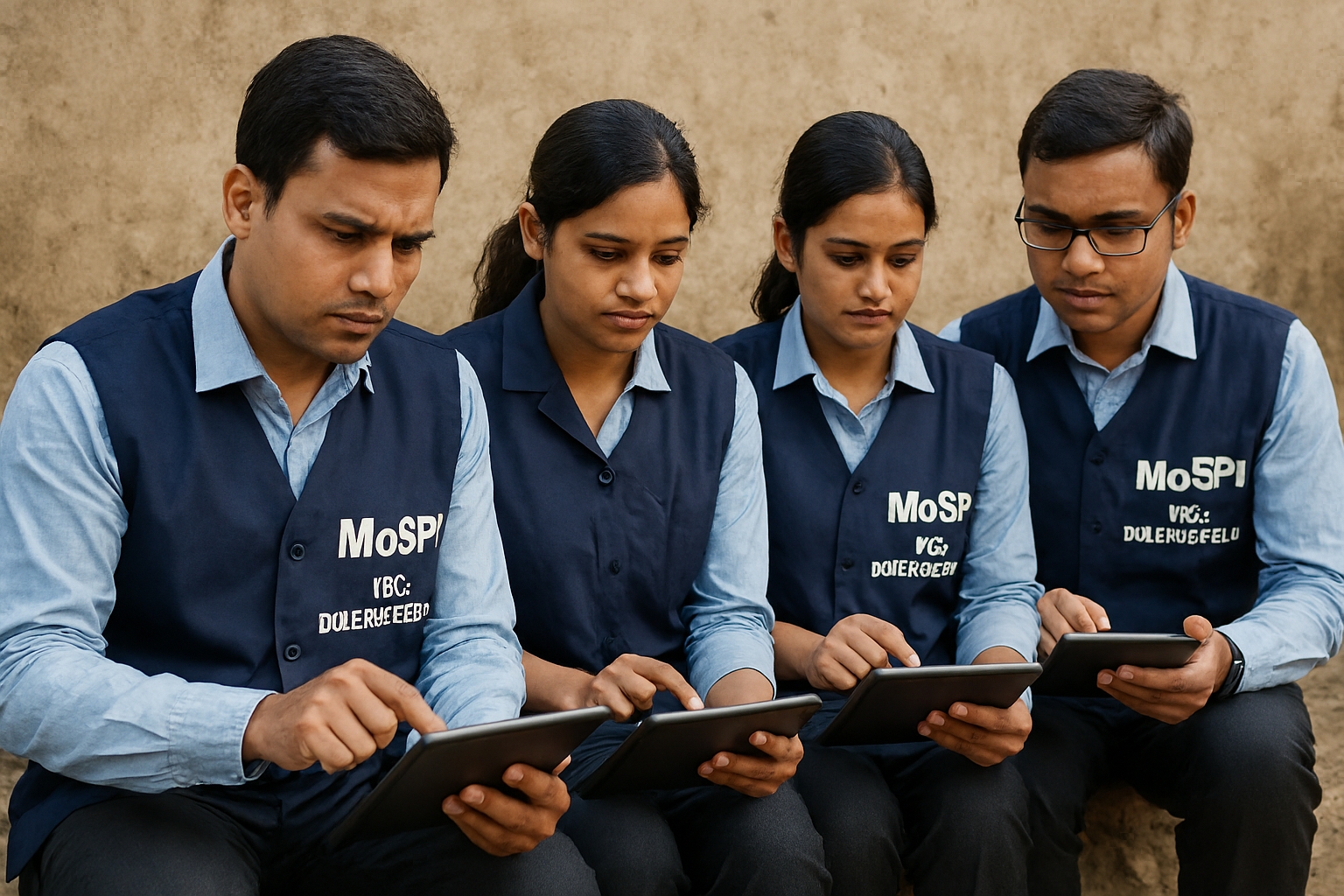
India is taking a major leap toward better policy-making with more localized and real-time data. The National Sample Survey (NSS) has undergone a major overhaul to generate district-level estimates and monthly labour market indicators.
Why This Change Matters
Earlier, most national data only reflected trends at state or national levels. This made it difficult for local authorities to make timely, data-driven decisions. Now, starting January 2025, districts will serve as the base strata for most NSS surveys.
This shift ensures that planning at the grassroots is backed by credible numbers. It also brings citizens closer to real-time data about their regions.


The PLFS has been redesigned to offer monthly updates on employment indicators like:
- Labour Force Participation Rate (LFPR)
- Worker Population Ratio (WPR)
- Unemployment Rate (UR)
This data is now available for both rural and urban areas at the national level. This high-frequency reporting allows better tracking of labour trends and economic shifts.
Maintaining Quality and Standards
The NSS has implemented strong quality control measures. These include:
- Uniform survey tools across states
- Robust sampling designs
- Standardized data processing protocols
- Structured validation checks
States and UTs must follow detailed Standard Operating Procedures (SOPs) provided by MoSPI. These SOPs cover the full survey cycle—from data collection to validation.
Building Local Capacity
MoSPI is not only giving guidelines but also offering resources. States get:
- Technical training
- Digital infrastructure like tablets, CAPI, and cloud storage
- Support to form local technical committees
These committees, involving local experts, help ensure that survey data is not just collected but critically evaluated for accuracy and impact.
Microdata Portal: Public Access to Statistics
In a move to increase transparency, MoSPI launched a revamped Micro-data portal. This user-friendly platform features:
- Responsive design
- 175+ datasets from household and enterprise surveys
- Unit-level data from the Economic Census
This portal makes it easier for citizens, researchers, and policymakers to access and analyze large volumes of statistical data.
GoIStats Mobile App: Data on the Go
On Statistics Day 2025, the government launched the GoIStats mobile app. This app features:
- Interactive dashboards
- Live data on GDP, inflation, and employment
- Dynamic graphs and visualizations
The app makes official statistics more engaging and accessible to every smartphone user in India.
e-Sankhyiki: Centralized Data Hub
Launched in 2024, e-Sankhyiki is a data-sharing portal designed for ease of dissemination. It hosts over 135 million records and features:
- Metadata for deeper understanding
- Dashboards for major socio-economic indicators
- Data visualizations for better readability
It helps users—from students to analysts—easily navigate India’s complex statistics.
Official Statement
These updates were shared by Minister of State (Independent Charge) Rao Inderjit Singh in the Rajya Sabha on August 5, 2025. He highlighted the importance of granular data in building an inclusive and transparent governance system.
Conclusion
India is entering a new era of data-driven governance. With tools like the revamped PLFS, Microdata Portal, GoIStats app, and e-Sankhyiki, the country is empowering its citizens, researchers, and decision-makers alike.
District-level data and monthly employment reports are no longer a luxury—they’re a necessity for inclusive development.