
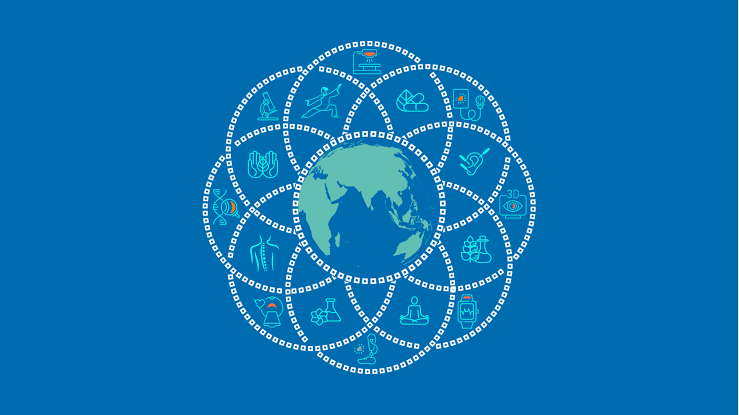
India is preparing to host one of the most significant global health events this year — the WHO–IRCH Workshop on Herbal Medicine Safety and Regulations. Scheduled from August 6 to 8, this international gathering will take place at Hotel Fortune District Centre, Ghaziabad.
The event is being organized by the Ministry of Ayush in collaboration with the World Health Organization (WHO). It is supported by the Pharmacopoeia Commission for Indian Medicine & Homoeopathy (PCIM&H).
Strengthening Global Regulation of Herbal Medicine
This three-day technical workshop is part of the efforts by the WHO–International Regulatory Cooperation for Herbal Medicines (IRCH) to build capacity, share best practices, and promote safe integration of traditional medicine into mainstream healthcare systems.
Key global regulatory officials and experts will engage in in-depth sessions, case studies, and hands-on training. The goal is to support harmonized regulations and pharmacovigilance in herbal medicine.


The event will be inaugurated by Vaidya Rajesh Kotecha, Secretary of the Ministry of Ayush, alongside Dr. Kim Sungchol, Chairperson of WHO–IRCH. Together, they will welcome participants from around the world.
Countries attending in person include Bhutan, Brunei, Cuba, Ghana, Indonesia, Japan, Nepal, Paraguay, Poland, Sri Lanka, Uganda, and Zimbabwe. Delegates from Brazil, Egypt, and the USA will join virtually, reflecting the truly international scope of this workshop.
Five Key Objectives of the Workshop
This workshop has five core goals that guide its agenda:
- Foster international collaboration on herbal medicine safety
- Enhance efficacy and regulatory frameworks globally
- Support regulatory convergence across countries
- Empower traditional medicine systems with evidence-based practices
- Promote safety, quality, and effectiveness in herbal medicine use
These goals align with WHO’s broader objective of integrating traditional medicine responsibly into healthcare policies worldwide.
Focus Sessions: Research, Regulation, and Real-World Cases
Several sessions will focus on key challenges and advancements in the field. Among them are reviews of the WHO–IRCH Working Groups 1 and 3, which handle safety, intended use, and efficacy standards for herbal products.
Participants will engage with case studies and live demonstrations on:
- Pre-clinical research and regulatory frameworks
- Quality assurance mechanisms for herbal products
- Risk management strategies for traditional medicines
A focused discussion on Ashwagandha (Withania somnifera) — a key herb in Ayurveda — will offer deep insights into its pharmacological profile, safety considerations, and international acceptance.
Hands-On Learning at PCIM&H Labs
One of the highlights of the event is the hands-on training session at PCIM&H laboratories. Participants will learn techniques such as:
- Herbal drug identification
- Heavy metal analysis in herbal products
- Chemo-profiling using High Performance Thin Layer Chromatography (HPTLC)
This practical exposure will help regulators and researchers gain deeper technical skills that can be applied in their home countries.
Ayush Suraksha Programme: Pharmacovigilance in Action
Another key agenda point is the introduction of the Ayush Suraksha (Pharmacovigilance) Programme. This initiative aims to strengthen the monitoring of adverse effects, interactions, and safety profiles of traditional medicine.
By adopting global best practices and building a robust surveillance system, India is leading efforts in herbal medicine safety management.
Institutional Visits: Immersive Learning
To give participants a broader understanding of India’s healthcare ecosystem, the workshop includes guided visits to three major institutions:
- PCIM&H — The nodal institution for standardization and quality control of traditional medicine
- National Institute of Unani Medicine (NIUM), Ghaziabad
- All India Institute of Ayurveda (AIIA), New Delhi
These site visits will showcase India’s integrative approach to public health, combining modern science with ancient wisdom.
A Step Toward Global Harmonization
With stakeholders from Asia, Africa, the Americas, and Europe, the workshop is poised to make a major impact. Experts believe it will contribute to global standardization of herbal medicine regulations and safety protocols.
It will also boost India’s image as a responsible leader in the global traditional medicine sector.
Conclusion: A Global Dialogue for Herbal Medicine Safety
The WHO–IRCH Workshop hosted by India marks a significant moment in the global movement toward safe, effective, and regulated traditional medicine. Through this platform, countries are coming together to build trust, share science, and promote health.
With strong leadership from the Ministry of Ayush and WHO, the workshop is not just a technical meeting — it is a catalyst for long-term international cooperation in herbal health care.