Strategic Agreement Signed at Ministerial Level
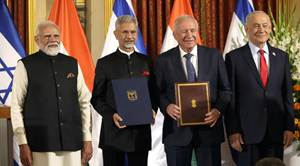
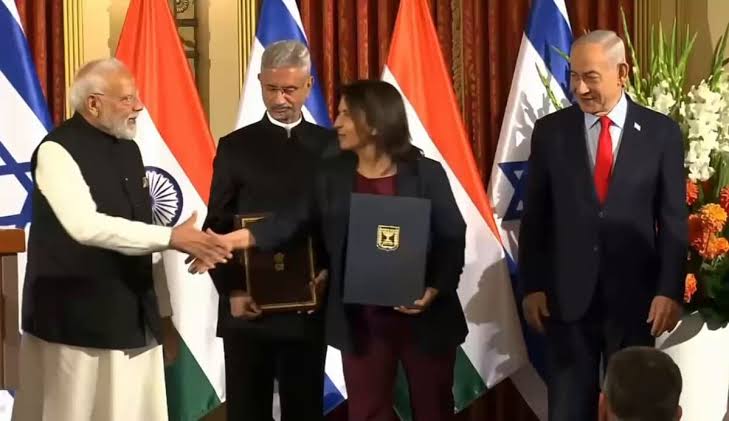
The agreement was formalised between Israel’s Agriculture and Food Security Minister Avi Dichter and India’s External Affairs Minister Dr. S. Jaishankar. The MoU sets the stage for deepened collaboration in advanced fisheries technologies, sustainable aquaculture practices, and marine resource conservation.
The partnership is aimed at transforming India’s fisheries sector through technology-driven growth while enhancing coastal livelihoods.
 Focus on Technology and Innovation
The MoU lays out a comprehensive framework covering priority areas such as Recirculating Aquaculture Systems (RAS), water reuse technologies, automation-based farming, and data-driven aquaculture management.
Both countries will work on developing climate-resilient and biosecure farming models suitable for water-scarce and climate-stressed regions. Cooperation will also extend to strengthening aquatic disease management using innovative scientific methods.
Centres of Excellence and Oceanarium Project
A major highlight of the agreement is the establishment of Indo–Israel Centres of Excellence for Fisheries and Aquaculture. These centres are expected to serve as hubs of innovation, research, and skill development.
The MoU also includes technical cooperation for setting up an oceanarium in India, enhancing marine education and public awareness.
Promoting Sustainable Mariculture
The collaboration extends to mariculture and Integrated Multi-Trophic Aquaculture (IMTA), including seaweed-based systems. Seaweed will be promoted both as a biofilter and an alternative feed resource, supporting environmentally friendly marine farming.
The two nations have also committed to advancing eco-friendly fishing practices and technology-led conservation of marine resources for long-term sustainability.
Capacity Building and Knowledge Exchange
Capacity building will form a central pillar of this cooperation. Structured exchange programmes, training initiatives, expert interactions, and exposure visits will be organised for officials, entrepreneurs, and stakeholders.
The partnership will strengthen linkages between startups, research institutions, and industry, particularly in water recycling technologies and aquaculture innovation ecosystems.
Joint Working Group to Oversee Implementation
A Joint Working Group (JWG) will be constituted to monitor implementation, review annual work plans, and identify new areas of cooperation. The JWG will meet annually, alternating between India and Israel, either physically or virtually.
Nodal officers from both sides will coordinate and ensure timely execution of projects under the MoU framework.
Boost to India’s Blue Economy
The landmark MoU reflects the shared commitment of both nations to deepen bilateral ties while promoting sustainable and climate-resilient development in fisheries and aquaculture.
With fisheries contributing significantly to India’s rural economy and employment generation, the agreement is expected to enhance productivity, attract investment, and create new livelihood opportunities in coastal regions.