

The Access Pass is a key instrument under the Sustainable Harnessing of Fisheries in the Exclusive Economic Zone Rules, 2025, notified under the Territorial Waters, Continental Shelf, EEZ and Other Maritime Zones Act. It enables mechanized and large motorized fishing vessels to legally fish in the EEZ, while promoting cooperative structures such as Fisheries Producer Organisations (FFPOs) and safeguarding small-scale artisanal fishers.
Union Minister for Fisheries, Animal Husbandry and Dairying & Panchayati Raj, Shri Rajiv Ranjan Singh, formally launched the Access Pass on 20th February 2026 from KCC Ground, Veraval, Gujarat. During the ceremony, passes were handed to 37 fishers representing 24 cooperatives from all 13 coastal states and UTs.
Digital Integration via ReALCRaft
The Access Pass is issued free of cost entirely online through the ReALCRaft portal, developed by the NIC and Department of Fisheries. This platform facilitates registration, licensing, transfer of ownership, and issuance of catch and health certificates via integration with MPEDA and the Export Inspection Council (EIC). By ensuring traceability, sanitary compliance, and eco-labelling, ReALCRaft enhances the global competitiveness of Indian marine products.
Further, structured training programs by CIFNET and FSI, in collaboration with coastal states, aim to equip fishers with deep-sea fishing skills, safety protocols, and export-grade handling practices. A Joint Working Group between the Department of Fisheries and Ministry of Cooperation promotes the inclusion of small-scale fishers and strengthens post-harvest and export value chains.
Benefits and Safety Measures for Fishers
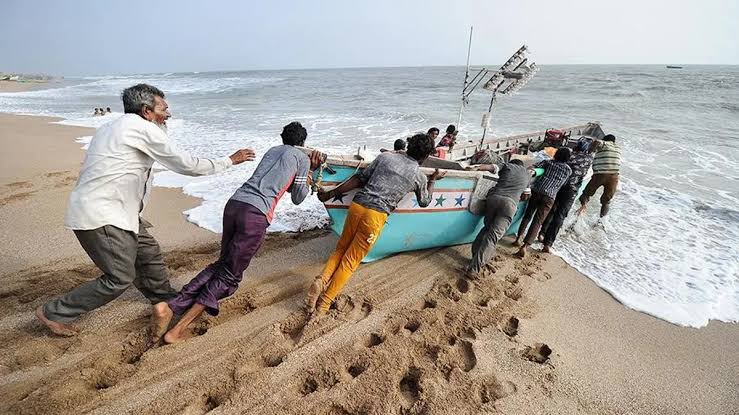
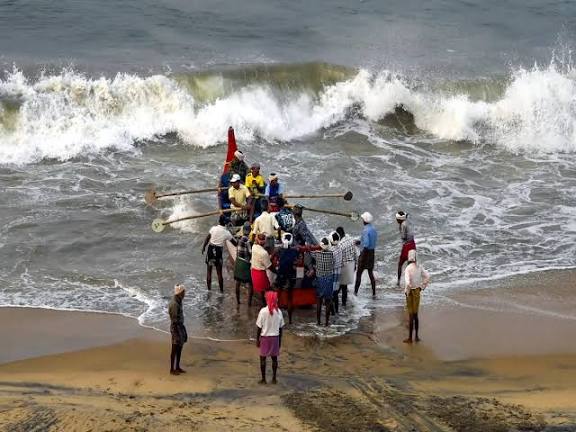
The Access Pass system protects small and artisanal fishers, as traditional non-motorized crafts are exempted. Mechanized vessels, totaling approximately 64,000, and large motorized vessels above 24 metres are required to obtain the pass.
To enhance safety, the government is installing one lakh free transponders on fishing vessels for real-time tracking, communication, and emergency alerts. More than 50,000 have already been deployed, linked to agencies like the Indian Coast Guard. Additionally, nearly 6 lakh fisher families receive annual livelihood support, and accident insurance coverage has been enhanced to ₹5 lakh, benefitting over 33 lakh fishers nationwide.