
A Landmark in Indian Genomics Research
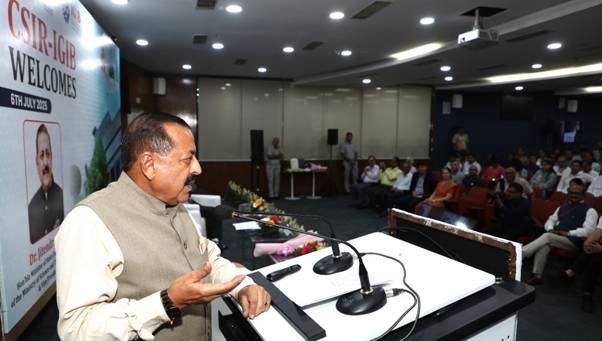
India took a bold leap in healthcare innovation as Union Minister Dr. Jitendra Singh inaugurated the National Biobank at CSIR-IGIB in Delhi. This marks the beginning of a massive longitudinal health study under the Phenome India Project, aimed at transforming India’s medical research landscape.
The Biobank will collect biological and lifestyle data from 10,000 people across India, building the country’s first large-scale longitudinal population database.
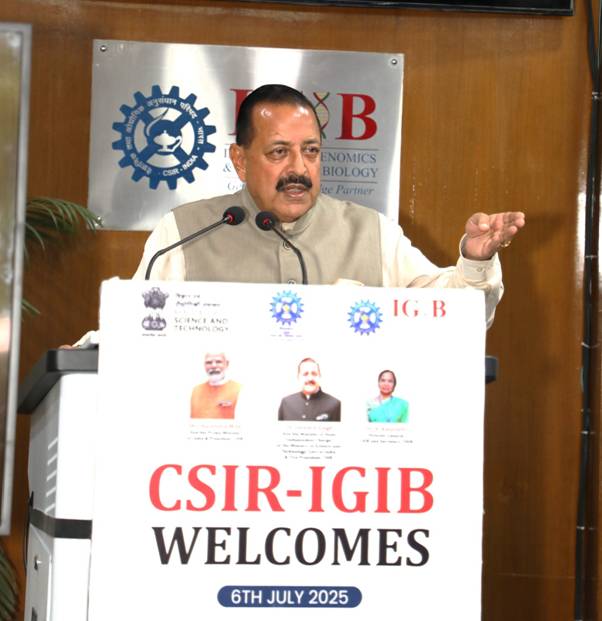

“This is the future—where treatment is customised to your genes, lifestyle, and environment,” said Dr. Singh. He emphasized that personalised healthcare is no longer a dream. Indigenous science is making it a reality.
He highlighted India’s unique health challenges, such as central obesity in lean individuals, which often goes unnoticed. A one-size-fits-all approach doesn’t work here. The Biobank, by mapping India’s rich genomic diversity, will allow doctors to target therapies more accurately.
Biobank to Boost CRISPR and AMR Research
This initiative complements CSIR-IGIB’s ongoing work in indigenous CRISPR therapies. Scientists are already advancing trials on sickle cell anaemia, liver fibrosis, breast cancer, and rare genetic disorders.
Moreover, the Biobank will support research into antimicrobial resistance (AMR) and enable AI-driven diagnostics. This integration of big data and biotechnology could soon power gene-guided treatments in India.
Phenome India Project: Long-Term Health Mapping
The Phenome India Project is more than just a biobank. It’s a long-term health monitoring study. Over the years, researchers will track disease progression, gene-environment interactions, and response to treatments.
Dr. N. Kalaiselvi, Director General of CSIR, called it a “baby step with global potential.” She believes the Indian cohort could match or surpass models like the UK Biobank in terms of diversity and depth.
Innovation Beyond the Lab
Dr. Singh also urged for deeper collaboration between researchers, industry, and government. “Science must step out of the lab and into people’s lives,” he stated.
Dr. Souvik Maiti, Director of CSIR-IGIB, noted that the institute was the first in India to work on human genome sequencing. Over the years, they’ve launched:
-
300+ genetic diagnostics for rare diseases
-
India’s first drug genome project
-
COVID-19 genome studies
-
Space biology projects with the Indian Air Force
He also noted the institute’s increasing focus on women’s health, breast cancer genomics, and pilot fitness assessments using AI.
Why This Matters
India’s move to develop its own Biobank means more than just research. It’s a step toward self-reliance in healthcare data and better public health policy. With data-driven strategies, doctors can catch diseases earlier, treat them better, and even predict future health risks.
As India joins global leaders in genomics, this Biobank serves as a symbol of what local innovation can achieve.