
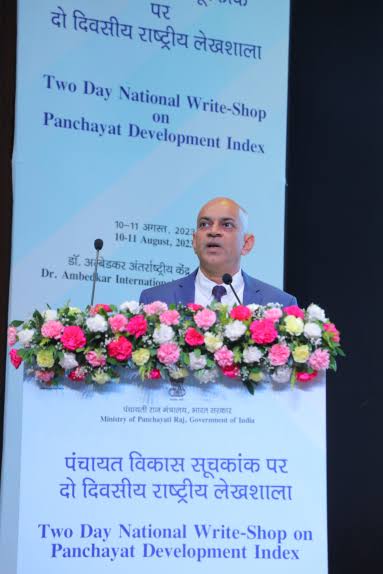
A significant step towards strengthening grassroots governance is set to unfold in New Delhi as the Ministry of Panchayati Raj hosts a two-day National Writeshop on May 26 and 27, 2025. The event will mark the national rollout of the Panchayat Advancement Index (PAI) 2.0 for the financial year 2023–24, signalling a new chapter in data-driven, inclusive development for India’s rural communities.
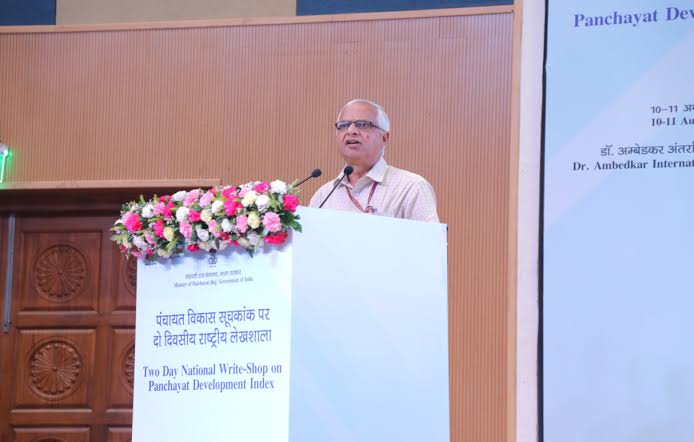

Held at the Dr. Ambedkar International Centre, the Writeshop will bring together senior officials, development experts, and state representatives to engage in an intensive dialogue on empowering Gram Panchayats through better data, smarter tools, and transparent planning processes. The presence of key dignitaries from the Ministry of Panchayati Raj, the Ministry of Statistics and Programme Implementation, NITI Aayog, and other key stakeholders will underscore the national importance of this initiative.
The Panchayat Advancement Index is more than just a performance metric—it’s a reflection of the country’s commitment to transforming rural governance. While the first version of the Index (PAI 1.0) laid the foundation by serving as a baseline assessment, the second version brings in meaningful refinements based on real-world feedback. With the number of indicators significantly reduced from 516 to 147, PAI 2.0 focuses on quality data, measurable outcomes, and actionable insights. These changes will not only make it easier for local bodies to report and track development but will also enhance the reliability and transparency of governance at the village level.
The updated framework emphasizes nine themes aligned with the Localized Sustainable Development Goals (LSDGs), touching every aspect of rural life—from poverty alleviation and education to gender empowerment and environmental sustainability. With automatic data integration from national portals, mobile-friendly dashboards, and intelligent validation features, PAI 2.0 is designed to be intuitive and impactful.
Throughout the two days, participants from 32 States and Union Territories will engage in collaborative sessions, technical demonstrations, and hands-on exercises to familiarize themselves with the upgraded portal and its practical applications. A special highlight will be the sharing of experiences from PAI 1.0, with states showcasing their successes and strategies for integrating PAI 2.0 into their planning efforts. These exchanges will enrich the collective knowledge pool and provide valuable direction for future implementation.
In a gesture that underscores the government’s commitment to inclusivity, the event will be livestreamed in eleven Indian languages, ensuring that the message of empowerment reaches every corner of the country.
This Writeshop is not just a meeting—it is a movement. It reflects a shared national vision where data, dialogue, and dedication come together to uplift every Panchayat and, by extension, every rural citizen. As the PAI 2.0 rolls out, it carries with it the hopes of millions and the promise of a stronger, more accountable rural India.