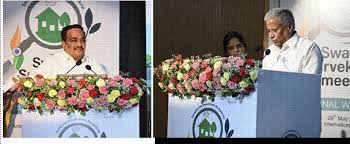
In a significant stride towards cleaner and healthier rural communities, Union Minister of Jal Shakti, Shri C R Patil, launched the Swachh Survekshan Grameen (SSG) 2025 in New Delhi today. The launch marks the beginning of India’s largest rural sanitation survey, aimed at assessing and reinforcing the progress made under the Swachh Bharat Mission (Grameen) Phase-II.
Addressing a gathering of key stakeholders, including the Minister of State Shri V. Somanna, and senior officials from the Department of Drinking Water and Sanitation (DDWS), Shri Patil emphasized that cleanliness is not a one-time goal but a lifelong commitment. He called for a sustained, community-led effort, highlighting the importance of collective action and local innovation in building a truly “Viksit Bharat.”
SSG 2025 is not just a survey—it’s a powerful validation tool that will cover 21,000 villages across 761 districts in 34 States and Union Territories. Through this ambitious initiative, the government aims to evaluate how well rural areas are sustaining their Open Defecation Free (ODF) Plus status and to provide a national ranking based on both quantitative and qualitative sanitation parameters.
The Minister reminded all present that real change must come from the ground up. “Our villages are the soul of India,” said Shri Somanna, “and turning them into visible, lived models of cleanliness is the truest reflection of our progress.”
Secretary of DDWS, Shri Ashok KK Meena, underscored the operational depth of SSG 2025. Anchored in SBM-G Phase 2, the survey will rely on accurate real-time data reporting, extensive grassroots mobilization, and a trained workforce to ensure that every aspect of rural sanitation is thoroughly assessed. From plastic waste management and faecal sludge treatment to public feedback and infrastructure functionality, no detail will be overlooked.
To guarantee transparency and integrity, an independent agency will conduct the survey using a structured assessment framework aligned with national guidelines. A combination of direct observation, citizen feedback, and geo-fenced data collection will ensure that the results reflect the true on-ground realities. The survey will evaluate service-level progress, sanitation infrastructure, and overall cleanliness of villages—each of which contributes to a composite score used for final rankings.
This year’s SSG also introduces a dedicated mobile app to facilitate citizen participation and real-time feedback. The hope is that this technological integration will deepen public involvement and ensure that every voice contributes to India’s sanitation journey.
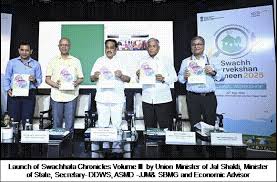
The event also saw the release of the Swachh Survekshan Grameen 2025 Assessment Framework and “Swachhata Chronicles Volume III,” a compendium capturing inspiring best practices from states across the country. These documents serve as both guideposts and motivation for communities to rise to the challenge.
As the nation moves forward with SSG 2025, the role of panchayats, local leaders, and citizens becomes more crucial than ever. Their dedication, compassion, and resilience will shape the narrative of sanitation in rural India—bringing us closer to the dream of a Swachh Bharat, not just in spirit, but in everyday life.