
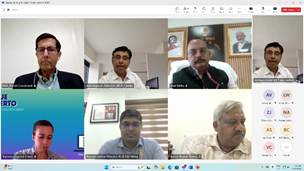
In a significant step towards strengthening international cooperation in digital innovation, India recently hosted a virtual Capacity Building Session on Digital Transformation for BRICS nations. Organized by the Department of Telecommunications (DoT) through the National Communications Academy – Technology (NCA-T), Ghaziabad, the event reflected India’s growing role in fostering collaborative efforts for inclusive and secure digital growth.


The session brought together digital experts and policymakers from across BRICS—Brazil, Russia, India, China, and South Africa—to exchange insights and develop shared strategies for addressing digital challenges and opportunities. The inaugural remarks by Mr. Daniel Cavalcanti, BRICS Chair, and Mr. Atul Sinha, Director General of NCA-T, India, set the tone for an engaging dialogue on mobile security, cyber resilience, digital public infrastructure, and cutting-edge technologies like Digital Twin.
India’s citizen-first approach was evident throughout the session. The Sanchar Saathi initiative, highlighted in the discussions, stands out as a powerful tool for protecting mobile users from fraud and enhancing transparency in telecommunications. It’s a reminder that technology, when deployed thoughtfully, can act as a shield for the most vulnerable.
The exchange on cyber resilience emphasized the urgency of preparedness and global cooperation in tackling cyber threats. Both India and Brazil contributed valuable insights, underlining the shared responsibility of nations in safeguarding digital frontiers.
One of the session’s focal points was the concept of Digital Public Infrastructure (DPI), with India presenting AADHAAR as a global benchmark for identity-driven digital inclusion. It was heartening to see how this platform has not only streamlined public service delivery but also empowered millions, especially those at the margins.
Perhaps the most forward-looking segment was the exploration of Digital Twin technology. India’s ambitious Sangam initiative envisions real-time, AI-driven governance, offering a glimpse into the future of infrastructure management and planning. The collaboration with China in this area showcased a mutual commitment to innovation with real-world impact.
The event concluded on a hopeful note, with reaffirmed commitments from all BRICS nations to continue learning from one another and working together for digital empowerment. These discussions are more than just technical exchanges—they reflect a collective aspiration to build a future where digital tools serve people equitably, securely, and effectively.
India’s leadership in this forum is not just a matter of national pride; it signals a broader shift toward inclusive, collaborative digital development. As these ideas take root and grow, they hold the promise of transforming societies across continents, with human dignity and resilience at the center.