
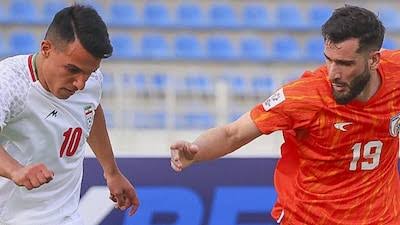
First half: Defence stands tall
Iran, ranked 20th in the FIFA standings, dominated possession from the outset. India, positioned 133rd, relied on a compact defensive setup orchestrated by coach Khalid Jamil. Sandesh Jhingan and Anwar Ali led the backline with discipline, while goalkeeper Gurpreet Singh Sandhu produced crucial saves. At half-time, the score remained 0-0 — a result that surprised many given Iran’s firepower.
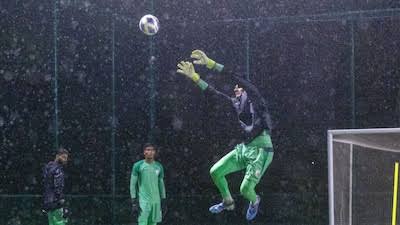
India’s first substitutions — Chinglensana Singh and Jeakson Singh for Danish Farooq and Suresh Singh — seemed to unsettle the rhythm. In the 60th minute, Amirhossein Hosseinzadeh latched onto a lofted pass and poked the ball past Sandhu to make it 1-0.
As India tired, Iran introduced stars Mehdi Taremi and Alireza Jahanbakhsh. Their impact was immediate. In the 89th minute, Taremi’s persistence set up Jahanbakhsh’s shot, which rebounded kindly for Ali Alipour to double the lead. Deep into stoppage time, Jahanbakhsh delivered a precise assist for Taremi, who sealed the 3-0 win with a calm finish.
India’s attacking struggles
While India showed flashes of promise through Ashique Kuruniyan and Mahesh Singh, the final ball was often lacking. Jithin MS and Vikram Pratap Singh attempted to break forward, but Iran’s defenders comfortably dealt with the threats. Jamil’s men rarely tested Iranian keeper Payam Niazmandghader, highlighting the gulf in attacking quality.
Coach Jamil’s philosophy tested
This was only the second match under Khalid Jamil’s tenure. After a 2-1 win against Tajikistan in the opener, his defensive philosophy was evident once again. However, against Iran’s world-class forwards, India’s resistance eventually faded.
Despite the scoreline, many fans and analysts praised the Blue Tigers’ fight, particularly in the first 60 minutes. Jamil’s ability to instill discipline and unity was clear, though questions remain about creativity in attack.
Head-to-head record
This defeat extended India’s winless run against Iran in recent decades. Their last victory dates back to 1959 in Ernakulam. The two sides have now met seven times, with Iran winning five and India two. In their previous encounter in 2016 World Cup qualifiers, Iran had cruised to a 4-0 win in Tehran.
Looking ahead
For India, the CAFA Nations Cup is less about results and more about building cohesion under Jamil. Upcoming fixtures will provide further opportunities to refine tactics and test young talent. Iran, meanwhile, continue to showcase their depth as they prepare for World Cup qualification campaigns.