
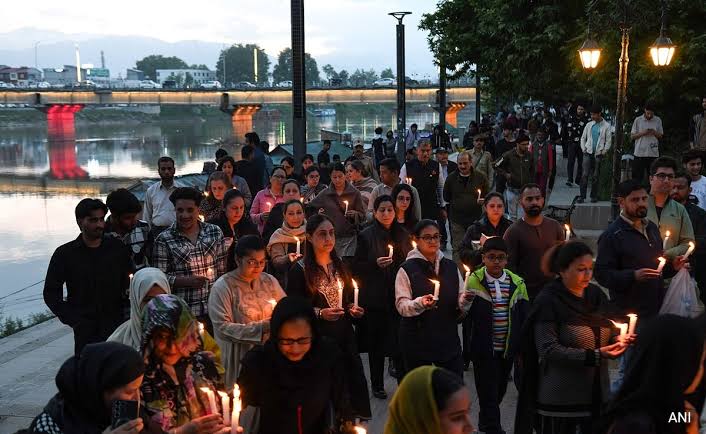
The nation continues to grapple with shock and sorrow following the devastating terror attack in Pahalgam, Jammu and Kashmir, on April 22 that claimed the lives of 26 people, most of them innocent tourists. As the country mourns, authorities have intensified security measures, reshuffled key officials, and launched a high-level investigation into what is now considered one of the deadliest civilian attacks in the region in two decades.


In a concerning escalation, Pakistani troops have repeatedly violated the ceasefire along the Line of Control (LoC), engaging in unprovoked small-arms fire across multiple sectors including Kupwara, Baramulla, Poonch, Rajouri, Mendhar, Naushera, Sunderbani, and Akhnoor. The Indian Army has responded with measured but firm action to these provocations, now stretching into a twelfth consecutive night of tension.
Meanwhile, the Jammu and Kashmir Police have undertaken a significant internal reshuffle, transferring six officers in Anantnag district, including the Station House Officer (SHO) of Pahalgam Police Station. This move comes amid heightened security concerns in the wake of the massacre, as officials work to prevent any further threats.
The National Investigation Agency (NIA) has officially taken over the case from local police, following an order from the Ministry of Home Affairs. Initial assessments suggest that the attack was orchestrated by The Resistance Front (TRF), a proxy group of the Pakistan-based Lashkar-e-Taiba. NIA teams have been collecting forensic evidence from the site in Baisaran and are working to identify and apprehend those behind the carnage.
In the international arena, India has garnered strong expressions of support and solidarity. At a closed-door session of the United Nations Security Council, members called for de-escalation and pressed Pakistan with pointed questions, largely dismissing its attempts to label the incident a “false-flag” operation. UN Secretary-General António Guterres called for maximum restraint, stressing that military confrontation is not the solution.
Countries such as Japan have stood firmly with India. Japanese Defence Minister Gen Nakatani and Speaker of the House Fukushiro Nukaga expressed heartfelt condolences and full support during their visits, condemning cross-border terrorism and reiterating the need for global unity against such threats. External Affairs Minister S. Jaishankar thanked Japan for its unwavering solidarity.
On the domestic front, political leaders across party lines, including former Rajasthan Chief Minister Ashok Gehlot, have voiced support for the central government’s decisions. The Punjab Assembly began its special session with a solemn tribute to the victims, observing a two-minute silence and urging decisive action to prevent future tragedies.
In a heartfelt civilian response, the town of Vrindavan observed a complete shutdown as traders and local organizations protested the attack. Marketplaces remained closed in solidarity with the victims, and citizens called for strict punishment for the perpetrators and their enablers.
Amidst this grim backdrop, the government has pledged full operational freedom to the armed forces and announced measures like suspending the Indus Water Treaty as a firm response to Pakistan’s continued sponsorship of cross-border terrorism. Parliament’s Standing Committee on Information Technology has also expressed concern over certain social media platforms allegedly spreading content against national interest, demanding urgent action from the concerned ministries.
India stands united in grief, anger, and resolve. The attack has shaken the nation’s conscience but also sparked a determined effort across military, political, diplomatic, and civilian fronts to ensure that such atrocities never occur again. The collective call for justice, peace, and security continues to echo across the country and beyond.