Troop Composition and Key Participants
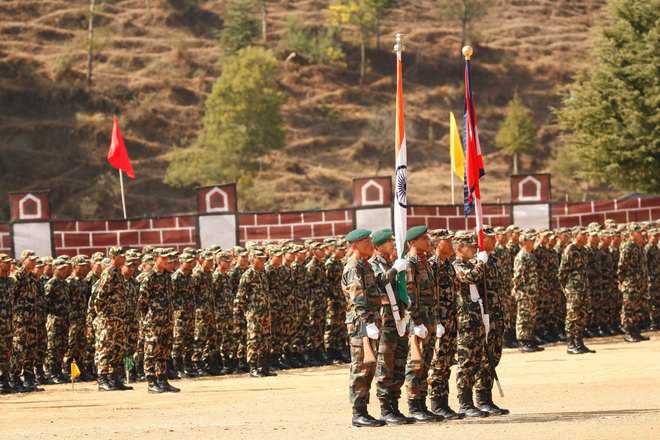
The Indian contingent comprises 334 personnel, primarily drawn from the Assam Regiment. On the Nepal side, an equal number of 334 troops are participating, most of them from the Devi Datta Regiment. The balanced deployment underscores the equal partnership and mutual trust between the two nations’ armies.
 Aims & Operational Focus
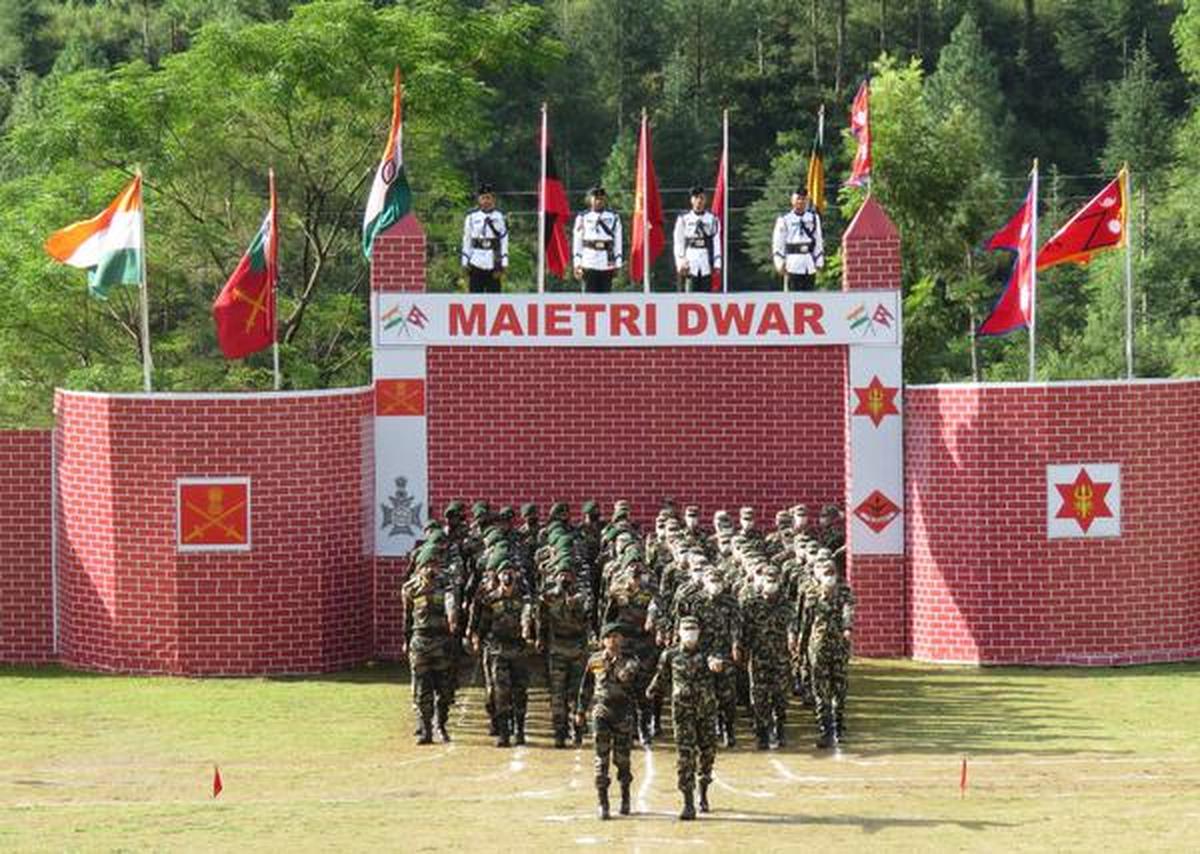
The exercise is designed to rehearse sub-conventional operations under Chapter VII of the United Nations mandate. The agenda includes jungle warfare, counter-terrorism in mountainous terrain, humanitarian assistance & disaster relief (HADR), medical response, environmental conservation, and integrated ground–aviation operations.
By operating in the rough terrain of Uttarakhand, both armies aim to sharpen their capabilities in high-altitude environments, improving coordination and rapid-response effectiveness.
Technology-Driven Cooperation
This edition of Suryakiran incorporates cutting-edge technology, including Unmanned Aerial Systems (UAS), drone-based intelligence, surveillance and reconnaissance (ISR), AI-enabled decision support tools, unmanned logistics vehicles and armoured platforms. These capabilities will be integrated into tactical drills, enabling both armies to refine their Tactics, Techniques and Procedures (TTPs) in a modern counter-terrorism context.
The use of drones, AI tools and unmanned systems helps both sides test real-time decision-making, logistics resilience and battlefield automation. These advancements reflect a forward-looking partnership that adapts to evolving global security dynamics.
Interoperability & Peacekeeping Emphasis
A key objective of the exercise is to foster interoperability between the Indian and Nepalese contingents. Joint drills and information exchange are expected to strengthen tactical cohesion and mutual trust. Both armies will practice standard operating procedures for multinational missions, reducing life and material risk during peacekeeping tasks.
Participants will also share best practices and tactical knowledge, further deepening defence cooperation and enhancing each side’s operational readiness. Such collaboration underlines the shared commitment to peace, stability and UN-mandated operations.
Humanitarian Focus & Disaster Relief
As part of the exercise, troops will conduct humanitarian assistance and disaster relief (HADR) operations, simulating real-world scenarios such as landslides, floods or medical emergencies. Joint medical response drills and environmental conservation activities will ensure readiness to serve civilian populations in distress.
This focus on civil-military synergy and communal welfare showcases the broader strategic purpose of the exercise not just warfighting, but also saving lives and serving communities in need.
Bilateral Relations & Strategic Value
Exercise Suryakiran XIX is more than a training event it is a symbol of deepening India–Nepal defence cooperation. Through collaborative training focused on emerging technologies and real-world threats, both nations reaffirm their mutual trust and shared security interests.
The drill also strengthens the diplomatic bond between New Delhi and Kathmandu, reinforcing the importance of regional stability and collective preparedness in South Asia.