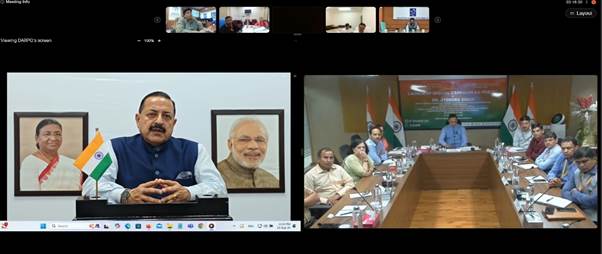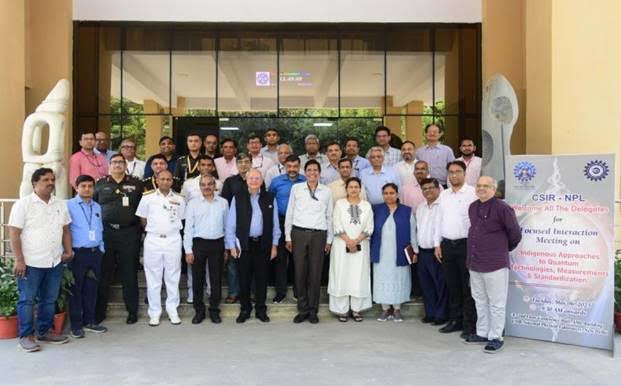
The CSIR-National Physical Laboratory (NPL), India’s premier measurement institute, recently hosted a crucial meeting focused on advancing indigenous quantum technologies and developing standards to support this emerging sector. Held on May 6, 2025, the “Focused Interaction Meeting on Indigenous Approaches to Quantum Technologies, Measurements, and Standardization” brought together over 40 experts from government ministries, research institutions, the armed forces, and industry.
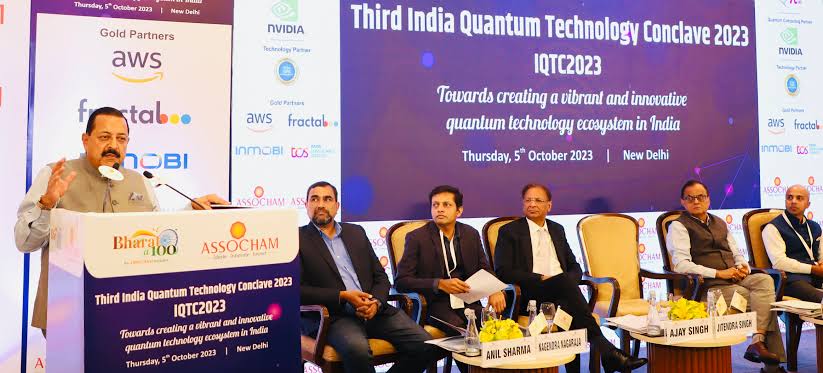
Participants, including leaders from IIT Madras, the Indian Army, ISRO, DRDO, and the National Quantum Mission, emphasized the urgent need for India to establish its own measurement capabilities and standards in quantum technology. They recognized that building homegrown solutions is essential not only for technological sovereignty but also to ensure the reliability and security of quantum applications—especially those with strategic importance.
Key speakers underlined that developing precise calibration, validation, certification, and standardization frameworks would be critical pillars for nurturing a strong and self-reliant quantum ecosystem in India. Prof. Venu Gopal Achanta, Director of CSIR-NPL, highlighted the institution’s pivotal role as the custodian of national standards and its ongoing research aimed at creating new quantum measurement standards. Dr. Ajai Chowdhry, Co-founder of HCL and Chairman of the National Quantum Mission Governing Board, stressed the need for coordinated efforts among key institutions to integrate metrology and standardization into the broader mission’s goals, ensuring that Indian startups, researchers, and defense forces benefit from indigenous technologies supported by Indian standards.
Representatives from the Indian Army and Navy shared their eagerness to adopt quantum technologies to strengthen national security and called for close collaboration with research bodies to develop customized, India-specific standards—particularly for secure quantum communications.
The meeting fostered an open and collaborative environment where experts discussed the importance of combining technological innovation with policy frameworks that promote self-sufficiency. Attendees agreed that India must not only innovate but also control the standards and measurements that underpin these technologies to safeguard national interests and create economic opportunities.
This event signals a growing commitment to building a robust and “Aatmnirbhar Bharat” in quantum technologies, reflecting a sympathetic understanding of the challenges faced by this cutting-edge sector. By focusing on indigenous development, the meeting offered hope for sustainable growth, greater technological independence, and the empowerment of Indian scientists and entrepreneurs in the quantum era.
The discussions reaffirmed that the path ahead requires unity among scientists, policymakers, and strategic sectors to ensure that India’s quantum ambitions translate into tangible benefits for the nation and its citizens.