
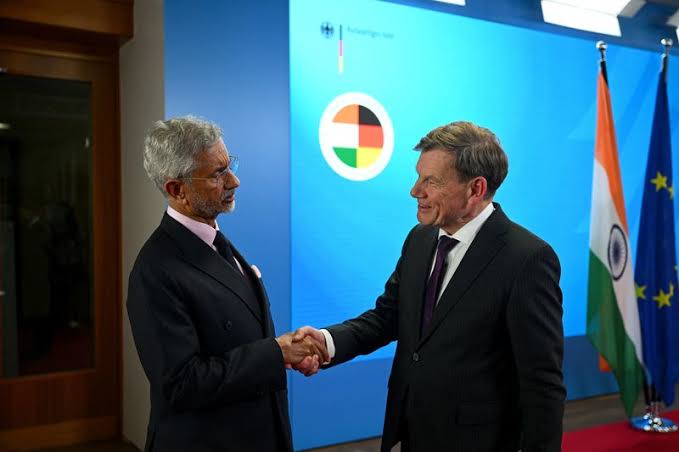
In a strong and heartfelt message to the international community, External Affairs Minister S. Jaishankar firmly reiterated India’s unwavering stand against terrorism during his diplomatic visit to Germany. Addressing media after high-level talks with German leaders, Jaishankar made it clear that India will neither succumb to nuclear blackmail nor tolerate any form of cross-border terrorism, no matter the pressure or provocation.
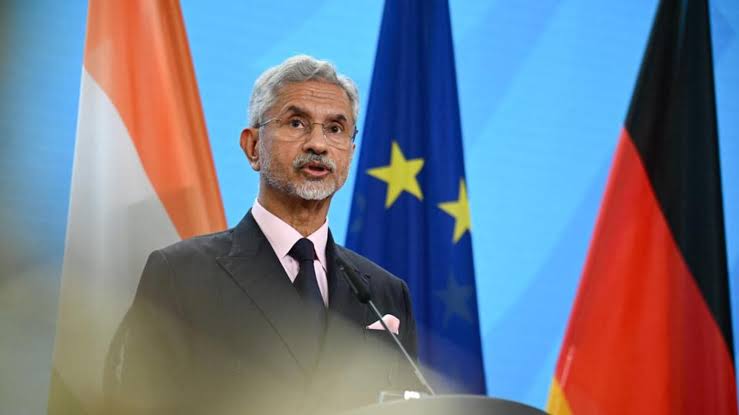

Standing alongside his German counterpart Johann Wadephul in Berlin, Jaishankar emphasized that India’s relationship with Pakistan would remain strictly bilateral, leaving no room for third-party mediation. His message carried the weight of a nation that has endured great pain due to repeated terrorist attacks, the most recent being the tragic incident in Pahalgam, which claimed innocent civilian lives and shocked the conscience of the country.
Germany’s response to this tragedy was deeply appreciated by India. Chancellor Friedrich Merz and other top German officials expressed solidarity with India, condemning the Pahalgam attack in the strongest terms and supporting India’s right to defend itself. This shared understanding marked a powerful moment of unity between the two nations, built on the belief that terrorism has no place in any civilised society.
Jaishankar’s remarks came shortly after Operation Sindoor—a decisive Indian strike against terrorist infrastructure across the border—highlighting India’s resolve to respond firmly and lawfully. He also acknowledged Germany’s role as a vital strategic partner, especially in maintaining a rules-based global order and ensuring regional stability.
His engagements extended beyond the German foreign ministry. In meetings with Chancellor Merz and Günter Sautter, the foreign policy adviser to the German leadership, Jaishankar underlined the importance of global cooperation in combating terrorism. He conveyed Prime Minister Narendra Modi’s appreciation for Germany’s consistent support and discussed ways to deepen the strategic partnership between the two democracies.
Meanwhile, India’s outreach continued on a global scale. In Moscow, an all-party Indian delegation, led by MP Kanimozhi Karunanidhi, met with Russian lawmakers and senior officials to explain India’s firm stance on eliminating terrorism and the rationale behind Operation Sindoor. Russia too voiced strong condemnation of the Pahalgam attack and expressed solidarity with India in its anti-terror efforts.
Similar sentiments were echoed in meetings across Japan and the UAE, where Indian parliamentary delegations engaged with their counterparts to present a united front against terrorism and radicalism. In Japan, even the Speaker of the Parliament, Fukushiro Nukaga, and senior leaders from the ruling Liberal Democratic Party extended their moral and political support to India’s stand.
India’s diplomatic campaign is a testament to the pain and perseverance of a nation that has long suffered from the scourge of terrorism. The government’s effort to engage 33 countries through seven all-party delegations reflects not just a political agenda, but a humanitarian appeal to protect innocent lives and uphold peace.
At a time when many across the globe are still healing from the wounds of senseless violence, India’s voice—firm yet respectful—is a reminder of the importance of collective resolve. Through dialogue, partnership, and a strong moral compass, India is working to build a safer and more compassionate world.