
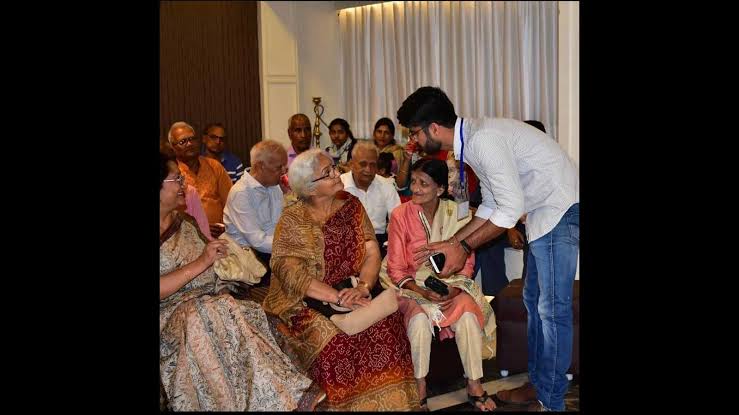
India Redefines Ageing with Cultural and Global Models
Published on: August 2, 2025
The National Human Rights Commission (NHRC), in collaboration with NITI Aayog, the Ministry of Social Justice & Empowerment, and the Ministry of Health and Family Welfare, supported a powerful day-long conference on ‘Ageing in India: Emerging Realities, Evolving Responses’. The event was organised by Sankala Foundation and held in New Delhi on August 1, 2025.


With India poised to become home to 35 crore elderly citizens by 2050, experts are urging for urgent, inclusive, and culturally rooted policy responses. NHRC Secretary General Shri Bharat Lal highlighted this demographic shift as a “critical policy challenge” but also a huge opportunity.
He called for integrating community-based models rooted in Indian family values with successful international practices from Scandinavian countries and Japan. These models focus on enabling the elderly to continue contributing meaningfully to society through community services and inter-generational support.
Ancient Values Meet Modern Policy
NHRC Chairperson Justice V. Ramasubramanian emphasized the need to embed India’s rich cultural legacy into contemporary frameworks. Drawing from Sangam literature and the Yajur Veda, he urged policymakers to ensure the dignity, respect, and protection of senior citizens. He reaffirmed NHRC’s commitment through advisories, research, and suo motu action for the elderly.
Empowering Families and Communities
Dr. Vinod K. Paul, Member of NITI Aayog, advocated for family-driven elderly care as the foundation of India’s strategy. He stressed on healthcare systems that are accessible and community-supported, especially for mental well-being and home-based services.
He pointed out how ageing should not be seen as a burden but as a phase of opportunity—leveraging wisdom, skills, and knowledge that older citizens bring to society.
Key Themes and Outcomes
The conference featured four thematic sessions and was addressed by renowned leaders including Dr. Kiran Bedi, Amitabh Kant, Preeti Sudan, and others. The discussions identified practical steps and key takeaways to redefine elderly care in India.
- Improved healthcare and nutrition have extended life expectancy—but without matching affluence, it creates unique challenges.
- Kerala’s Palliative Care model was highlighted as an ideal for other states to replicate.
- States must compete and collaborate to improve elderly welfare through decentralised governance.
- Financial security, digital literacy, assistive devices, and long-term care insurance were seen as crucial components.
- A call to create a ‘Silver Economy’ where seniors are economically and socially active.
New Report Offers Actionable Roadmap
The newly launched report titled ‘Ageing in India: Challenges and Opportunities’ provides a roadmap for inclusive elderly care. It encourages community-based healthcare and emphasises the importance of intergenerational bonding, local participation, and public-private partnerships.
Technology and Elder Engagement
While automation reduces physical labour, it increases the need for cognitive and knowledge-based roles. This shift opens new opportunities for the 60+ population to contribute to society, especially in education, mentorship, and advisory services.
The event also recommended tech-led initiatives to ensure seniors remain digitally connected and safe. This includes online healthcare consultations, wearable assistive devices, and digital pension access systems.
Call to Action
The conference concluded with a strong message: Ageing is not just a personal journey; it’s a societal responsibility. All stakeholders—governments, civil society, private sectors, and individuals—must unite to ensure dignity, safety, and purpose for every elderly citizen in India.
As India prepares for a massive demographic transition, this national dialogue laid the groundwork for transforming ageing into an opportunity—not just for the elderly, but for the nation as a whole.