
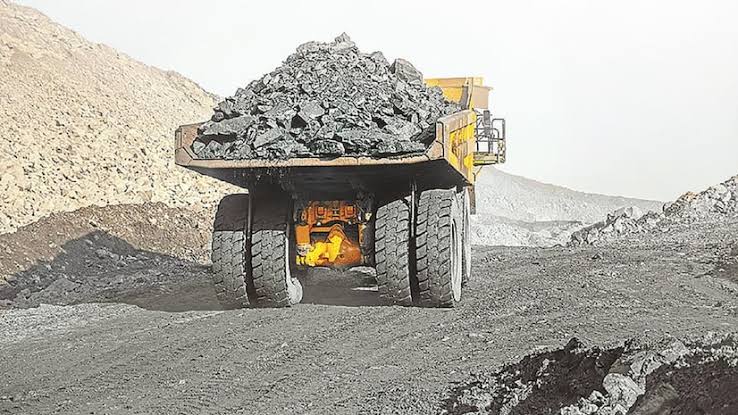
In a promising sign of progress toward self-reliance, India has witnessed a notable 9.2% decline in coal imports during the period from April 2024 to February 2025, with total imports standing at 220.3 million tonnes compared to 242.6 million tonnes in the same timeframe of the previous fiscal year. This significant reduction has not only supported domestic industry but also resulted in substantial foreign exchange savings of approximately $6.93 billion (₹53,137.82 crore), a step forward for the country’s economic resilience.


The most significant drop was observed in the Non-Regulated Sector, which excludes power generation, where imports fell by 15.3%. Interestingly, despite a 2.87% rise in coal-based power generation during this period, imports for blending in thermal power plants declined sharply by 38.8%. This development underscores India’s ongoing efforts to rely more on domestic coal resources while continuing to meet its growing energy demands.
The government’s continued push through initiatives like Commercial Coal Mining and Mission Coking Coal has been instrumental in this shift. These programs aim to unlock the potential of India’s coal reserves, boost domestic output, and reduce dependence on international suppliers. As a result of these efforts, the country recorded a 5.45% increase in coal production during the same period.
Coal remains the backbone of India’s energy needs, fuelling crucial sectors such as power, steel, and cement. However, the country still grapples with limited availability of coking coal and certain high-grade thermal coal types. While imports continue to play a role in bridging this gap, especially for industries like steel, the broader focus remains firmly on strengthening domestic capabilities.
The Ministry of Coal has been proactive in ensuring that India’s coal supply is not only adequate but also sustainable and secure. These strategic actions align with the national vision of a ‘Viksit Bharat’—a developed India—by laying the foundation for an energy framework that is both economically efficient and environmentally conscious. The decline in coal imports is more than just a statistic—it reflects a shift towards a more confident, self-sustaining India.