
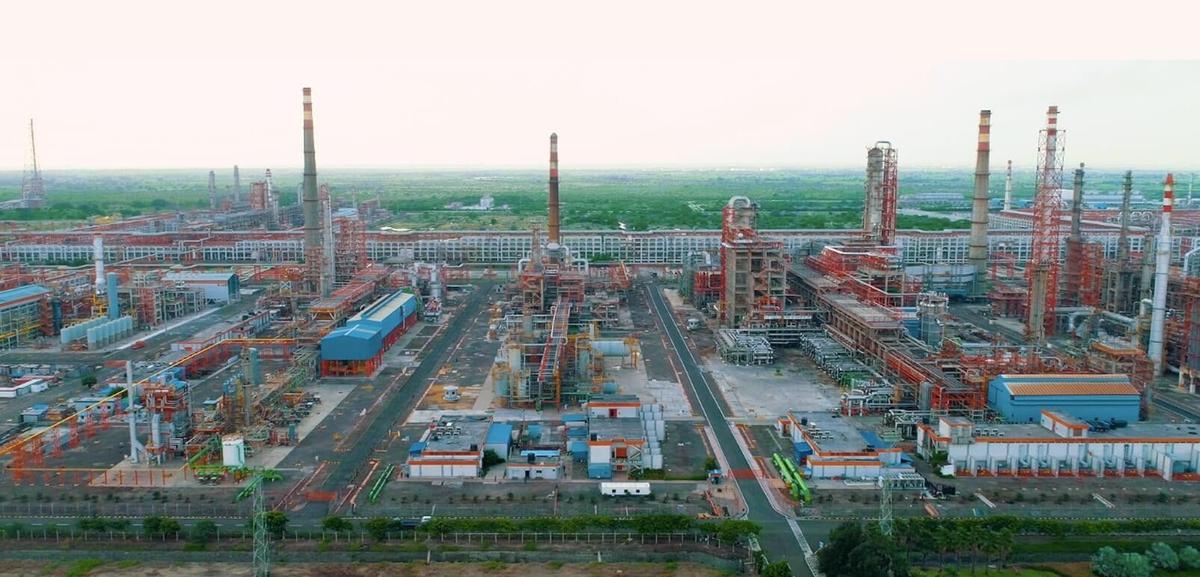
India has firmly opposed the European Union’s latest round of sanctions targeting Russia, which includes naming the Nayara Energy’s Vadinar Refinery in Gujarat. The refinery is part-owned by Rosneft, a major Russian energy firm.


The European Union recently introduced its 18th package of sanctions against Russia over the ongoing war in Ukraine. The new sanctions are among the toughest yet, with a special focus on curbing revenues from Russia’s oil and energy sector.
These measures include:
- An import ban on refined petroleum products made from Russian crude oil
- A reduction in the oil price cap
- Sanctions on 105 vessels believed to be part of Russia’s “shadow fleet”
- The public naming of Nayara Energy’s Vadinar Refinery as a major Rosneft-linked asset
EU’s foreign policy chief Kaja Kallas described it as “one of the strongest sanctions packages against Russia to date.”
India Responds: No to Double Standards
MEA spokesperson Randhir Jaiswal responded to the announcement, stating, “India is a responsible actor and remains committed to its legal obligations.” He reaffirmed that the country’s policy is centered around securing affordable and reliable energy for its people.
India emphasized the importance of energy trade in ensuring the welfare of its citizens. The MEA further criticized what it called “double standards” in global energy policies that appear to selectively target specific nations or companies.
“The provision of energy security is of paramount importance to meet the basic needs of our population,” Jaiswal stressed.
Nayara Energy: The Indian Link to Rosneft
Nayara Energy operates the Vadinar Refinery in Gujarat, one of India’s largest private sector refineries. Russian oil giant Rosneft holds a significant stake in the company, making it a focal point of the EU’s sanctions.
The refinery has continued importing Russian crude despite Western sanctions, under India’s strategic decision to diversify and stabilize its energy sources. This approach is aligned with India’s national interest, not geopolitical alignments.
India’s Stand on Global Sanctions
This is not the first time India has distanced itself from unilateral sanctions, especially those that affect its energy needs. India believes that only sanctions imposed through the United Nations Security Council hold international legitimacy.
India has consistently advocated for a rules-based global order that respects sovereignty and recognizes the right of developing nations to secure their energy future.
Strategic Independence in Energy Policy
As a rapidly developing economy, India requires secure, stable, and affordable energy. The government has repeatedly emphasized that its partnerships and trade decisions in the energy sector are based on national interest, not global pressure.
Despite criticism, India has ramped up its Russian crude imports, which are often offered at discounted rates. This has helped stabilize fuel prices domestically, supporting inflation control and economic recovery post-COVID.
Conclusion: A Diplomatic Tightrope
India’s response to the EU sanctions illustrates the complex diplomatic balancing act it performs. While maintaining ties with Western powers, it has chosen to prioritize strategic autonomy and national energy security.
With rising global tensions, India is likely to continue this policy — pushing back against measures that undermine its sovereign decision-making while staying engaged on international platforms for dialogue and peace.