
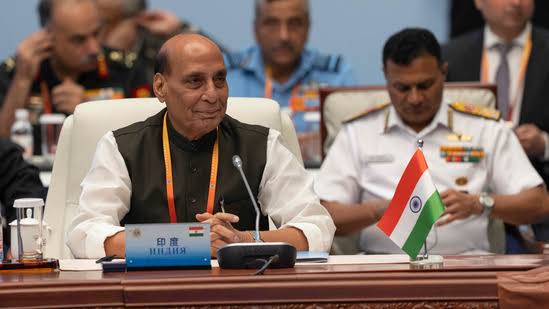
India Walks Out of SCO Statement Over Kashmir Terror
The Ministry of External Affairs (MEA) confirmed the document ignored India’s key concerns. It excluded the Pahalgam attack, where 26 civilians died in April 2025.
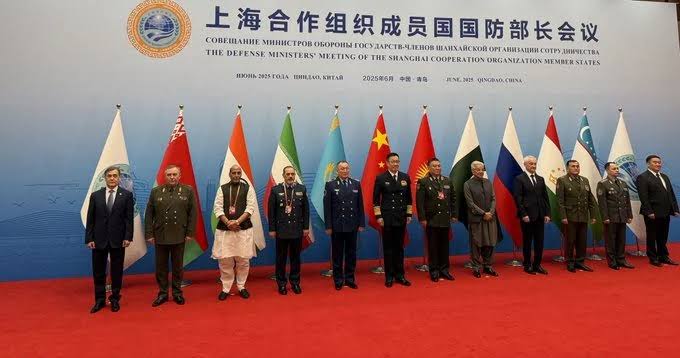

MEA spokesperson Randhir Jaiswal said India’s suggested inputs were blocked by “one particular country.” Media reports indicate that Pakistan influenced the decision.
The joint text mentioned militant activity in Balochistan but omitted the Kashmir attack. Indian officials called it a biased and pro-Pakistan statement. They strongly objected to the exclusion, especially since India blames Pakistan-based groups for the attack.
India’s Tough Stand on Terrorism
During the SCO defence ministers’ meet, Defence Minister Rajnath Singh urged action against cross-border terror. He stated:
“Some countries use terrorism as state policy and shelter terrorists. The SCO must have the courage to name and shame such nations.”
India’s position highlights its shift towards assertive diplomacy. It is now more vocal in demanding recognition of its security concerns on global platforms.
SCO and Regional Tensions
The SCO was formed in 2001 by China, Russia, and four Central Asian countries to reduce Western influence. India and Pakistan joined in 2017.
Relations between the two nuclear-armed neighbours have worsened. The Pahalgam attack in April escalated tensions. India launched airstrikes on what it called terror camps in Pakistan. Pakistan retaliated using drones and missile fire.
On May 10, a ceasefire was announced by the US. However, India denied that any foreign power mediated the truce.
What This Means for the SCO
India’s refusal to sign the joint statement shows cracks in SCO unity. It raises doubts about the group’s ability to act on its anti-terror goals.
India may raise this issue again at the SCO Leaders’ Summit later this year. It could push for a new counter-terrorism framework that respects its strategic priorities.
Conclusion
This episode underlines India’s evolving foreign policy. It is moving from quiet diplomacy to direct challenges against perceived biases.
As India seeks a larger role in global and regional security, it also demands that platforms like the SCO respond more sensitively to its security needs.