
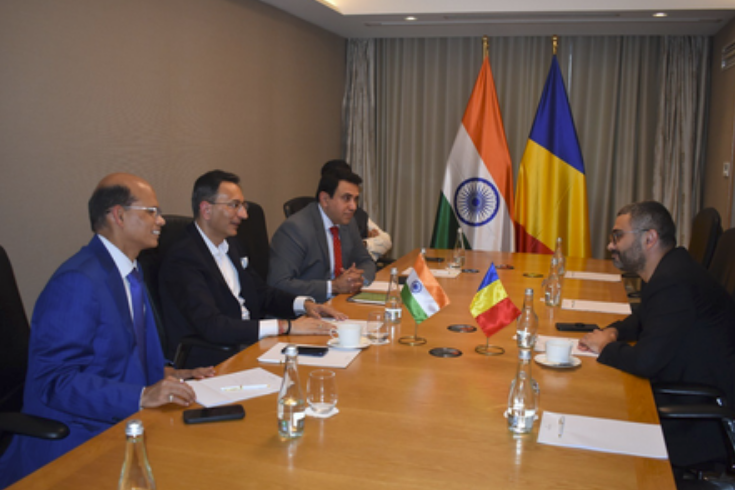


On arrival, Shri Prasada was formally received by senior Romanian officials. The Indian delegation held detailed discussions with Romania’s Minister of Labour, Family, Youth and Social Solidarity, H.E. Mr. Petre-Florin Manole, focusing on creating safe, orderly and regular channels for skilled labour mobility. Both sides acknowledged Romania’s demand for roughly 100,000 non-EU workers annually and committed to crafting a mutually beneficial route for about 30,000 Indian professionals aligned with Romania’s sectoral needs.
Education, Training and Mutual Recognition
The ministers placed strong emphasis on people-to-people ties, agreeing to expand cooperation in higher education, research, vocational training and cultural exchanges. Officials were tasked to explore mutual recognition of qualifications, develop standardized employment contracts, and design language and vocational training modules to ready Indian candidates for Romanian labour market requirements.
“We see a clear opportunity to match India’s skilled workforce with Romania’s labour market needs,” Shri Prasada said, underlining India’s demographic advantage, rapid growth in technology and manufacturing, and rising investments in frontier sectors. He noted that deeper India–EU cooperation will be essential in the evolving geoeconomic landscape.
Fast-Track Processes and Employer Verification
The two sides agreed to pilot fast-track processing mechanisms for employers verified by both governments, while ensuring worker protection and employer accountability. Discussions included employer obligations, social security portability and the exploration of a Totalization (social security) Agreement to guarantee social protection for migrant workers.
Strengthening Trade, Technology and Institutional Links
Beyond labour mobility, the JCEC meeting reaffirmed commitments to deepen trade, technology collaboration and joint research. Officials agreed to activate enablers across four pillars skills mobility, knowledge exchange, business engagement and institutional frameworks to make the partnership more integrated and results-driven.
Mutual Benefits and Strategic Partnership
Romania’s readiness to open a structured pathway aligns with India’s objective to expand high-quality employment opportunities overseas while supplying skilled talent to European labour markets. For Romania, tapping India’s talent pool addresses immediate labour shortages in sectors such as healthcare, IT, manufacturing and specialised services.
Both governments instructed their teams to finalize operational details, including recruitment protocols, training curricula, language certification, and timelines for implementation. Officials will also examine mechanisms for pre-departure skill verification and post-arrival integration support.
Next Steps
Concrete steps will include negotiating memoranda of cooperation for skills mobility, piloting recruitment drives with verified employers, and initiating academic and R&D linkages. The commitment to explore a Totalization agreement signals a long-term approach to social security coordination for migrant workers.