
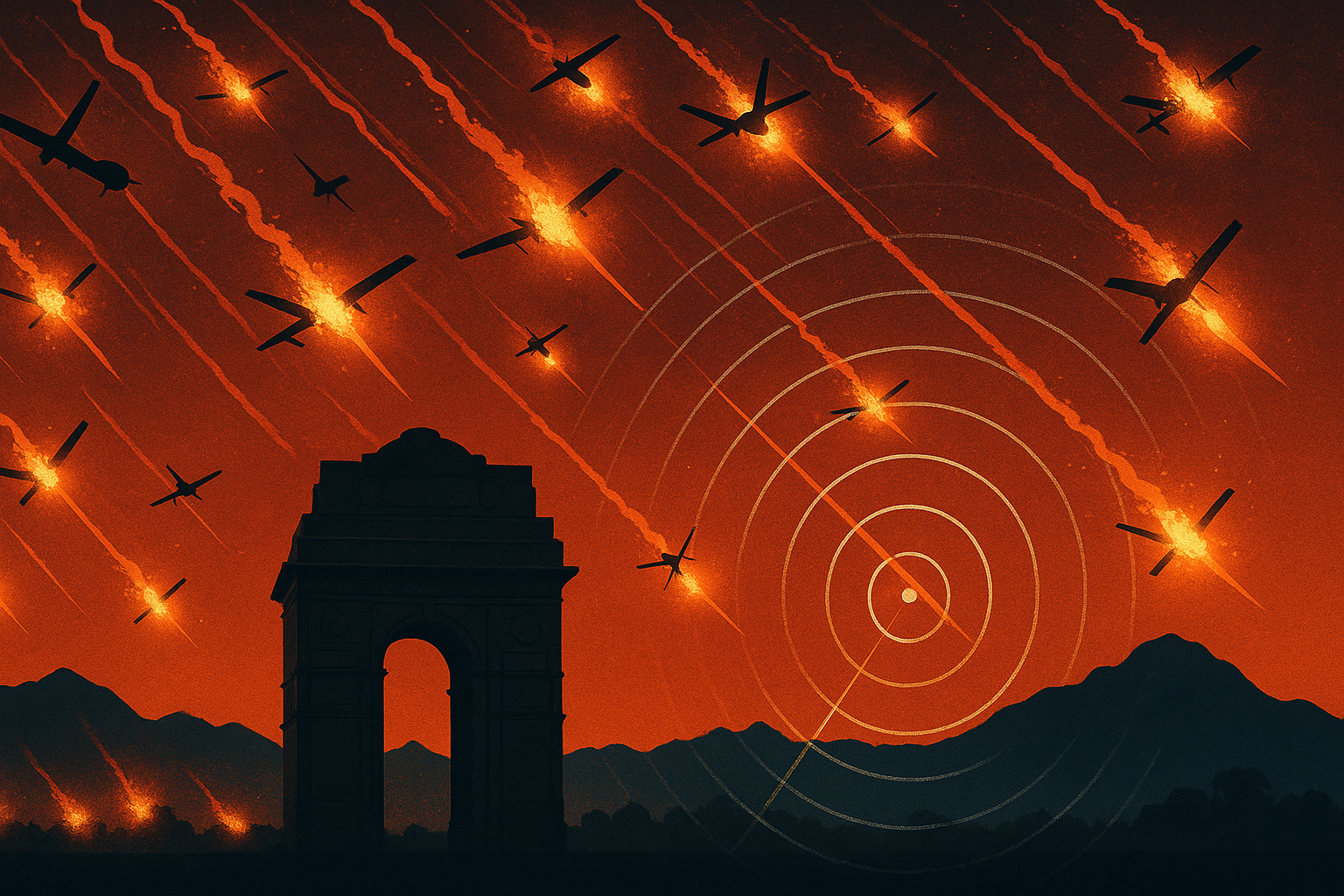
The Future of War or Just Overhyped?
Battlefields are no longer defined by tanks and trenches. They’re now ruled by drones—unmanned aerial vehicles that buzz in and strike without warning.
The MQ-9 Reaper from the US, Turkey’s Bayraktar TB2, China’s Wing Loong II, and Russia’s Orion have become symbols of military modernization. These machines have shaped conflicts from Libya to Ukraine.
But over Indian skies, the myth of drone supremacy shattered in a matter of hours.
Operation Sindoor: Where Drone Warfare Crashed
During a hostile engagement initiated by Pakistan, Chinese and Turkish drones were deployed in Indian airspace. Their purpose: exploit air defense gaps and gain early ground.
Instead, they faced Akashteer—India’s homegrown radar-integrated air defense system.
In what is now being referred to as Operation Sindoor, over 300 drones were detected, tracked, and neutralized. None crossed into Indian territory. None hit a target.
It was a strategic message written not with press releases—but with precision.
What is Akashteer?
Developed by Bharat Heavy Electricals Limited (BHEL), Akashteer is designed to create a seamless network between Indian Army and Air Force radar systems. It automates airspace monitoring and threat elimination—allowing rapid engagement of drones and even smaller loitering munitions.
The system works on artificial intelligence and auto-target acquisition. Unlike manually triggered responses, Akashteer reacts in real-time, drastically reducing response lag.
While the system is not yet globally showcased like the Iron Dome or Patriot system, defense insiders confirm that its performance during Operation Sindoor has made global defense players take note.
Drone Sellers on the Defensive
Turkey had positioned the Bayraktar TB2 as the crown jewel of its drone diplomacy. President Erdoğan personally promoted it as a protector of Muslim nations and a rival to Western systems.
China’s Wing Loong II, often sold as a budget-friendly Reaper alternative, gained popularity in several African and Asian nations looking to cut costs on military hardware.

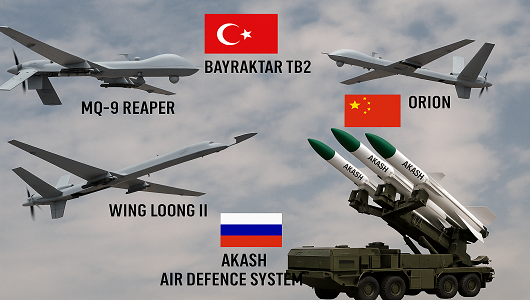
But after the events in India, both platforms are under scrutiny.
Without needing to launch a single offensive drone, India made both systems look fragile and beatable. According to defense market observers, some nations are now re-evaluating or delaying their drone procurement plans involving Turkey and China.
India’s Rise in the Global Defense Map
The Akashteer success is more than a tactical win—it’s a signal of India’s transition from defense importer to credible defense innovator.
India now has a working air defense system that:
-
Neutralizes swarm drone threats
-
Operates autonomously
-
Integrates across services
-
Can potentially be exported to allied nations
This ties directly into India’s broader Atmanirbhar Bharat push toward defense self-reliance.
For more, see:
📝 India’s Road to Defense Autonomy – Akashteer & Beyond
Final Lesson: Shields Are the New Swords
Drone supremacy is not absolute. Operation Sindoor proves that an advanced air defense system can make even high-profile UAVs seem like overpriced flying targets.
India did not just defend its skies—it exposed the illusion of invincibility around foreign drones. More importantly, it offered a new blueprint for middle powers to counter next-gen warfare.
As the world rethinks drone strategy, India’s Akashteer stands tall—not just as a missile system, but as a symbol of strategic shift in global power balance.
India’s Emerging Role in Global Defense
This is more than just a battlefield win. It’s a symbol of self-reliance, a showcase of India’s technological maturity, and a loud declaration that India is no longer a passive buyer in global defense dynamics.
It manufactures. It innovates. And now, it defends—with unmatched precision.
As global powers watch, one thing is certain: India has arrived.