
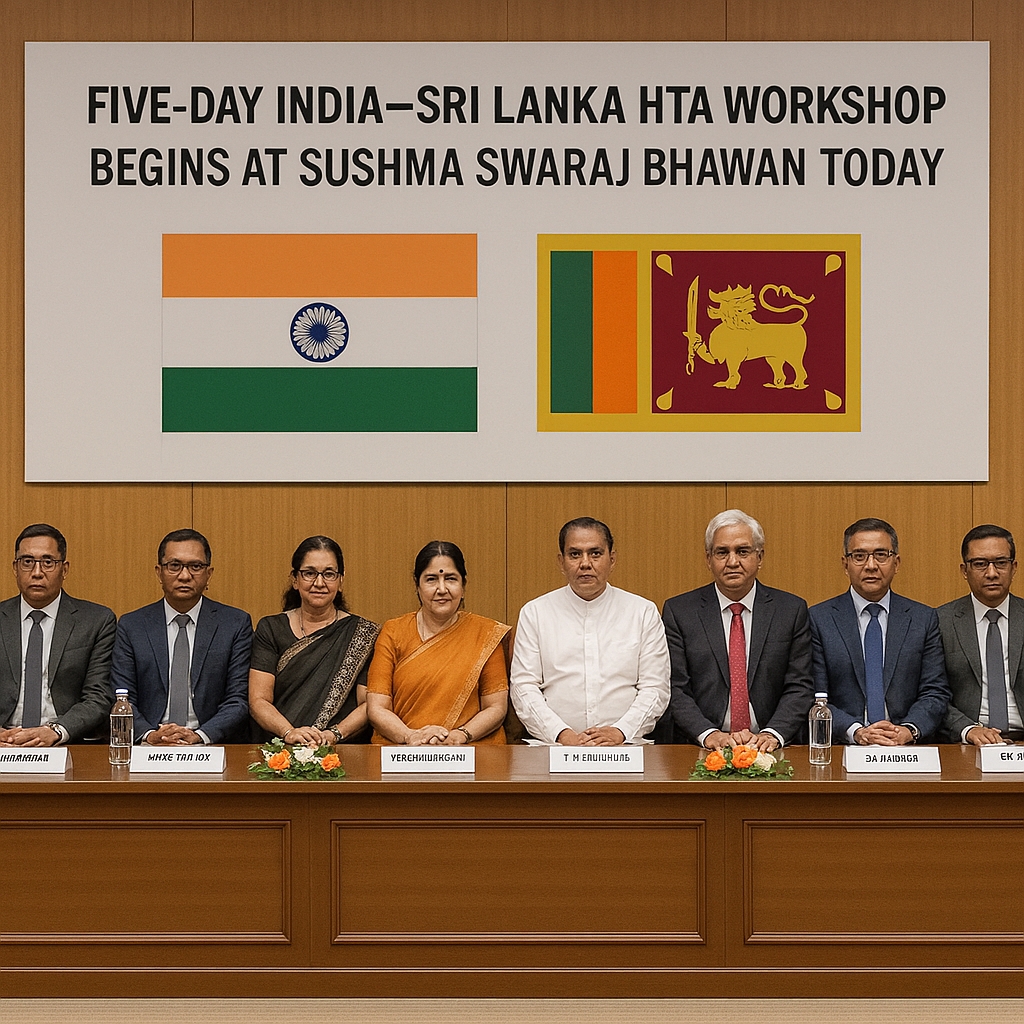
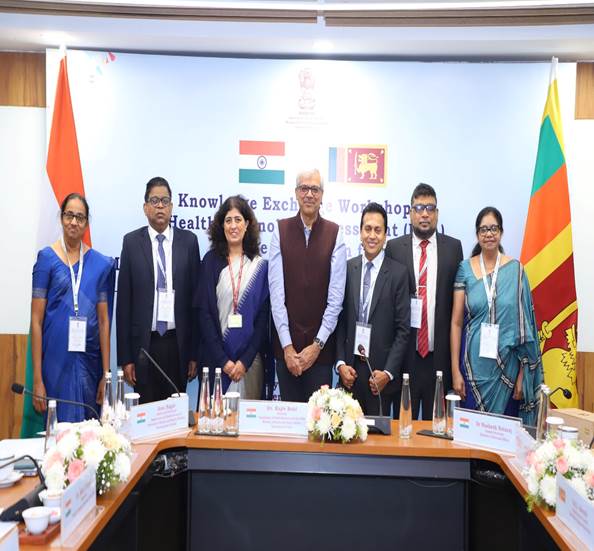

Health Technology Assessment is increasingly recognised as a critical tool for evaluating the clinical effectiveness, cost efficiency, and broader impact of healthcare technologies. By adopting HTA-driven policy decisions, governments can ensure better allocation of limited healthcare resources while improving patient outcomes.
The five-day workshop is designed as a structured knowledge-sharing platform, covering institutional frameworks, governance models, HTA methodologies, pricing mechanisms, and procurement-linked decision-making. Officials said the discussions would help Sri Lanka build sustainable systems suited to its national healthcare priorities.
India’s Commitment to Regional Health Diplomacy
Addressing the inaugural session, Dr. Rajiv Bahl, Secretary of the Department of Health Research and Director General of the Indian Council of Medical Research (ICMR), described the workshop as a strategic milestone in bilateral healthcare diplomacy. He highlighted India’s experience in integrating HTA into national health planning and reaffirmed New Delhi’s commitment to supporting neighbouring countries in strengthening their public health systems.
Dr. Bahl noted that India’s HTA journey has demonstrated how scientific evidence and economic evaluation can guide policy choices, especially in resource-constrained settings. He emphasised that regional collaboration in healthcare is essential to address shared challenges such as rising treatment costs, ageing populations, and the growing burden of non-communicable diseases.
Role of HTAIn in India’s Health System
Health Technology Assessment India (HTAIn), an attached office of the DHR, has played a central role in shaping India’s evidence-based healthcare policies. Over the years, HTAIn has supported decision-making on drug pricing, medical devices, diagnostics, and large-scale public health interventions.
Smt. Anu Nagar, Additional Secretary at the Department of Health Research, highlighted HTAIn’s contributions during the inaugural programme. She expressed confidence that the exchange of technical expertise and practical insights would assist Sri Lanka in building its own institutional HTA capacity while also opening avenues for future collaboration.
Collaborative Learning and Capacity Building
Officials from the Ministry of Health, Government of Sri Lanka, are expected to engage in interactive sessions, case studies, and policy simulations during the workshop. The programme also seeks to identify potential areas of joint research, training, and long-term cooperation between institutions in both countries.
According to organisers, the workshop outcomes could pave the way for sustained engagement through technical assistance, expert exchanges, and collaborative projects. Such cooperation aligns with India’s broader vision of promoting affordable, accessible, and quality healthcare across the region.
Strengthening India–Sri Lanka Health Ties
The HTA workshop comes at a time when India and Sri Lanka are expanding cooperation across multiple sectors, including health, education, and capacity building. Public health experts view the initiative as an example of how knowledge diplomacy can complement traditional development assistance.
By sharing institutional experience and policy tools, India aims to contribute to stronger health systems in neighbouring countries while reinforcing regional resilience against future health challenges.
Looking Ahead
As the workshop progresses over the next few days, both sides are expected to outline a strategic roadmap for institutionalising HTA practices in Sri Lanka. Observers say the initiative could serve as a model for similar collaborations with other countries in the region.
The New Delhi workshop underscores India’s evolving role as a hub for public health expertise and policy innovation, reinforcing its commitment to cooperative and sustainable healthcare development in South Asia.