

The Ministry of Ayush has implemented a Central Sector Scheme for the Promotion of International Cooperation in Ayush, known as the IC Scheme. Under this initiative, financial and institutional support is extended to Indian Ayush drug manufacturers and service providers to expand exports and international market access.
The scheme also focuses on facilitating international promotion, academic collaboration, research development and global recognition of Ayush systems. It supports training programmes, workshops and symposiums abroad to enhance awareness and acceptance of traditional Indian medicine.
WHO-Global Traditional Medicine Centre in Jamnagar
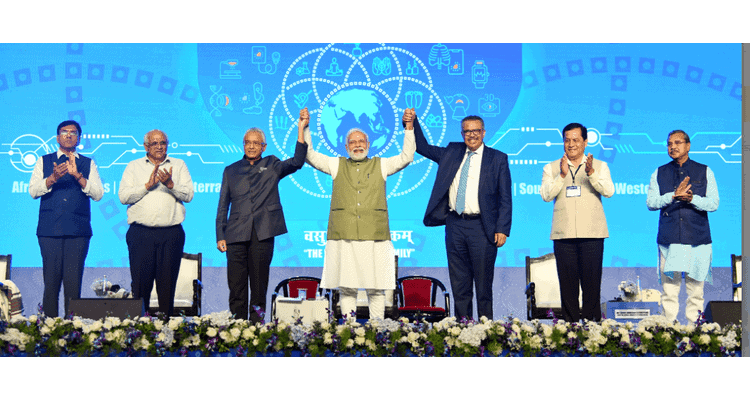
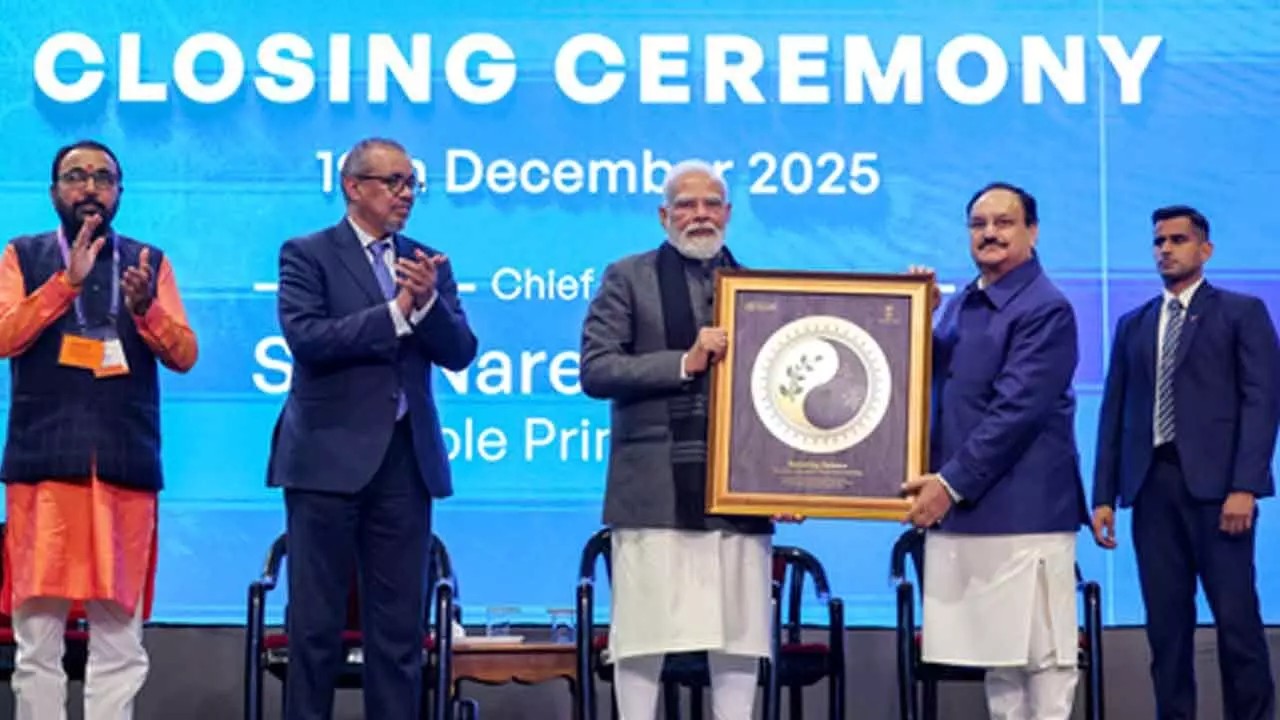
A major milestone in India’s traditional medicine diplomacy is the establishment of the WHO-Global Traditional Medicine Centre in Jamnagar, Gujarat. The centre was created following an agreement between the Ministry of Ayush and the World Health Organization.
The centre functions as a global knowledge hub for evidence-based traditional, complementary and integrative medicine. It supports WHO’s global traditional medicine strategy and assists countries in developing policies to integrate traditional medicine into universal healthcare systems.
Setting Global Standards and Benchmarks
The Jamnagar centre plays a critical role in developing international norms, standards and guidelines for traditional medicine. It focuses on ensuring quality, safety, efficacy and rational use of traditional therapies worldwide.
As part of earlier collaborations, benchmark documents for the training and practice of Ayurveda and Unani were published in 2022. WHO has also released official terminology documents for Ayurveda, Unani and Siddha to support standardised global usage.
Traditional Medicine in Global Health Classification
In May 2025, the Ministry of Ayush and WHO signed a landmark agreement to develop traditional medicine intervention categories under the International Classification of Health Interventions. This initiative focuses on Ayurveda, Siddha and Unani systems.
The move is expected to integrate traditional medicine into global health classification systems, bringing scientific structure and international credibility to India’s traditional healthcare knowledge.
MoUs, Academic Chairs and Global Outreach
The Ministry of Ayush has signed 25 country-to-country Memorandums of Understanding for cooperation in traditional medicine and homoeopathy. Additionally, 15 MoUs have been signed with international institutions to establish Ayush Academic Chairs abroad.
Over 50 institute-level collaborations have been facilitated for joint research and academic exchange. The ministry has also supported the establishment of 43 Ayush Information Cells across 39 countries to promote Indian traditional medicine globally.
Scholarships and Knowledge Exchange
To strengthen people-to-people ties, the Ministry offers scholarships to foreign nationals for pursuing Ayush courses in recognised Indian institutions under the International Ayush Fellowship and Scholarship Programme.
These initiatives aim to create a global community of trained professionals who can promote evidence-based traditional medicine practices worldwide.