
Strong Growth in Exports
According to provisional data from the Directorate General of Commercial Intelligence and Statistics (DGCIS), textile and apparel (T&A) exports, including handicrafts, reached USD 37.75 billion in 2024–25 — a 5.2% rise over the previous year. In the first quarter of 2025–26 alone, exports touched USD 9.32 billion.
India currently ranks as the sixth-largest textile exporter globally, with a strong presence in over 220 countries despite tariff disadvantages in some markets compared to competitors such as China, Bangladesh, and Vietnam.
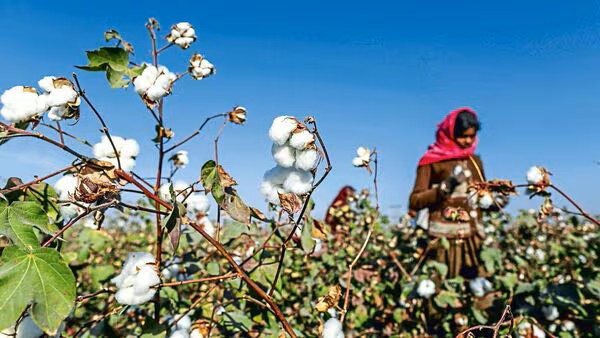

A key driver of the export plan is the Mission for Cotton Productivity, structured into three mini-missions: Kapas Kranti for productivity and sustainability, Kapas Kanti for quality enhancement, and Navya Fibre to promote allied natural fibres. The initiative aims to increase yields, promote extra-long staple cotton, and ensure a steady supply of premium raw material for the textile industry.
Implemented in partnership with the Department of Agricultural Research and Education (DARE), this mission is expected to improve farmer incomes, integrate modern science into cotton farming, and strengthen India’s traditional textile base.
Policy Support and Trade Agreements
The government is leveraging trade agreements to give Indian textiles an edge in global markets. India has signed 15 Free Trade Agreements (FTAs), including the recent Comprehensive Economic and Trade Agreement (CETA) with the UK. These agreements aim to reduce tariffs, streamline trade procedures, and open new export destinations.
Additionally, schemes such as the Rebate of State and Central Taxes and Levies (RoSCTL) for apparel and made-ups, and the Remission of Duties and Taxes on Exported Products (RoDTEP) for other goods, ensure exporters operate under a zero-rated tax regime. Export Promotion Councils also receive government support to showcase Indian textiles at global exhibitions and trade fairs.
Major Infrastructure and Incentive Programs
The ₹9 lakh crore target is further supported by flagship initiatives:
- PM MITRA Parks Scheme – Creation of integrated, world-class textile manufacturing hubs.
- Production Linked Incentive (PLI) Scheme – Focused on MMF fabrics, apparel, and technical textiles to drive large-scale manufacturing.
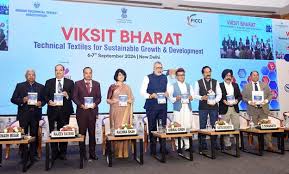
- National Technical Textiles Mission – Promoting R&D, market development, and innovation in technical textiles.
- SAMARTH – Skill development for a demand-driven, placement-oriented textile workforce.
- Silk Samagra-2 – Holistic development of the silk value chain.
- Handloom and Handicraft Programs – Strengthening artisan clusters and promoting traditional crafts globally.
Global Competitiveness and Outlook
Despite global economic uncertainties, India’s textile industry continues to expand, leveraging its vast natural fibre resources — cotton, silk, wool, jute — and a complete manufacturing value chain from raw fibre to finished garments. The sector is poised to play a pivotal role in India’s export-led growth strategy, with policymakers confident that the 2030 target is within reach.
The announcement was made by Minister of State for Textiles, Shri Pabitra Margherita, in a written reply to the Lok Sabha.