India’s First Step Toward Income Mapping
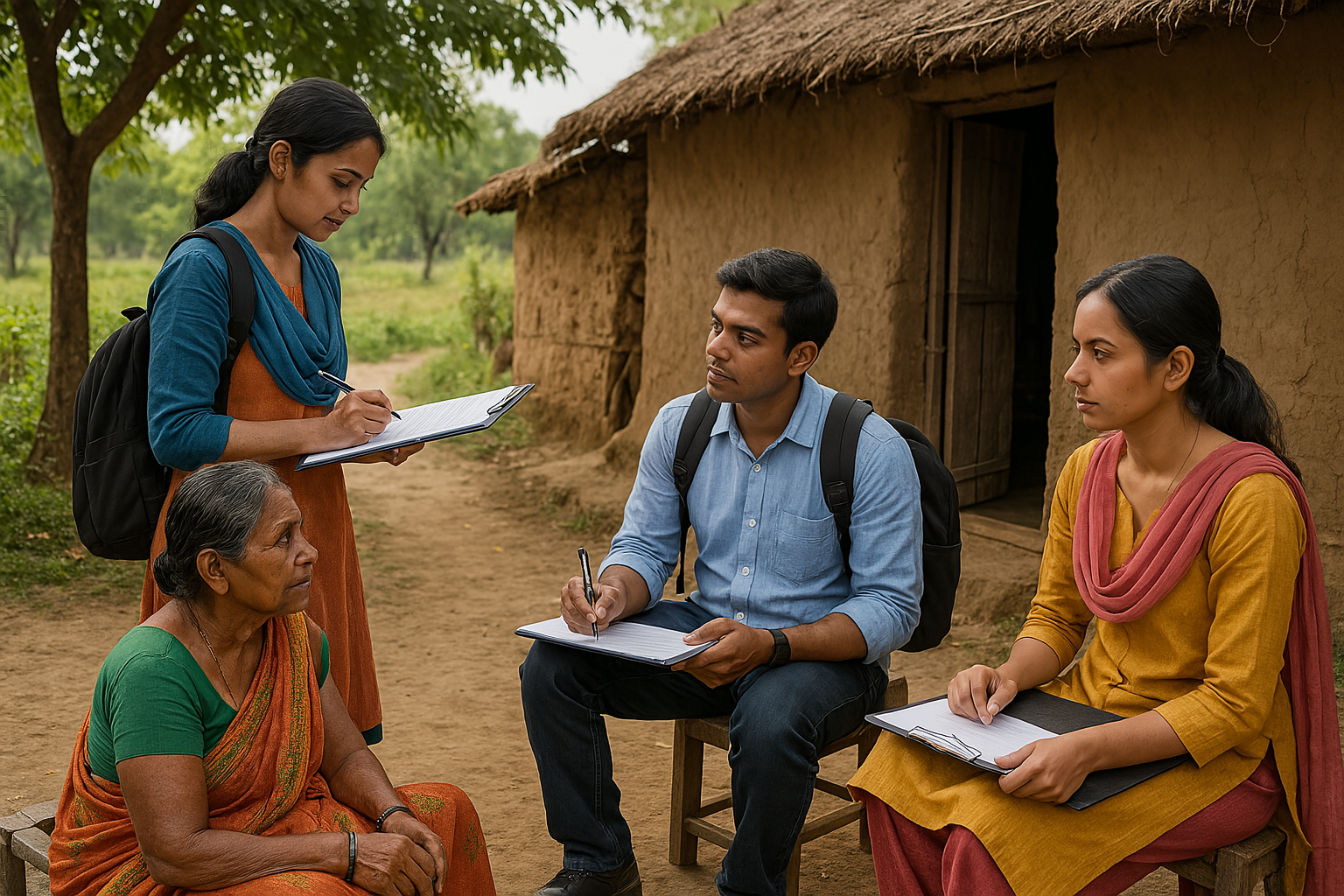
In a landmark initiative, the Ministry of Statistics and Programme Implementation (MoSPI) is preparing to launch India’s first nationwide Household Income Survey in 2026. This will be conducted by the National Sample Survey Office (NSSO)—a body globally respected for its large-scale data collection work since 1950.
Although India has long captured consumer spending and economic activities, comprehensive income data has remained a major gap. With this survey, the government aims to understand how income is distributed across Indian households, a key input for evidence-based policymaking.
 Why This Survey Is a Big Deal
So far, India’s economic landscape has been described using indicators like GDP, consumption, and employment. However, actual household income data—who earns how much, and from where—has been missing. Attempts were made in past decades, such as in the 9th (1955), 14th (1958), 19th (1964), and 24th (1969) NSS rounds, but the data either wasn’t reliable or wasn’t published.
This new survey aims to correct that by providing a clear, credible picture of income inequality, social mobility, and the effect of technological shifts on wages.
Learning from Global Best Practices
To ensure quality and accuracy, the government has formed a Technical Expert Group (TEG) chaired by Dr. Surjit S. Bhalla, former Executive Director of India at the IMF. This panel includes:
-
Prof. Sonalde Desai, NCAER
-
Prof. Praveen Jha, JNU
-
Prof. Ram Singh, Delhi School of Economics
-
Dr. Tirthankar Patnaik, Chief Economist, NSE
-
Dr. Rajesh Shukla, CEO, PRICE
Together, they will define methods, survey design, data tools, sampling techniques, and international benchmarking. The survey will also consider how technology adoption affects household incomes, a subject of growing relevance in the digital age.
MoSPI’s Recent Reforms in Data Collection
This announcement comes in line with several recent NSS initiatives:
-
Annual surveys on the unincorporated sector
-
Studies on private capital expenditure
-
Tourism and domestic travel data collection
All these aim to strengthen India’s macro-economic insights. Adding household income data will now complete the picture by showing what reaches Indian families’ wallets.
Challenges and How India Plans to Overcome Them
Collecting accurate income data is tough. Previous surveys struggled with underreporting and inconsistencies. Income estimates often appeared lower than reported consumption, suggesting data gaps.
However, MoSPI aims to fix this by:
-
Using better survey instruments
-
Enhancing enumerator training
-
Learning from countries like USA, Canada, Australia, and South Africa
The TEG will guide the end-to-end survey process, ensuring results are both credible and usable for public policy.
What This Means for India’s Future
This survey will enable better policy targeting, from welfare schemes to tax reforms. With credible data on income disparities and wage trends, India will move toward more inclusive economic planning.
Moreover, it aligns with global standards, ensuring India’s economic data is on par with developed economies.