

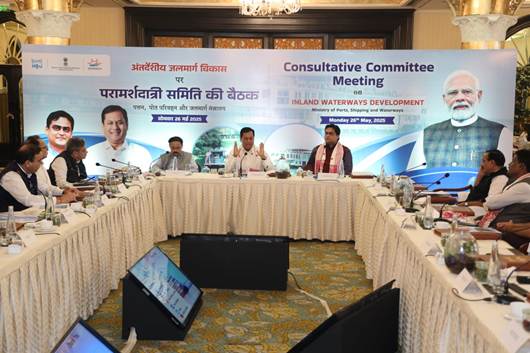
India is set to witness a major transformation in its inland water transport network with the ambitious plan to make 47 new National Waterways operational by 2027, announced Union Minister of Ports, Shipping & Waterways, Shri Sarbananda Sonowal. Speaking at a Consultative Committee meeting in Mumbai, Sonowal revealed that cargo volume carried through inland waterways is expected to surge to 156 million tonnes per annum by the end of the financial year 2026, a significant step toward the country’s goal of becoming a global maritime powerhouse.

Currently spanning 11 states, the inland waterways network is poised to expand to 23 states and 4 Union Territories within the next two years. This expansion will unlock new economic opportunities, especially in remote and underserved regions, and promises to strengthen connectivity across the nation. The Inland Waterways Authority of India (IWAI) is already conducting extensive surveys to improve navigability, reflecting the government’s commitment to making waterways a viable and sustainable mode of transport.
Sonowal highlighted that under the visionary leadership of Prime Minister Narendra Modi, policy initiatives like the National Waterways Act, 2016, and the Inland Vessels Act, 2021, alongside projects such as Jal Marg Vikas and Arth Ganga, are driving this transformation. He emphasized that these efforts are more than just policies—they are the foundation of a greener, more efficient, and inclusive transport future.
A special focus is being placed on the Northeast, where a ₹5,000 crore roadmap for inland waterways development will help boost regional trade and connectivity over the next five years. Key projects include terminals on the Brahmaputra and Barak rivers and improved infrastructure such as ship repair facilities and alternative roads, all aimed at supporting local economies and providing much-needed employment opportunities.
The meeting also showcased plans for the dedicated development of National Waterway 1 along the Ganga, enhancing the capacity to handle larger vessels and improve cargo movement through upgraded terminals. These projects will not only ease pressure on roads and railways but also reduce environmental pollution, underscoring the government’s commitment to sustainable growth.
Sonowal also stressed the importance of eco-friendly innovations, mentioning the procurement of electric and hydrogen-powered vessels as part of the Harit Nauka initiative. The government’s focus on green transport solutions reflects a deep concern for the environment and the communities that depend on these waterways.
River cruise tourism is another growing area, with the number of operational cruise circuits and luxury vessels increasing significantly in recent years. The government’s plans to develop world-class terminals and new cruise routes are expected to bring economic benefits to many local communities, fostering cultural exchange and sustainable tourism.
The meeting was attended by several Members of Parliament who expressed strong support for increasing budget allocations to further accelerate the growth of inland waterways. This collective enthusiasm shows a shared vision to harness India’s vast river networks for inclusive economic development, regional connectivity, and environmental sustainability.
In sum, the government’s focus on expanding and modernizing inland waterways signals a compassionate and forward-looking approach to transport and infrastructure, promising to bring new hope and opportunities to many parts of the country often overlooked by traditional transport networks.