
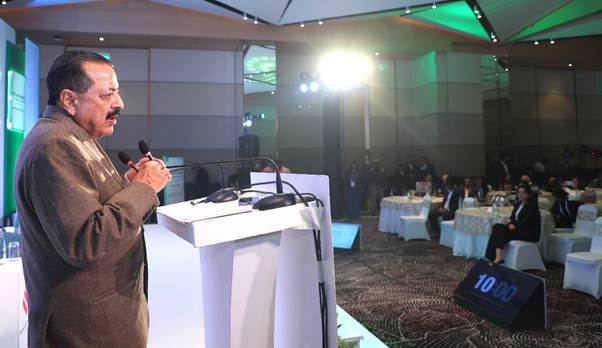


Dr Singh stressed that reducing reliance on fossil fuel imports strengthens India’s self-reliance while preparing the nation for a global energy shift. “Persisting with outdated energy models is like clinging to obsolete technology. Tomorrow, even spare parts may not be available,” he remarked.
He highlighted that traditional energy exporters are diversifying their portfolios, making it imperative for India to embrace a modern, hybrid energy strategy that combines renewable, nuclear, and emerging technologies.
India as a Global Trendsetter
The Minister noted that India has transitioned from a passive participant to a global leader in climate action, clean energy, and advanced technology. “Other nations now look to India for direction,” he said, citing examples from space exploration and biotechnology where Indian innovation has global impact.
Nuclear Energy’s Critical Role
Dr Singh underlined India’s commitment to achieving 100 GW of nuclear energy capacity by 2047 as part of its broader clean energy goals. While renewables form a significant portion of India’s energy mix, sectors like data centres, AI, and advanced computing require stable 24×7 power, where nuclear energy is indispensable.
“The future lies in a hybrid energy model, where each source is used where it is most cost-effective and efficient,” he said.
Public-Private Synergy and Reforms
Highlighting government reforms, Dr Singh applauded initiatives that opened strategic sectors like nuclear energy and space to private participation. “Public-private collaboration is essential for scale, speed, and sustainability,” he said, calling for integrated action and trust between stakeholders.
Drawing parallels with technology, he noted that just as AI is evolving into an ‘AI plus Human Intelligence’ model, India’s energy strategy will mature into a coordinated mix of renewables, nuclear, hydrogen, and other emerging solutions.
Clean Energy: A Way of Life
Concluding his remarks, Dr Singh emphasized that clean energy is no longer a policy debate but a way of life. “While the transition presents challenges, India is firmly on the right path under PM Narendra Modi’s leadership. We will adapt, innovate, and lead the world in sustainable energy,” he said.
India’s proactive approach signals its readiness to set benchmarks in energy transition, combining economic growth with environmental responsibility and strategic independence.