
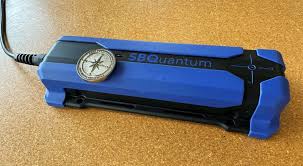
India Unveils Portable Quantum Magnetometer
This innovation, based on Raman-Driven Spin Noise Spectroscopy (RDSNS), could transform everything from medical imaging to space exploration. And it all happens without the bulky shielding or quiet lab conditions previously required.
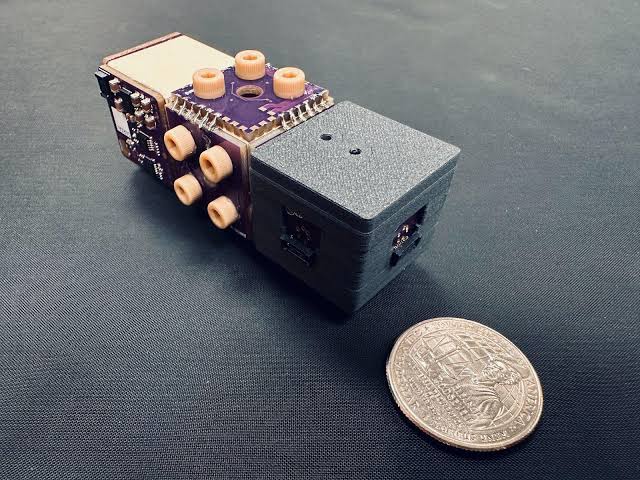

Magnetometers are devices that measure magnetic fields—those invisible forces that power compasses, shape planetary weather, and influence brain activity. They’re critical in navigation, space research, medicine, and even mining.
Until now, the most sensitive magnetometers—like Spin Exchange Relaxation Free (SERF) magnetometers—required heavy shielding and pristine lab environments to function properly. This limited their portability and practical use.
The RDSNS Breakthrough
Enter RDSNS. RRI researchers have designed a fully optical setup that uses laser light and Rubidium atoms to detect magnetic fields. Here’s the genius part—it listens to the quantum ‘jitters’ or spin noise of atoms and interprets changes in the noise to measure magnetic fields.
This technique requires no shielding. It works in real-world environments—indoors, outdoors, even in noisy settings like hospitals or factories.
What Makes It Different?
“We’ve combined high sensitivity with a large dynamic range—a rare combination,” said Sayari, the study’s lead author. Most magnetometers excel at either low-field or high-field detection, but not both. RDSNS handles both without losing accuracy.
That’s a game changer. Their compact, optical-only setup achieved a sensitivity of 30 picotesla/√Hz at 100 Hz, comparable to lab-based systems. But it fits into a portable form factor, making it ideal for deployment anywhere.
Built for the Real World
Unlike traditional magnetometers, this quantum magnetometer is:
- Compact and portable
- Fully optical—no moving parts
- Immune to stray radio-frequency (RF) noise
- Unaffected by mechanical vibrations
- Usable in fluctuating magnetic fields
Whether you’re exploring magnetic anomalies underground or scanning brain activity in a hospital, this sensor works flawlessly.
How Does RDSNS Work?
The technique uses a laser to probe Rubidium atoms. Atoms behave like tiny bar magnets. Their spins jitter due to quantum uncertainty. This “spin noise” carries information. When a magnetic field is applied, the noise pattern shifts. Researchers then analyze the shift to deduce the field’s strength.
This process is non-invasive and contactless. The atoms remain undisturbed, making the method both clean and precise.
Applications Across Industries
The implications are wide-ranging. Here’s how this technology could be used:
- Medical imaging: Replace bulky and loud MRI machines with compact, silent brain scanners.
- Space exploration: Equip satellites with shield-free magnetometers to study planetary fields.
- Geophysics: Help prospectors find underground minerals by measuring magnetic anomalies.
- Military navigation: Enable precision location tracking where GPS fails.
Made in India, for the World
Dr. Saptarishi Chaudhuri, head of RRI’s Quantum Mixtures (QuMIX) lab, is proud of the team’s work. “We’re using atoms—nature’s quantum building blocks—to design next-generation sensors,” he said. The project is part of India’s National Quantum Mission.
It reflects India’s growing ambitions in the global quantum technology race. This invention could easily place India among the world leaders in quantum sensing.
The Road Ahead
RRI plans to further improve the device. They aim to use phase-locked lasers to enhance stability. They also plan to integrate squeezed light—a quantum trick that suppresses noise even more.
Long term, the team wants to miniaturize the sensor using MEMS (Micro-Electro-Mechanical Systems) technology. That means chip-sized devices that can fit into wearables, phones, and satellites.
With such innovations, the same quantum sensors could help decode how atoms interact, monitor neurological disorders, and explore deep space.
Published and Peer-Reviewed
The team’s findings were recently published in the IEEE Transactions on Instrumentation and Measurement, a globally recognized journal. This peer-reviewed publication validates the reliability and scientific merit of the work.
It’s not just a lab experiment anymore. It’s a tested, proven method ready for real-world deployment.