
Focus on Handlooms, Craft Villages and MSMEs
The delegation interacted extensively with the Vietnam Association of Craft Villages (VICRAFTS), discussing opportunities for cooperation in handlooms, handicrafts, product development and village-level enterprise models. Vietnamese representatives expressed strong interest in working with Indian institutions to promote traditional crafts while improving export readiness and market access.
These discussions highlighted the shared challenges and opportunities faced by artisan communities in both countries, including skill upgradation, design innovation and integration with global supply chains.
Meetings at Indian Embassy and Diplomatic Outreach
The Indian delegation also called on Shri Tshering Wangchuk Sherpa, Ambassador of India to Vietnam, at the Embassy of India in Hanoi. The meeting focused on strengthening institutional cooperation in silk and textiles and leveraging diplomatic channels to facilitate smoother business-to-business partnerships.
Officials emphasised that diplomatic support will play a crucial role in addressing regulatory issues, promoting joint ventures and enabling long-term collaboration between Indian and Vietnamese enterprises.
Insights from Vietnam’s Silk Ecosystem
A key highlight of the visit was the delegation’s tour of the historic Van Phuc Silk Craft Village in Hanoi. Interactions with local weavers and artisans provided valuable insights into Vietnam’s integrated silk ecosystem, which links weaving, embroidery, design, fashion and direct market access.
Delegation members noted that the Van Phuc model offers important lessons for India, particularly in developing sericulture-linked tourism and strengthening rural livelihoods through heritage-based industries.
Exposure to Modern Technology and Global Exhibitions
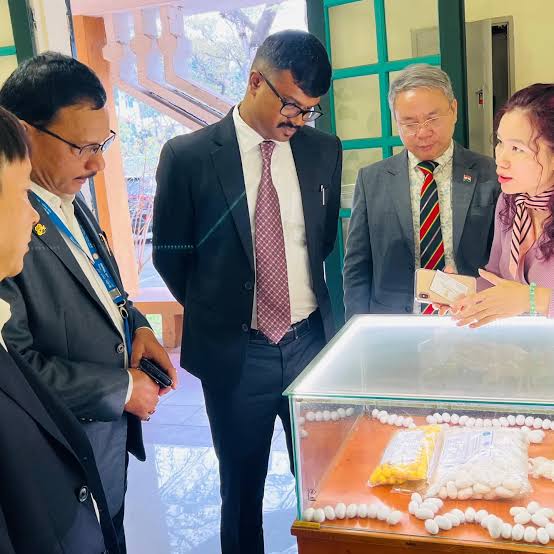
The delegation visited advanced silk processing facilities, including automatic reeling units and mulberry farms, gaining first-hand exposure to modern production techniques. These interactions underscored the scope for technology transfer and joint research initiatives between the two countries.
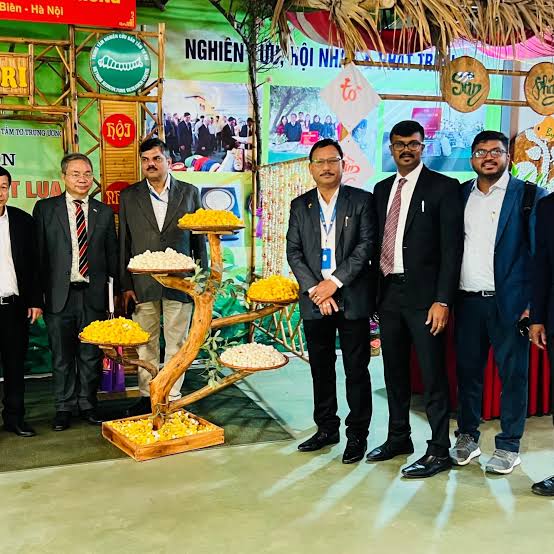
Indian officials and entrepreneurs also participated in major international exhibitions such as the Vietnam International Value Chain Exhibition 2026 and the Vietnam Glorious Spring Fair 2026 at the Vietnam Exhibition Center. The Central Silk Board’s stall, showcasing Indian silk products, attracted strong interest from global buyers and industry representatives.
Expanding Market Linkages and Future Collaboration
In Ho Chi Minh City, the delegation visited traditional silk outlets and engaged with local artisans to study stitching techniques, design trends and heritage fashion products. These interactions opened discussions on product diversification and co-creation for international markets.
According to officials, the visit has laid a strong foundation for joint research and development, technology collaboration, business partnerships and enhanced global market access for Indian silk and textile products.
The Ministry of Textiles believes such international engagements will help Indian producers move up the value chain, improve sustainability and strengthen India’s position as a global textile and silk hub.be