 Shaping AI Education and Workforce Transition
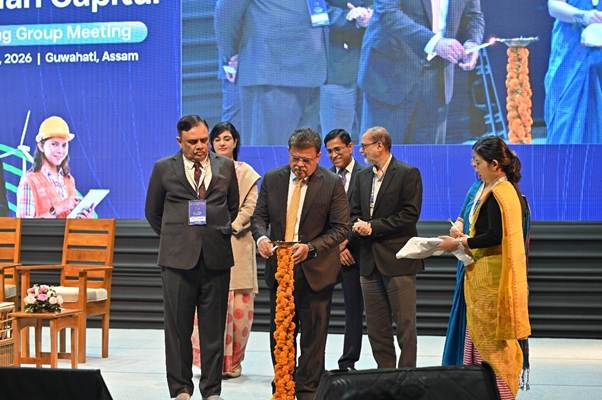
The meeting, chaired by Prof. T. G. Sitharam, Chair of the Human Capital Working Group, serves as a precursor to the India AI Impact Summit 2026, scheduled in New Delhi from February 15–20, 2026. Keynote speakers and panelists highlighted the need to move beyond traditional skilling models, emphasizing lifelong learning, human augmentation, and institutional readiness for an AI-driven economy.
Prof. Devendra Jalihal, Director of IIT Guwahati, welcomed attendees and highlighted the institute’s role in fostering collaboration between academia, industry, and policymakers to build future-ready human capital. Ms. Shikha Dahiya, Joint Director, IndiaAI, MeitY, underscored the Summit’s focus on democratizing AI resources, indigenous model development, and inclusive adoption, particularly for the Global South.
Human-Centric AI and Inclusive Policy
Prof. T. G. Sitharam emphasized the importance of prioritizing people in AI transitions, advocating for ecosystems that blend technical skills with adaptability, critical judgment, and human-centric capabilities. Shri K. S. Gopinath Narayan, Principal Secretary (IT), Government of Assam, highlighted the societal impact of AI, cautioning against automation-driven inequalities and advocating continuous learning, micro-skilling, and AI literacy.
Shri Syedain Abbasi, IAS, Special Chief Secretary, Government of Assam, noted that AI’s evolving autonomy requires indigenous compute capacity and strong public-private collaboration. He stressed differentiated skilling pathways to ensure equitable access and employment continuity in India’s IT and outsourcing sectors.
Keynote and Panel Highlights
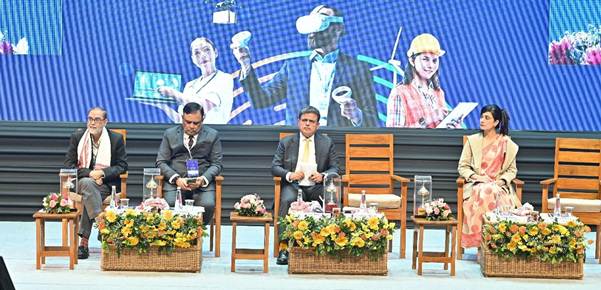
The first day featured a keynote by Prof. Gautam Barua, Former Director, IIT Guwahati, on “Democratizing Competency in the Age of AI,” emphasizing sector-aligned AI systems for human augmentation and worker transition security. Two panel discussions followed: “Gender-Responsive Strategies for the AI Transition,” which addressed automation risks, wage gaps, and algorithmic bias; and “Redefining Education for the Cognitive Age,” focusing on AI-driven pedagogical shifts, personalized learning, and alignment with evolving industry needs.
Looking Ahead
Day two will continue with deliberations on education reform, workforce transition, lifelong learning, and gender-responsive strategies for the AI era. Recommendations from the Guwahati meeting will inform national policy and feed directly into the India AI Impact Summit 2026, reinforcing India’s commitment to building inclusive, human-centric AI ecosystems aligned with Viksit Bharat 2047.