

India’s HADR framework is anchored in a strong institutional structure combining defence, diplomacy and disaster management. Domestically, disaster response is governed by the Disaster Management Act, 2005, under which the National Disaster Management Authority (NDMA) and Ministry of Home Affairs coordinate efforts.
For international operations, the Ministry of External Affairs leads coordination, supported by the Armed Forces, NDMA and the National Disaster Response Force. In October 2024, NDMA issued updated International HADR Guidelines, reinforcing principles of sovereignty, transparency and rapid response.
The framework aligns with the Sendai Framework for Disaster Risk Reduction and integrates modern technologies such as drones and AI-enabled forecasting.
The 2004 Tsunami: A Turning Point
The 2004 Indian Ocean tsunami marked a watershed moment in India’s disaster response history. Nearly 20,900 personnel from the Army, Navy, Air Force and Coast Guard were deployed. Forty naval vessels, 34 aircraft and 42 helicopters took part in massive rescue and relief operations.
More than 28,000 people were rescued on the mainland, while thousands were evacuated from the Andaman and Nicobar Islands. India also extended immediate assistance to Sri Lanka and Maldives, setting the template for future tri-service coordination.
Major Domestic Operations
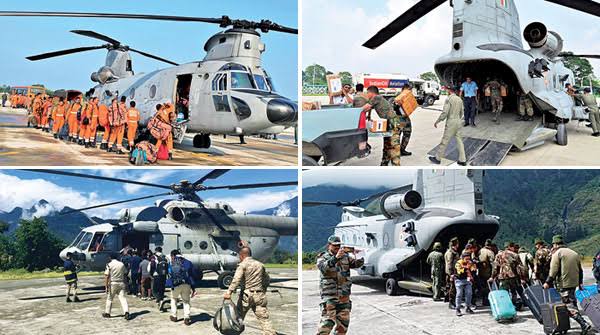
Over the years, the Armed Forces have responded to floods, cyclones, earthquakes and landslides across the country. During the 2013 Uttarakhand floods, the Air Force and Army conducted extensive rescue missions, airlifting hundreds of tonnes of supplies.
In the 2014 Jammu & Kashmir floods, nearly 70 aircraft were deployed, rescuing over 96,000 people. The Kerala floods of 2018 saw coordinated action involving helicopters, aircraft, boats and medical teams, rescuing more than 60,000 civilians.
In 2025 alone, the Indian Army deployed 141 columns across ten states, rescuing over 28,000 civilians and providing medical aid to more than 7,000 individuals.
Global First Responder
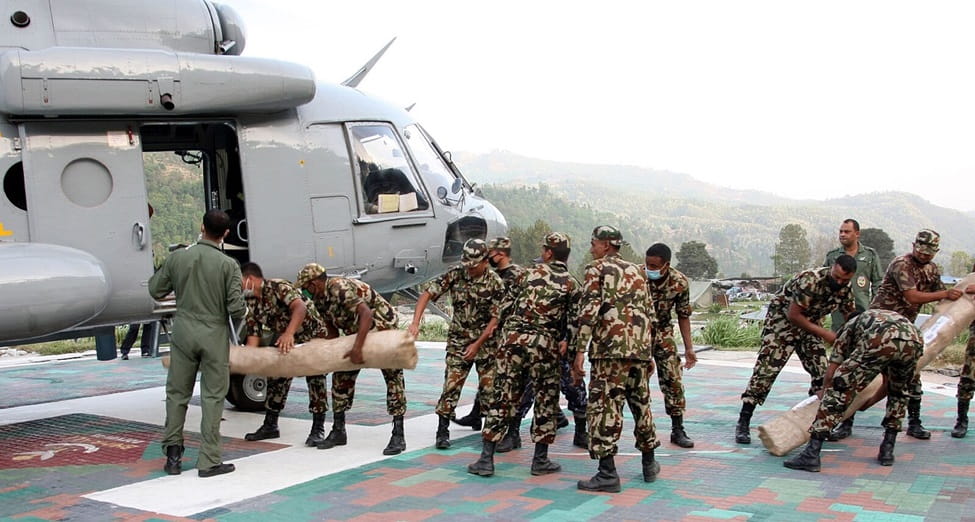
India has established itself as a reliable first responder in the Indian Ocean Region and beyond. Operation Maitri in Nepal (2015) demonstrated rapid mobilization within hours of the earthquake, rescuing thousands and delivering relief supplies.
During the COVID-19 pandemic, Operation Samudra Setu repatriated 3,992 Indians by sea. Mission Sagar delivered food, medical supplies and oxygen assistance to multiple nations.
In 2025, Operation Brahma saw a 60-bed field hospital deployed in Myanmar following a devastating earthquake, treating over 2,500 patients. Operation Sagar Bandhu supported cyclone-hit Sri Lanka with evacuation and delivery of over 1,000 tonnes of relief material.
These missions reflect India’s commitment to “Vasudhaiva Kutumbakam” and SAGAR — Security and Growth for All in the Region.
Integrated Civil-Military Coordination
The success of HADR missions lies in seamless coordination between the Armed Forces and civil authorities. Under the principle of Aid to Civil Authorities, military resources are deployed when civilian capacity is overwhelmed.
The Armed Forces provide strategic airlift, engineering support, medical teams, maritime evacuation and logistics expertise, often operating in extreme and hostile environments.
With growing climate challenges and global uncertainties, India’s HADR doctrine continues to evolve, strengthening preparedness and resilience at home and abroad.