
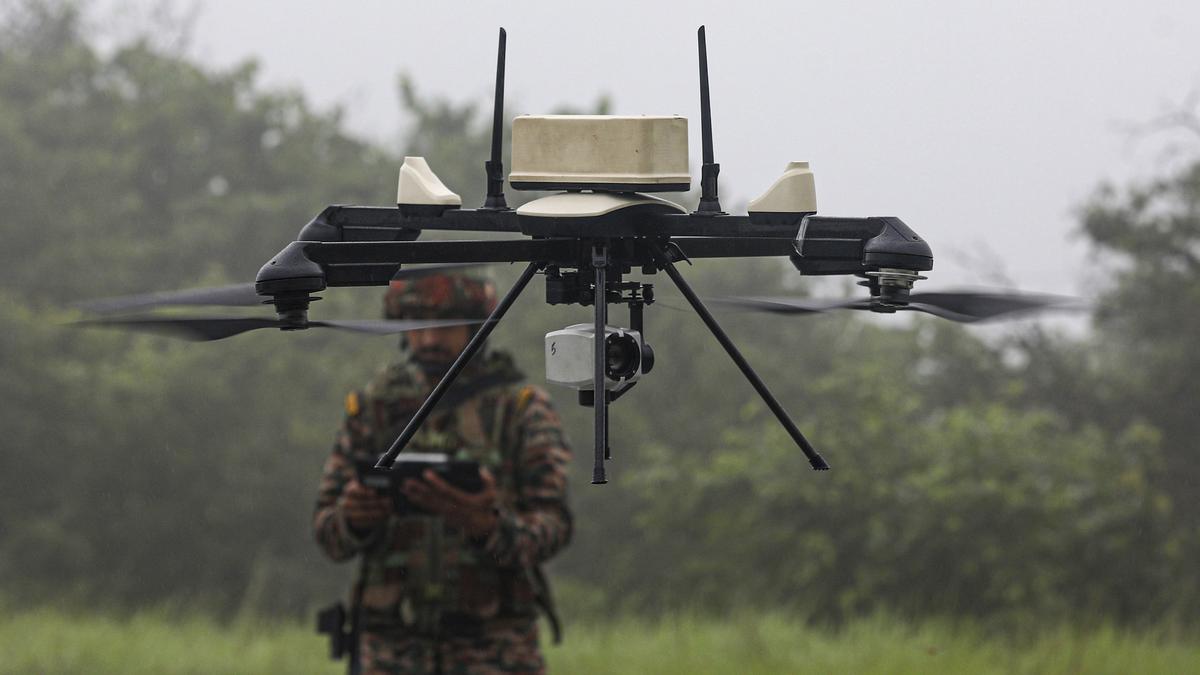
Strengthening Airspace Security
The Tactical Battlefield Space now includes the “Air Littoral” — the airspace up to 3,000 metres (10,000 feet) above ground level. This new operational framework allows the Army to dominate both land and low-altitude airspace, enabling rapid detection and neutralisation of hostile drones while ensuring safe movement of friendly aerial assets.
According to the Indian Army, the need for an advanced CUAS grid became critical during Operation Sindoor, which exposed gaps in traditional airspace control against rising drone intrusions. The Saksham system was conceptualised to address these vulnerabilities through automation, integration, and real-time coordination.
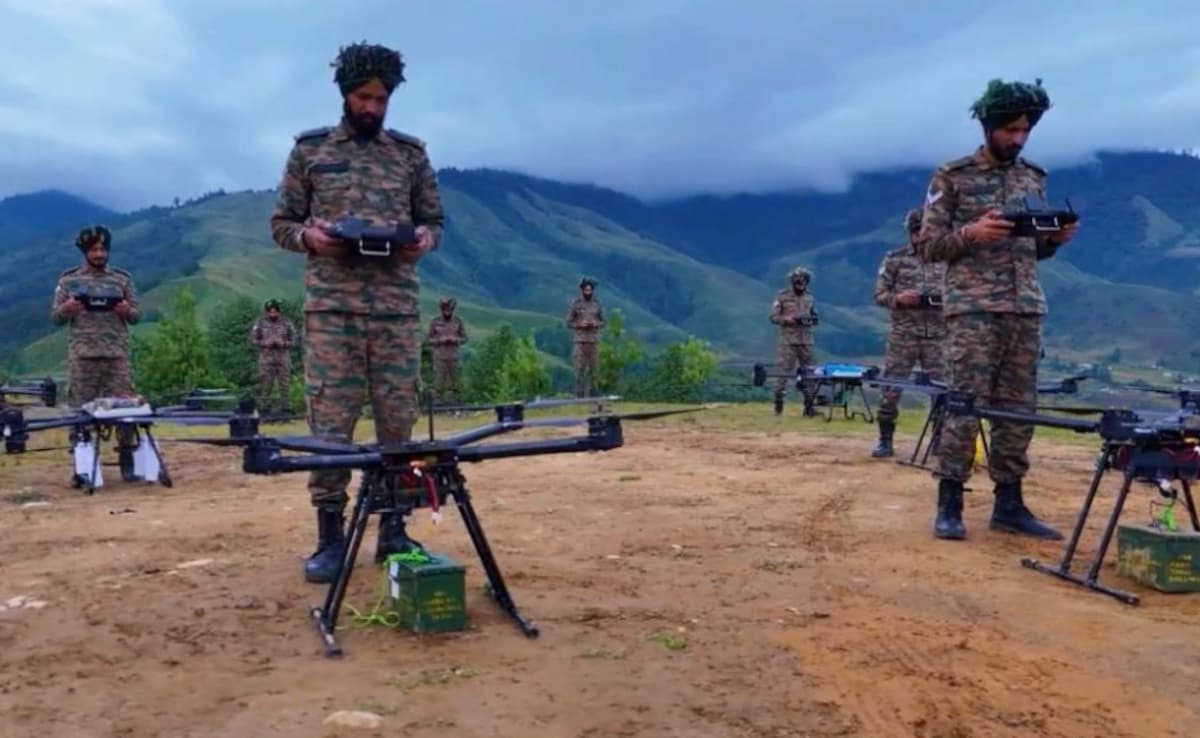

Developed in collaboration with Bharat Electronics Limited (BEL), Ghaziabad, Saksham — short for Situational Awareness for Kinetic Soft and Hard Kill Assets Management — is a modular, high-end Command and Control (C2) system. It operates on the secure Army Data Network (ADN) and integrates sensors, weapon systems, and AI analytics to create a unified Recognised UAS Picture (RUASP) for commanders.
Key features include real-time threat detection, AI-enabled predictive analysis, automated decision support, and 3D battlefield visualisation. The system seamlessly integrates CUAS sensors and weapons to provide a synchronised and automated response to aerial threats.
Digital Transformation of the Battlefield
The Saksham grid represents a major stride in the Army’s ongoing “Decade of Transformation (2023–2032)” programme, focused on creating a digitally networked battlefield. The new system allows commanders to receive AI-based alerts, visualise enemy drone movements in 3D, and execute coordinated countermeasures instantly.
Through seamless interoperability with the Army’s Akashteer System, Saksham maps all friendly, neutral, and hostile airspace users. It significantly boosts decision-making speed and ensures quick, precise engagement of aerial targets.
Aligned with Atmanirbhar Bharat Vision
Completely designed and produced in India, Saksham embodies the government’s Atmanirbhar Bharat (self-reliant India) initiative in defence technology. The system has been approved under the Fast Track Procurement (FTP) route, and the Army plans to deploy it across all field formations within a year.
“Saksham reflects our commitment to technological self-reliance and next-generation warfare readiness,” a senior Army official said. “It will serve as the backbone of India’s counter-drone defence grid in future conflicts.”
Boosting National Security Infrastructure
The introduction of Saksham strengthens India’s position among nations developing autonomous, AI-assisted air defence systems. With the increasing use of drones in modern warfare, this technology is expected to enhance India’s operational readiness, safeguard border areas, and prevent infiltration attempts via aerial routes.