
India Enters Space Nutrition Era with Experiments on ISS
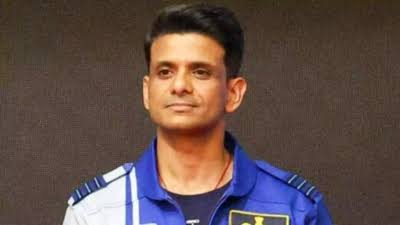
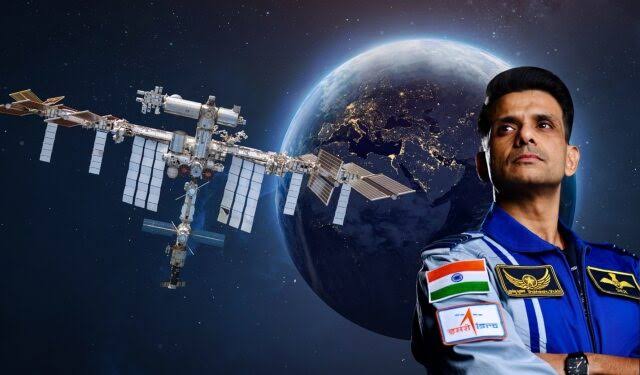
In a moment of national pride, Group Captain Shubhanshu Shukla is all set to become the first Indian to lead pioneering food and biotechnology experiments aboard the International Space Station (ISS) during the Axiom Mission 4 (Ax-4). The announcement, made by Union Minister Dr. Jitendra Singh, marks a new frontier for India in space-based sustainability and life science innovation.

A Milestone Mission with Global Impact
Group Captain Shukla will serve as Mission Pilot, joining a distinguished crew led by former NASA astronaut Peggy Whitson, along with international specialists from Poland and Hungary. His participation not only reflects India’s growing space capabilities but also its increasing role in shaping the future of human survival beyond Earth.
These experiments are backed by a tri-agency collaboration involving the Indian Space Research Organisation (ISRO), the Department of Biotechnology (DBT), and NASA. For the first time, indigenously developed biotechnology kits will be tested in microgravity conditions, showcasing the spirit of Atmanirbhar Bharat in the global space arena.
Microalgae and Cyanobacteria: Food for the Future
One key area of focus is microalgae—tiny organisms that can produce protein-rich biomass, generate oxygen, and absorb CO₂. Studying their behavior in space will help scientists determine their suitability for long-term life support systems in space travel.
In parallel, experiments will assess the growth of cyanobacteria such as Spirulina and Synechococcus in microgravity. Notably, these microbes can potentially thrive on human-waste-derived nitrogen sources, including urea. This could lead to closed-loop systems, where waste is recycled into food—a revolutionary step in making deep-space missions more sustainable.
A Vision Beyond Space
Dr. Jitendra Singh emphasized that the mission isn’t just about scientific curiosity.
“These experiments are paving the way for long-duration missions and sustainable living solutions, both in space and on Earth,” he said.
Many of these innovations could help tackle resource scarcity and malnutrition back home, particularly in remote or disaster-struck regions. As India prepares for crewed missions under Gaganyaan, this research becomes even more vital.
India’s Space Biotech Push Gains Momentum
The mission has sparked a new wave of research collaborations. A Joint Working Group between ISRO and DBT has been formed to advance space biotechnology and biomanufacturing. Top institutes like ICGEB and BRIC-inStem are already exploring next-gen solutions for food, medicine, and air regeneration in outer space.
The long-term goal? Equip future missions with self-sustaining biological ecosystems, reducing dependency on Earth for supplies.
From Earth to Orbit: India’s Global Leap
This mission marks a technological and symbolic leap for India. It places the country among global frontrunners working on life systems for space. With Indian astronauts poised to join future international missions, including NASA-led programs, Group Captain Shukla’s efforts are laying the groundwork for a new era in astrobiology and space exploration.