
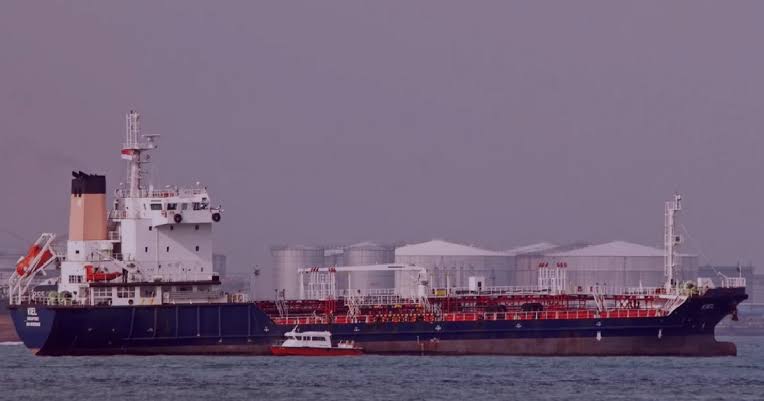
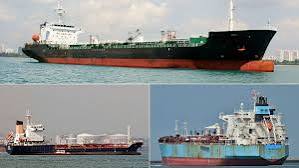

The operation was initiated after ICG’s advanced, technology-enabled surveillance systems detected a motor tanker exhibiting suspicious movement patterns within India’s EEZ. Digital monitoring and data analytics revealed unusual rendezvous behaviour at sea, prompting a deeper investigation by maritime intelligence units.
Subsequent analysis of vessel movement data indicated that two additional ships were converging on the tanker, raising strong suspicion of an illegal ship-to-ship transfer designed to evade customs duties and maritime regulations.
Coordinated Sea-Air Interception
Acting swiftly, the Indian Coast Guard deployed ships and aerial surveillance assets to intercept the suspected vessels on February 5. All three vessels were stopped approximately 100 nautical miles off the Mumbai coast, and specialist boarding teams were deployed for inspection.
During sustained rummaging operations, ICG personnel examined cargo holds, verified ship documents, recovered electronic data, and conducted detailed interrogations of crew members. The evidence gathered helped establish the complete chain of events and confirmed the vessels’ involvement in an international smuggling syndicate.
Mid-Sea Oil Transfers and Identity Evasion
Preliminary investigations revealed that the syndicate operated by transporting low-cost oil through seagoing vessels and transferring the cargo mid-sea to motor tankers in international waters. These ship-to-ship transfers allowed the smugglers to bypass regulatory oversight and avoid substantial duties payable to coastal states.
Investigators also found that the vessels frequently changed their identities, including ship names and electronic identifiers, to evade detection by maritime law enforcement agencies across regions.
Foreign Links Under Investigation
Initial findings suggest that the owners and handlers of the intercepted vessels are based in foreign countries, indicating the transnational nature of the racket. The syndicate is believed to have handlers operating across multiple jurisdictions, coordinating the sale and transfer of oil cargo at sea.
Authorities are now examining financial trails, ownership structures, and communication networks to identify the broader network behind the operation.
Vessels Likely to Be Escorted to Mumbai
The apprehended vessels are expected to be escorted to Mumbai for further investigation. Once preliminary inquiries are completed, the case will be handed over to Indian Customs and other relevant law enforcement agencies for legal action under applicable maritime, customs, and economic laws.
Officials noted that the operation was conducted in close coordination with multiple agencies, highlighting the importance of inter-agency cooperation in combating maritime crime.
Strengthening India’s Maritime Security Role
The successful bust once again reinforces India’s position as a net security provider in the Indian Ocean Region and a firm enforcer of the international rules-based order at sea. The Indian Coast Guard’s expanding surveillance footprint and operational readiness have significantly enhanced India’s ability to detect and deter illicit maritime activities.
Message to Maritime Smugglers
Security experts say the operation sends a strong deterrent message to transnational smuggling networks exploiting maritime routes for illegal trade. With increasing coordination between surveillance systems and enforcement assets, India’s coastal and offshore waters are becoming significantly harder to exploit.
As investigations continue, officials have indicated that further disclosures and possible international cooperation may follow, reinforcing India’s zero-tolerance stance on maritime crime.