
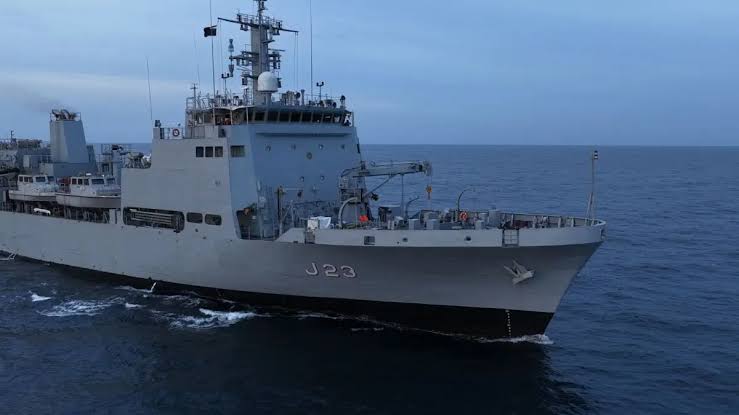
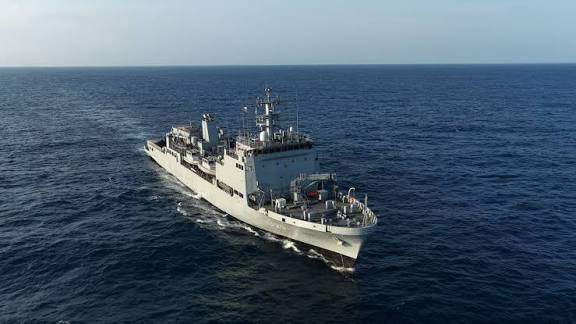

Launched to accelerate domestic development across the “Float, Move and Fight” spectrum, INIP provides a 15-year roadmap for reducing import dependence and fostering high-end R&D. The plan encourages partnerships between DRDO, DPSUs, private industry and MSMEs to design, test and manufacture sensors, propulsion systems, sonars and weapons indigenously.
Shipbuilding: Scale and Value
India currently has 51 large naval ships under construction across public and private yards, with a combined value reported at roughly ₹90,000 crore a tangible indicator of expanding national shipbuilding capacity. The ongoing programmes range from survey vessels and ASW shallow-water craft to stealth frigates and destroyers, reflecting breadth in industrial capability.
Recent Inductions: Proof in Platforms
The commissioning of twin Project 17A frigates, INS Udaygiri and INS Himgiri, in August 2025 marked the Navy’s 100th and 101st indigenous warships a symbolic and operational leap in indigenisation. In November, the Navy inducted INS Mahe, the first of the Mahe-class ASW shallow-water craft, further strengthening coastal anti-submarine capability. These inductions showcase growing domestic integration of combat systems and sensors.
Undersea and Weapons Ecosystem
Indian yards and DRDO partners have advanced submarine platforms and underwater systems under Project-75 and related initiatives, while domestic torpedoes, sonars and countermeasure suites have moved from design to production and trials. Progress in Air Independent Propulsion (AIP) and indigenous sonar suites signals stronger underwater combat readiness.
Budget, Policy & Industry Linkages
Strategic investment has matched policy ambitions: the Navy’s overall budget rose from about ₹49,623 crore in 2020–21 to approximately ₹1,03,548 crore in 2025–26, increasing its share of defence spending and enabling major capital programmes. Policy frameworks like DAP 2020 and the Defence Procurement Manual 2025 have incentivised Buy-Indian procurement and technology transfer.
Key public shipyards Mazagon Dock, Garden Reach and Cochin Shipyard along with private partners and over 100 MSMEs, now form a deep ecosystem for design, hull construction and systems integration. Warship-grade steel, propulsion gear and many combat-critical subsystems are increasingly available from Indian industry.
Operational Reach and Strategic Rationale
Indigenisation strengthens operational autonomy crucial for sustained deployments, humanitarian missions and IOR first-responder tasks. A stronger domestic supply chain shortens procurement timelines and reduces vulnerability to external disruptions, while creating skilled jobs and innovation linkages with academia and start-ups. The Navy’s innovation initiatives and the Warship Design Bureau are central to this transition.
Challenges Ahead
Despite notable gains, gaps remain in high-end weapon LRUs and certain combat systems where indigenisation levels lag. The Navy’s indigenisation targets call for continued investment in R&D, stronger MSME integration and accelerated private-sector participation to close capability shortfalls.
What Comes Next
With multiple ships launching and a record capital outlay, India is steadily converting policy into platforms. The coming years will test whether the industrial base can sustain steady deliveries, absorb advanced technologies and scale exports. For now, the trajectory is clear: a stronger, more self-reliant Indian Navy is central to national security and the Aatmanirbhar Bharat ambition.