 Design and Technical Standards
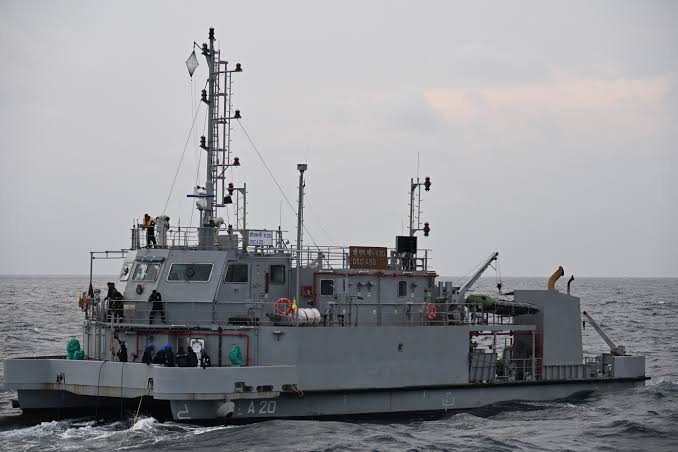
DSC A20 features a catamaran hull form that provides superior stability, an increased working deck area and favourable seakeeping characteristics for diving operations. The vessel displaces approximately 390 tonnes and has been designed and constructed in compliance with Naval Rules and regulations of the Indian Register of Shipping (IRS).
Before construction, DSC A20 underwent detailed hydrodynamic analysis and model testing at the Naval Science and Technological Laboratory (NSTL), Visakhapatnam. The trials and design validations at NSTL helped optimise the hull form and operational performance for envisaged coastal missions.
Operational Role and Capabilities
As a Diving Support Craft, DSC A20 will support a range of underwater tasks including diving operations, underwater inspection and salvage assistance. The platform’s expanded deck space and stable catamaran form make it suitable for launch and recovery of diving equipment and specialised sub-surface gear.
Commissioned into Southern Naval Command and based at Kochi, DSC A20 will augment local operational readiness in coastal waters and provide an in-service asset dedicated to underwater support tasks for naval units operating in the region.
Indigenous Shipbuilding and Strategic Value
The induction of DSC A20 underscores India’s push for self-reliance in defence manufacturing and the growing capability of domestic shipyards. The series, constructed by TRSL, represents industry–navy collaboration and the application of national research inputs in naval ship design and validation.
Officials highlight that platforms like DSC A20 not only enhance operational capability but also support the broader “Make in India” and Aatmanirbharta objectives by creating specialised manufacturing knowledge, supply chains and skilled employment in the maritime sector.
Testing, Trials and Quality Assurance
Design compliance with IRS Naval Rules coupled with hydrodynamic testing at NSTL reflects the Navy’s focus on rigorous testing and quality assurance. These steps help ensure that operational safety, stability during diving operations and mission reliability meet naval standards before formal commissioning and induction into service.
Following commissioning, DSC A20 will undergo sea trials and operational checks as part of its integration with fleet units and diving teams before fully assuming assigned missions.
Collaboration Between Navy, Industry and Research Labs
DSC A20’s development involved coordinated inputs from the Indian Navy, TRSL and national research establishments. Such collaboration has enabled the integration of shipbuilding expertise with naval operational requirements and scientific validation through institutions like NSTL.
The project highlights a template for future specialised vessel development where design validation and industry manufacturing come together to meet service-specific needs.
Looking Ahead
With DSC A20’s induction, the Navy strengthens an often-overlooked but critical maritime function dedicated underwater support. The additional four DSC units under construction promise to expand this capability further, offering enhanced support for diving operations and coastal underwater tasks across commands.