
What the New Ranking Means
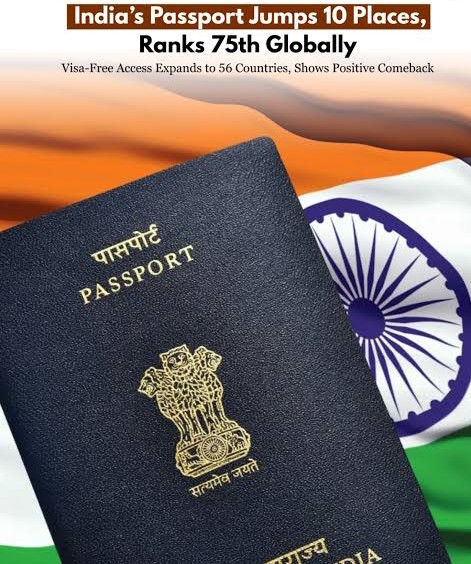
The Henley Passport Index measures global travel freedom based on the number of destinations passport holders can enter without obtaining a prior visa. India’s rise to the 75th spot reflects expanding mobility options for Indian travellers across Asia, Africa, the Caribbean and Oceania.
Although not India’s highest-ever position — the passport peaked at 71st in 2006 — the current climb signals renewed momentum. After slipping to 85th last year, the improvement suggests stronger diplomatic engagement and growing international connectivity.
For tourists, business travellers and students, easier access reduces paperwork and waiting periods, making international travel more convenient and cost-effective.

Indian passport holders can travel visa-free or obtain electronic travel authorisation (ETA) to several destinations. These include Bhutan, Nepal, Malaysia, Mauritius, Thailand, Kenya (ETA), Seychelles (ETA), Kazakhstan, Fiji, Jamaica and the Philippines, among others.
Popular island destinations such as Barbados, Dominica, Grenada and Trinidad and Tobago also feature on the list. In the Pacific region, Vanuatu and Micronesia provide entry without a pre-approved visa.
Such flexibility is particularly beneficial for short leisure trips and spontaneous travel plans.
Visa on Arrival Options
Several countries offer visa-on-arrival facilities to Indian citizens. These include Indonesia, Maldives, Sri Lanka, Jordan, Tanzania, Cambodia, Ethiopia and Myanmar. In many cases, travellers can obtain entry permits at the airport upon arrival by paying a fee and submitting required documents.
Visa-on-arrival access simplifies entry procedures, though travellers must still ensure compliance with local immigration rules.
Expanding E-Visa Access
E-visa facilities are increasingly common, allowing travellers to apply online before departure. Countries such as Azerbaijan, Armenia, Bahrain, Morocco, South Africa, Türkiye, Vietnam, Uzbekistan and Ukraine provide digital visa options for Indian passport holders.
The growing adoption of e-visas reflects a global shift towards digitised border management systems. These platforms streamline approval processes and reduce physical paperwork.
India’s Passport Journey Over the Years
India’s passport ranking has fluctuated over the past decade. After achieving its best-ever rank of 71st in 2006, it experienced a gradual decline before touching 85th last year. The 2026 rise to 75th indicates recovery and incremental diplomatic gains.
Global passport rankings often shift due to changing bilateral agreements, geopolitical developments and evolving immigration policies. Improved travel freedom can also enhance business ties and cultural exchanges.
While India still trails several advanced economies in passport strength, the upward trend suggests gradual progress in global mobility for its citizens.
Looking Ahead
Travel experts note that broader visa waivers depend on sustained diplomatic outreach and mutual agreements. As India deepens economic and strategic partnerships worldwide, further improvements in passport access may follow.
For now, Indian travellers have more destinations than before where they can travel without a lengthy visa process. With 56 countries offering simplified entry, global exploration is becoming steadily easier.
The improved ranking offers a positive signal for tourism, business travel and international education reinforcing India’s growing integration into the global community.