
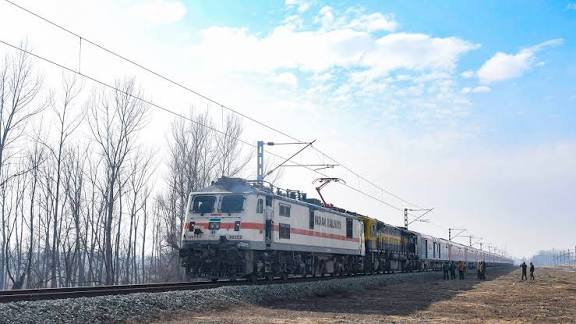
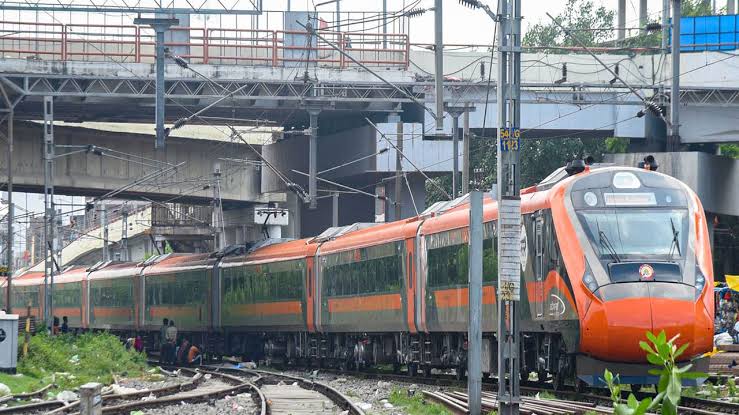

The Barbenda–Damrughutu doubling and the Damrughutu–Bokaro Steel City third and fourth line projects, approved at a combined cost of ₹815.32 crore, are among the most significant capacity expansions under South Eastern Railway. This corridor is a vital link for coal, steel and cement movement, forming the backbone of India’s energy and industrial supply chains.
At present, the line operates at 108 percent utilisation, with daily train detention stretching up to 150 minutes. It handles 78 trains a day and supports freight throughput of over 35 million tonnes annually. Without intervention, utilisation was projected to rise sharply, threatening operational stability.
The expansion will improve connectivity to Central Coalfields, major cement and steel plants, petroleum depots and the Bokaro Steel City industrial ecosystem. By easing congestion, the project is expected to directly enhance energy logistics, industrial productivity and national supply chain efficiency.
Advanced Signalling to Boost Safety on Northern Railway
In a major safety upgrade, Indian Railways has approved the rollout of Electronic Interlocking systems at 34 stations across Northern Railway routes where the Kavach train protection system is being implemented. The projects, costing ₹421.41 crore, cover 21 stations in the Delhi Division and 13 in the Ambala Division.
Electronic interlocking will modernise signalling on some of the busiest sections of the network, enabling safer train movements and higher frequencies. Officials said the upgrades would reduce human error, improve operational reliability and complement the broader push toward automated safety systems on high-density routes.
Rajpura Bypass to Decongest a Busy Northern Corridor
The approval of the 13.46-kilometre Rajpura Bypass Line, at a cost of ₹411.96 crore, is expected to significantly streamline freight movement on the Ambala–Jalandhar section. One of Northern Railway’s busiest corridors, this stretch has long faced congestion due to heavy freight and passenger traffic.
The bypass will directly connect the New Shambhu Dedicated Freight Corridor station with Kauli on the Rajpura–Bathinda line, allowing freight trains to avoid the crowded Rajpura Yard. This is expected to ease pressure on existing tracks and ensure smoother integration with the Dedicated Freight Corridor network.
Kerala Projects to Improve Passenger Reliability
In Kerala, Indian Railways has cleared two important projects aimed at improving passenger punctuality and freight efficiency. The Alappuzha–Ambalapuzha doubling project, costing ₹324.16 crore, will remove a critical single-line bottleneck on the Ernakulam–Kayankulam route.
Once completed, the project will allow nine additional passenger trains in each direction daily and add nearly three million tonnes of freight capacity annually. It will also help decongest major junctions and improve reliability for long-distance travellers.
Additionally, the Palakkad Town–Parli bypass line, approved at ₹163.57 crore, will eliminate engine reversals at Palakkad Junction. This is expected to cut passenger train detention by over 40 minutes and significantly reduce freight delays, improving punctuality across Southern Railway routes.
Tamil Nadu Corridor Set for High-Capacity Transformation
The Irugur–Podanur doubling project in Tamil Nadu, costing ₹277.42 crore, will transform a key link on the Chennai–Thiruvananthapuram corridor. The expansion will enable 15 additional passenger trains daily and increase freight capacity by over three million tonnes annually.
With adjoining stretches already upgraded or under expansion, the project will help convert the Chennai–Coimbatore–Podanur belt into a high-capacity four-line corridor. This will directly benefit industrial hubs such as Coimbatore and improve terminal operations at Podanur.