
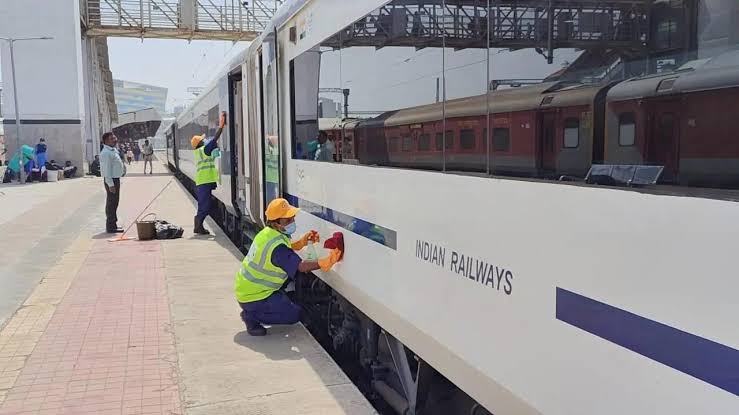
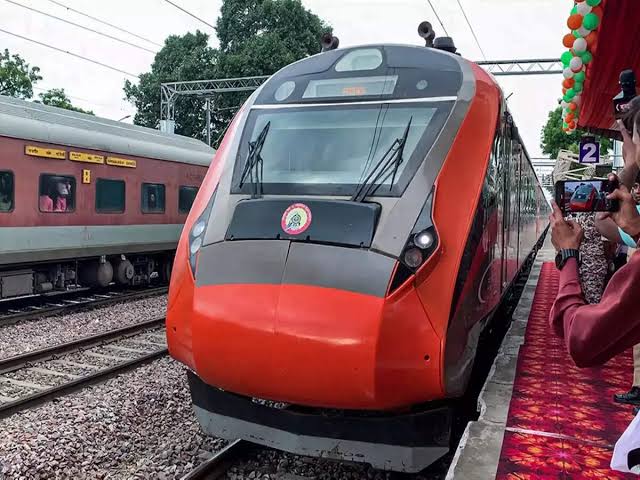

Under the first reform, Railways will introduce end-to-end continuous cleaning of long-distance trains. For the first time, general coaches will be fully integrated into the professional cleaning system, bringing them at par with reserved coaches.
The earlier “Clean Train Station” model, which allowed deep cleaning only at selected stoppages, will now be replaced with a continuous model from origin to destination. Toilets, garbage disposal, cabin interiors, water availability and minor electrical faults will be addressed during the journey itself.
According to the Ministry of Railways, about 80 trains have been identified in the first phase, covering four to five trains per zone. Over the next three years, the system will be expanded across the entire network.
Single Agency for Linen and Cleaning
A significant structural change involves appointing a single professional agency for linen distribution, collection and washing. Previously, these services were handled by multiple agencies, leading to coordination gaps.
Service Level Agreements will define cleaning frequency, with increased attention during peak hours. Dedicated teams will also handle minor mechanical and electrical issues, ensuring integrated on-board service delivery.
AI-Enabled Monitoring and War Rooms
The reform includes AI-based monitoring systems. War room-style control centres will analyse AI-generated images to verify whether cleaning has been carried out as required.
If standards are not met, corrective action will follow immediately. Railway officials say this technology-backed monitoring will bring accountability and measurable quality improvements.
500+ Gati Shakti Cargo Terminals Planned
The second reform focuses on freight growth through expansion of Gati Shakti Cargo Terminals (GCTs). The policy, introduced in 2022, simplified approvals and enabled 124 multi-modal cargo terminals to be developed.
Now, Railways plans to scale this number to over 500 in the next five years. These terminals will transform into “cargo-plus-processing” hubs, allowing value addition activities such as cement grinding, food grain processing, stuffing and de-stuffing within terminal premises.
Infrastructure, Connectivity and Dispute Prevention
Under the enhanced framework, underutilised goods sheds will be converted into GCTs. Legacy sidings can migrate to the simplified structure. Railways may also undertake maintenance of short connecting stretches on a payment basis to improve safety and clarity of responsibility.
Standard layouts will enable faster approvals. Contract tenure has been extended from 35 to 50 years, encouraging long-term private investment. A structured dispute prevention mechanism with milestone-based joint meetings aims to reduce arbitration and litigation.
Revenue and Freight Boost
Railways estimates that the reform could generate around ₹30,000 crore in additional revenue over three years. Recent reforms in bulk cement transportation have already doubled tonnage movement in some corridors, reducing costs and improving efficiency.
With seven more reforms in the pipeline and dozens under preparation, Indian Railways has signalled an aggressive transformation agenda for 2026 under its “52 reforms in 52 weeks” initiative.