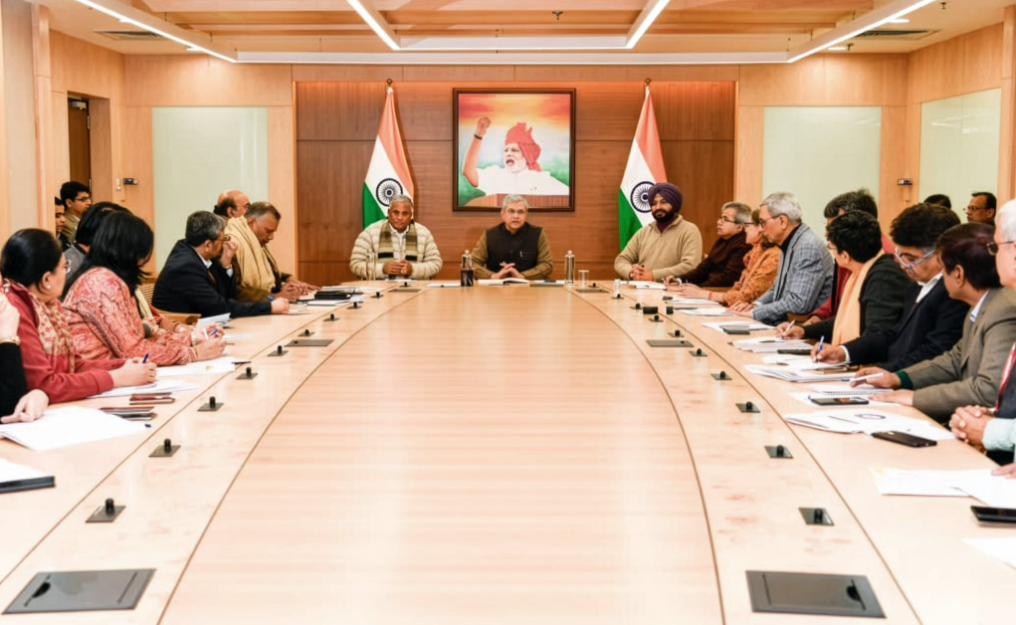
Union Ministers of State Shri V. Somanna and Shri Ravneet Singh, Railway Board Chairman and CEO Shri Satish Kumar, and senior officials were present at the meeting. The discussions drew upon on-ground experiences and reviewed ongoing infrastructure, maintenance, and capacity enhancement initiatives.
 52 Reforms in 52 Weeks: A Comprehensive Vision
The proposed reform agenda seeks to improve efficiency, strengthen governance, and enhance service delivery across Indian Railways. Officials said the initiative is not about isolated changes but about coordinated, outcome-oriented reforms implemented consistently over the year.
The Railway Ministry reaffirmed that each reform will be closely monitored to ensure timely execution and measurable impact, with passenger safety and satisfaction remaining at the core of all initiatives.
Sharp Focus on Safety
Safety continues to remain the top priority for Indian Railways. During the meeting, it was highlighted that consequential train accidents have reduced by nearly 90 percent over the past decade, falling from 135 in 2014–15 to just 11 in 2025–26.
The Ministry has set an even more ambitious target of bringing this figure down to single digits. Officials attributed the improvement to sustained investments in track renewal, signalling systems, rolling stock maintenance, and stricter operational protocols.
AI and Technology Push
Another key pillar of the reform agenda is the accelerated adoption of artificial intelligence and advanced technologies. AI-based tools are being increasingly deployed for predictive maintenance, real-time monitoring of assets, and enhanced safety mechanisms.
Technology-driven solutions are also expected to improve operational efficiency, reduce downtime, and support better decision-making across railway operations, aligning with India’s broader digital transformation goals.

Talent and Training Revamp
Recognising the importance of human resources in delivering reforms, the Ministry is exploring innovative approaches to talent management and employee skill development. The focus will be on modern training methods, leadership development, and continuous upskilling.
Officials said a future-ready workforce is essential for managing advanced technologies and ensuring that reforms translate into improved on-ground outcomes.
Food and Catering Reforms
Passenger experience, particularly food quality and onboard services, will also see significant reforms. The Ministry plans major upgrades in catering standards, hygiene, and service delivery to meet passenger expectations.
Improving food quality and consistency across trains is expected to enhance overall passenger satisfaction, especially on long-distance journeys.
Passenger-Centric and Future-Oriented Growth
The meeting also reviewed progress in infrastructure expansion, station redevelopment, and capacity enhancement projects. Officials stressed that reforms must directly benefit passengers while ensuring long-term sustainability of the railway system.