
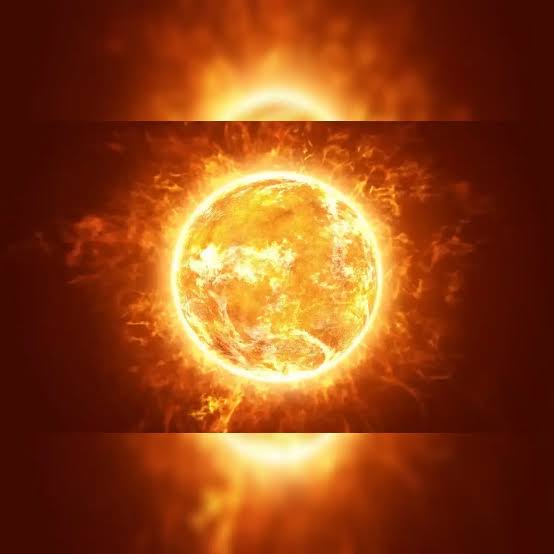
Why Stellar Atmospheres Are So Complex
The atmosphere of a star is not a calm, orderly environment. It is a chaotic region where photons scatter unpredictably, atoms constantly change energy states, and particles rarely stay in equilibrium. Traditional models made a simplifying assumption: while atoms could shift energy states, their velocity distributions would still follow the neat Maxwellian curve expected in equilibrium. This allowed calculations but ignored crucial physical effects.
Such simplifications limited astronomers’ ability to decode the fine details of stellar spectra, the unique light signatures that reveal a star’s temperature, composition, and structure. As stars are the primary light sources in the universe, even small inaccuracies cascade into larger uncertainties in astrophysical research.
The FNLTE Breakthrough
FNLTE modeling removes these approximations by allowing all variables to vary simultaneously — atomic populations, their velocity distributions, and the radiation field. The challenge is that each of these quantities is interdependent, creating a highly complex web of equations. Earlier attempts in the 1980s failed due to computational limitations.
The IIA–IRAP team, led by Dr. Sampoorna M from IIA and researchers T. Lagache and F. Paletou from Toulouse, first solved the simpler two-level atom case. Building on this, they have now achieved the far more demanding three-level atom model, where additional scattering processes, such as Raman scattering (light absorbed at one frequency and re-emitted at another), naturally emerge in the calculations.

When the new FNLTE model was compared with conventional approximations, the results were striking. For example, the velocity distribution of excited hydrogen atoms no longer followed the tidy Maxwellian pattern. Instead, significant deviations appeared near the stellar surface — precisely where astronomers collect the light signatures used in spectral analysis.
These findings suggest that existing models may underestimate or misinterpret spectral features, especially in the outer layers of stars. More accurate modeling could sharpen measurements of stellar temperatures, chemical abundances, and internal dynamics.
Implications for Astronomy and Exoplanet Science
This advancement could reshape several fields of astrophysics. Stellar spectra are central to identifying Earth-like exoplanets, as astronomers must carefully separate the faint planetary signals from the far brighter stellar background. With more realistic atmosphere models, researchers can better distinguish whether a spectral anomaly originates in the star itself or hints at a planet orbiting it.
Similarly, the findings will help refine our understanding of circumstellar disks, interstellar clouds, and the processes that govern star and planet formation. By improving the accuracy of stellar models, astronomers gain a more reliable toolkit for interpreting cosmic phenomena.
this work also positions Indian research institutes at the forefront of cutting-edge computational astrophysics, advancing both theory and global collaborations.
The Road Ahead
The conceptual leap from two to three atomic levels represents a major step forward. The IIA–IRAP team is now working on expanding the method to more complex multi-level atoms and developing faster numerical algorithms to manage the heavy computational load. If successful, these efforts could eventually provide astronomers with the ability to simulate stellar spectra in their full complexity — a dream long considered beyond reach.
“The major conceptual jump from two to three or more atomic levels has now been made,” said Dr. Sampoorna. “Our goal is to keep pushing toward generalizing this method, so that we can explore stars in the most realistic way possible.”