
Scientists in India have uncovered a critical insight into how ageing affects the body, revealing that the deterioration of tissues may begin not within stem cells themselves, but in the support cells that surround and sustain them. The discovery opens promising new directions for research aimed at promoting healthy ageing and preserving the body’s regenerative capacity.
Why the Stem Cell ‘Neighbourhood’ Matters
Traditionally, ageing research has focused on damage accumulated within individual stem cells. However, the ARI study challenges this view by showing that neighbouring support cells known as cap cells are far more vulnerable
to age-related stress. These cells form the stem cell “niche,” providing essential biochemical signals that keep stem cells healthy and functional.
The researchers found that while germline stem cells can survive with very low levels of autophagy the cell’s internal recycling system cap cells are critically dependent on this process for long-term survival. Autophagy helps cells remove damaged components and maintain normal function.
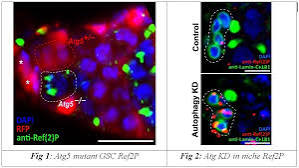

When key autophagy-related genes such as Atg1, Atg5, and Atg9 were selectively switched
off in cap cells, these support cells accumulated damage and gradually lost their structure. Over time, they failed to send critical maintenance signals to the germline stem cells.
As a result, even though the stem cells themselves remained intrinsically robust, they were eventually lost from the tissue. This demonstrated that the collapse of the supportive microenvironment, rather than stem cell failure alone, drives the loss of regenerative capacity during ageing.
Linking Ageing to Signalling Breakdown
Cap cells continuously release biochemical cues, including Bone Morphogenetic Protein (BMP) signals, which help stem cells maintain their identity and produce eggs. The study showed that when autophagy declines in these niche cells during midlife, BMP signalling weakens, directly linking microenvironmental deterioration to stem cell loss.
This finding reframes ageing as a community-level process within tissues, where the health of each cell type depends on the resilience of its neighbours.
Implications for Human Health
Although the research was conducted in fruit flies, the core biological pathways involved autophagy and stem cell niche signalling are conserved across species. This makes the findings highly relevant for understanding ageing in human tissues such as the intestine, skin, and muscle.
By highlighting support cells as early “weak links,” the study suggests that protecting or strengthening these cells could indirectly preserve stem cell function, fertility, and tissue health during ageing.
India at the Forefront of Ageing Research
Led by researchers Kiran Suhas Nilangekar and Dr. Bhupendra V. Shravage of ARI’s Developmental Biology Group, the study was published as a cover article in the international journal Stem Cell Reports. The work places ARI Pune at the forefront of global research on how stem cell niches age.
The team plans to explore whether targeted modulation of autophagy in niche cells can slow age-related decline, offering new strategies for healthy ageing interventions in the future.