
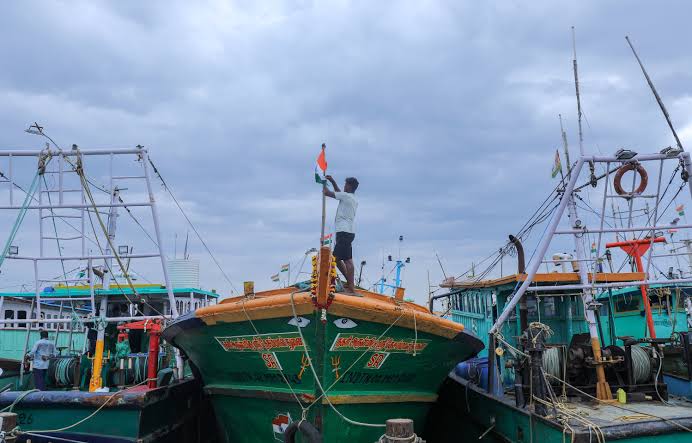

India ranks as the world’s second-largest fish-producing nation, contributing 8% of global production. The sector supports around 30 million livelihoods and generated ₹60,523 crore in exports during FY 2023–24. With an Exclusive Economic Zone (EEZ) exceeding 2 million sq. km and an 11,098 km coastline across nine coastal states and four Union Territories, India has immense potential to expand deep-sea fisheries, which remain largely untapped.
Deep-Sea Fisheries Potential
The EEZ’s estimated yield of 7.16 million tonnes, including conventional and non-conventional resources, offers opportunities to enhance seafood exports, generate employment, and reduce pressure on coastal fisheries. The report emphasizes responsible, science-based, technology-enabled, and ecologically sustainable exploitation of deep-sea resources.
Policy Framework and Strategic Interventions
The report recommends six key policy actions: overhauling regulations, strengthening institutional capacity, modernizing fleets and infrastructure, promoting sustainable fisheries management, mobilizing financing, and enhancing local community participation. Inclusive fleet development through fisher cooperatives and cluster-based models aims to ensure equitable access to modern fishing technologies and collective ownership.
Three-Phase Implementation Roadmap
An indicative costing framework outlines a phased approach: Phase 1 (2025–28) – laying foundations and early growth; Phase 2 (2029–32) – scaling up and achieving global competitiveness; Phase 3 (2033 onwards) – establishing global leadership in sustainable deep-sea fisheries. The strategy integrates central schemes, investment priorities, and monitoring mechanisms for long-term ecological and economic sustainability.
Stakeholder Engagement and Workshops
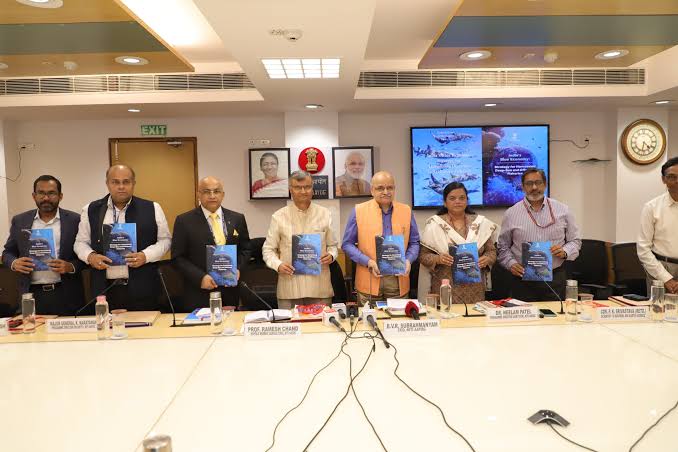
The report release was accompanied by a workshop attended by 18 institutions, including coastal states like Goa, Gujarat, Lakshadweep, Maharashtra, Odisha, and Tamil Nadu. Presentations focused on state strategies and export potential, followed by a panel discussion on advancing resource management through regulatory reforms, research, financing, and capacity building.
Towards a Sustainable Blue Economy
With integrated interventions in policy reform, infrastructure, financing, and community empowerment, NITI Aayog’s strategy aims to position India as a global leader in sustainable deep-sea fisheries. The initiative promises prosperity for coastal communities while contributing significantly to the nation’s Blue Economy vision.