
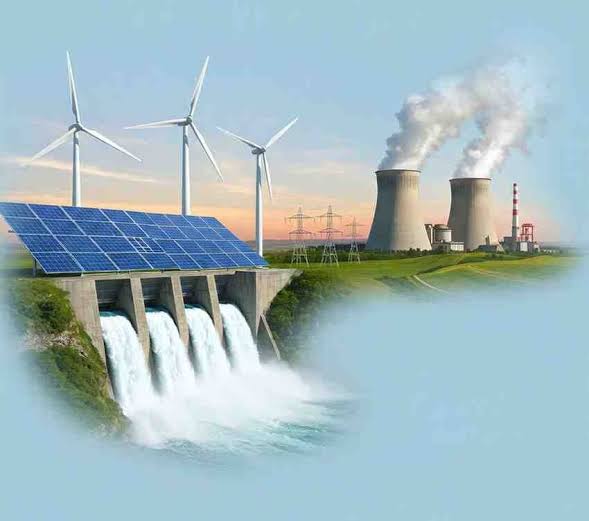
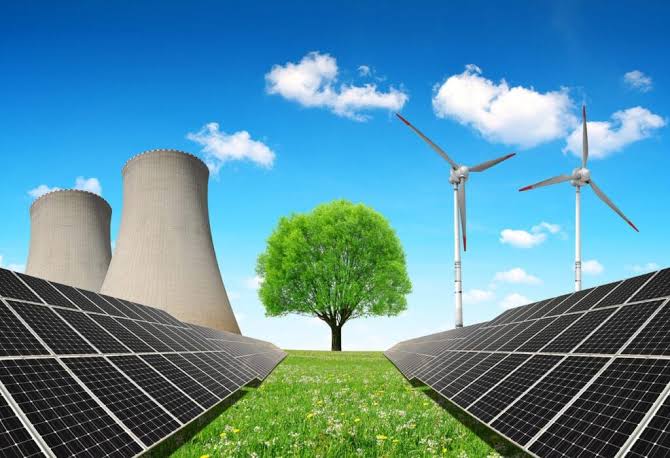

India has emerged as a global leader in renewable energy. Installed solar capacity surged from 3 GW in 2014 to 140 GW in January 2026, while cumulative wind capacity reached 54.65 GW. Together, solar and wind now dominate India’s clean energy capacity, with non-fossil fuel sources exceeding 50% of total installed electricity capacity.
Programs such as PM Surya Ghar and PM-KUSUM promote rooftop solar in households and solarisation in agriculture, reducing diesel dependence and enhancing rural energy security. Large-scale initiatives include 55 solar parks with nearly 40 GW sanctioned capacity and a ₹24,000 crore PLI scheme to boost domestic solar manufacturing.
Green Hydrogen: The Next Frontier
Green hydrogen, produced using renewable energy or biomass with minimal CO₂ emissions, is poised to decarbonise difficult sectors like steel, fertilisers, shipping, and heavy transport. India targets 5 million metric tonnes annually by 2030 under the National Green Hydrogen Mission, with a ₹19,744 crore outlay, including incentives for domestic electrolyser manufacturing.
Pilot projects are underway, including port-based hydrogen production and hydrogen mobility routes. The Green Hydrogen Certification Scheme ensures emission standards are met, supporting both domestic and export markets while linking clean energy growth with industrial competitiveness.
Nuclear Energy: Baseload and Legislative Modernisation
Nuclear power provides stable, low-carbon baseload electricity. India’s nuclear capacity stands at 8.78 GW, projected to reach 22.38 GW by 2031–32, with a long-term target of 100 GW by 2047. The SHANTI Act, 2025 modernises India’s nuclear legal framework, allowing limited private participation under strict oversight and strengthening safety and liability mechanisms.
Development of Small Modular Reactors (SMRs) with a ₹20,000 crore allocation aims for at least five indigenous designs by 2033, enhancing flexibility and scalability in energy supply.
Energy Efficiency, Carbon Markets, and Smart Grids
India promotes energy efficiency to reduce costs and emissions while supporting system reliability. Transitioning from PAT to the Carbon Credit Trading Scheme (CCTS) incentivises industries to exceed emission targets. Household programmes like UJALA have distributed 36.87 crore LED bulbs, saving 47,883 million kWh annually and reducing CO₂ emissions by 3.88 million tonnes.
The India Energy Stack (IES) digital platform transforms consumers into active energy participants, enabling rooftop solar monetisation, smart meter integration, and consent-based data sharing for efficient grid management.
Power Sector Reforms and Distribution Strengthening
Investments of ₹1.85 lakh crore under schemes like DDUGJY, IPDS, and SAUBHAGYA electrified 18,374 villages and connected 2.86 crore households. RDSS projects worth ₹2.8 lakh crore and 5.62 crore smart meters improve billing, reduce losses, and enhance demand management. Draft amendments to electricity legislation aim to improve regulatory accountability and financial viability of DISCOMs.
Global Leadership and Strategic Partnerships
India actively shapes global energy conversations through platforms like the G20 Energy Transitions Working Group and the Global Biofuels Alliance. Initiatives such as the International Solar Alliance (ISA) and India Energy Week (IEW) strengthen India’s role in solar deployment, clean fuels, and renewable collaboration with developing nations, complementing domestic energy reforms.
Conclusion
India’s energy transformation is structured, multi-layered, and forward-looking. Through renewable expansion, green hydrogen adoption, nuclear development, energy efficiency, and digital platforms, the country is achieving reliable, sustainable, and inclusive energy access. As India moves toward Net Zero by 2070, its evolving energy spectrum demonstrates that economic growth and environmental responsibility can advance hand-in-hand.