
Lead: Union Textiles Minister Shri Giriraj Singh on Saturday dedicated India’s first Manikin Flame Test System at the Northern India Textile Research Association (NITRA), Ghaziabad, and inspected a pilot milkweed (aak) cultivation on campus — urging industry to adopt milkweed-based fibres and the new testing facility to strengthen protective textiles and worker safety.
Manikin Flame Test — a national first
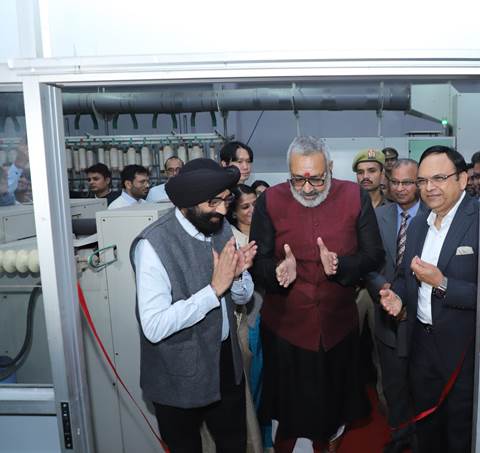
Shri Giriraj Singh formally inaugurated the manikin-based flame engulfment testing equipment installed at NITRA and described the facility as a milestone for India’s textile and safety ecosystem. The equipment simulates real-world burn scenarios on life-sized manikins to evaluate protective clothing performance, helping industries design garments that better protect workers in high-risk environments such as steel, oil & gas, railways and chemical plants.

Until now, many specialised flame and engulfment tests required sending samples abroad or to limited domestic centres. The new NITRA manikin facility enables end-to-end testing in India, shortens certification time and reduces import-dependence for protective apparel testing. Officials emphasised the facility’s potential to raise domestic standards for firefighting suits, industrial protective wear and other technical textiles.
Milkweed (Aak) — an emerging sustainable fibre
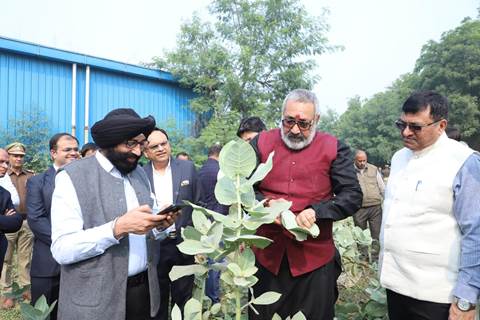
During the visit, the minister inspected milkweed plots on NITRA’s campus. Milkweed — locally known as aak — is being developed as a smart-age natural fibre with promising thermal and physical properties for certain textile applications. Shri Giriraj Singh lauded NITRA’s research and said the institute has already transferred milkweed processing technology to leading firms while discussing further industry uptake.
Industry and safety benefits
Dr M. S. Parmar, Director General, NITRA, highlighted that the manikin testing system will help determine the precise protective clothing needs across sectors and improve occupational safety. The minister noted that the facility will benefit not only textiles but also steel, petroleum, railways and chemical industries — sectors where workers face flame and heat hazards.
Policy push and research partnerships
The visit underscores the Ministry of Textiles’ sustained push for sustainable natural fibres and home-grown testing infrastructure under programs such as the National Technical Textiles Mission. NITRA has previously collaborated with CSIR-NBRI and other research bodies for milkweed genome and processing research, helping translate lab results into industry-ready processes.
Call to industry
Addressing industry stakeholders, Shri Giriraj Singh urged manufacturers to develop more milkweed-based products and leverage NITRA’s Centre of Excellence in Protective Textiles and the manikin facility for testing and certification. He encouraged exports of milkweed-derived textiles and wider commercialisation that can create farmer incomes while strengthening the domestic technical textiles value chain.
Next steps and access
NITRA has made the manikin testing facility and related services available to industry and research partners. Companies and sectors requiring protective apparel testing can approach the Centre of Excellence at NITRA for bookings and technical support. Readers can view the official press release on the Press Information Bureau and NITRA’s announcements for details.