
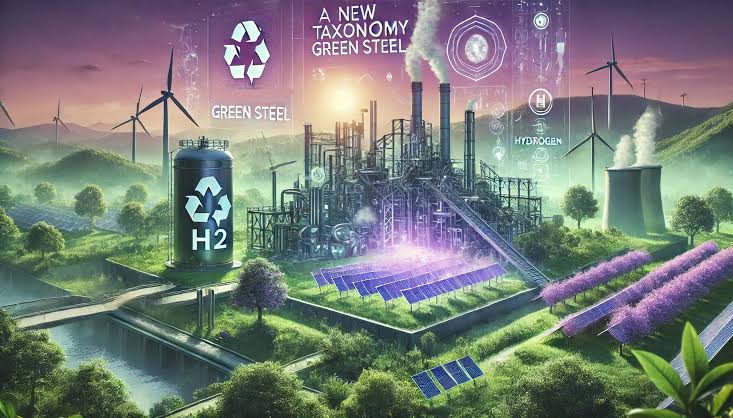
What Is Green Steel and Why It Matters
Steel powers the world — from buildings to bridges and industries. But it also comes at a cost. The steel industry is one of the highest carbon emitters globally.
To tackle this challenge, India has introduced the Green Steel Taxonomy. It is a major step toward sustainability in one of the country’s most vital industries.
This taxonomy defines what qualifies as Green Steel and provides a framework to encourage eco-friendly production methods. The goal is simple: make steel cleaner and greener.


The Ministry of Steel finalized the Green Steel Taxonomy after extensive consultations with industry stakeholders. It outlines clear emission intensity benchmarks for manufacturers.
Plants that meet these standards can apply for official Green Steel Certificates. These certifications reward producers that reduce fossil fuel use and adopt energy-efficient technologies, especially renewable energy.
NISST: The Green Steel Gatekeeper
The National Institute of Secondary Steel Technology (NISST) has been appointed as the nodal agency. NISST will manage:
- Measurement, Reporting, and Verification (MRV)
- Issuance of Green Steel Certificates
- Star ratings for environmentally responsible plants
This structure ensures transparency, accountability, and credibility in India’s green steel journey.
39 Producers Already Onboard
India’s steel industry is responding. So far, 39 iron and steel producers have applied for certification under the Green Steel framework.
This signals a strong shift toward cleaner production in a traditionally high-emission sector. As more producers come forward, India can significantly lower its carbon footprint while growing industrially.
Steel’s Climate Impact — And India’s Green Shift
Globally, steel production accounts for roughly 7–9% of CO₂ emissions. India, as the second-largest steel producer, plays a crucial role in making the global steel sector more sustainable.
The Green Steel Taxonomy is part of India’s broader plan to reach net-zero emissions by 2070. Encouraging cleaner industrial processes is key to that goal.
Benefits of Green Steel
Switching to green steel production isn’t just good for the planet. It also opens new markets and economic opportunities:
- Access to global green supply chains
- Increased trust from eco-conscious buyers
- Cost savings through energy efficiency
- Boosted investor interest in sustainable ventures
For companies, this move is both an environmental and economic win.
Policy Backed by Industry Engagement
The Green Steel Taxonomy wasn’t built in isolation. Policymakers consulted a wide range of experts, industry players, and climate advocates. This collaboration ensured practical standards that are also ambitious enough to drive real change.
As the Minister of State for Steel, Shri Bhupathiraju Srinivasa Varma, stated in Parliament, this initiative will help India transition to a low-carbon industrial economy without compromising growth.
What’s Next?
With the groundwork in place, the focus now shifts to execution. The next phase will involve:
- Scaling up awareness among steel plants
- Speeding up the certification process
- Integrating green steel standards in public infrastructure projects
Incentivizing early adopters could further accelerate the shift across India’s industrial base.
Conclusion: Forging a Greener Tomorrow
The Green Steel Taxonomy is a game changer. It sets the stage for a more sustainable steel industry while aligning with India’s climate goals. It promotes innovation, rewards responsibility, and signals India’s leadership in green industrial policy.
With industries, government, and agencies like NISST working together, India is well on its way to making green steel the new standard.