In a recent article dated July 22, 2025, Reuters questioned the accuracy of India’s official unemployment data. But it relied mostly on anonymous opinions rather than hard data. This raises serious doubts about its credibility and intent.
The Reuters Article Lacks Data, Relies on Opinions
The Reuters story is based on the perceptions of around 50 unnamed economists. It does not disclose who they are or how they were selected. There’s no explanation of survey structure, sample size, or statistical validation.
It fails to mention if these opinions are backed by any field research or factual datasets. Without transparency, the article becomes a collection of unverifiable viewpoints.
 PLFS: India’s Gold Standard in Employment Data
In contrast, India’s Periodic Labour Force Survey (PLFS), conducted by the National Statistical Office (NSO), is globally recognized for its accuracy and reliability. It uses a multi-stage, stratified, random sampling design that covers both urban and rural populations.
Since January 2025, PLFS has moved to a monthly reporting format in addition to quarterly and annual releases. This means faster, more detailed insights into India’s labour market dynamics.
Global Standards, Full Transparency
The PLFS follows international norms laid down by the International Labour Organization (ILO). Terms like Usual Principal Status (UPS) and Current Weekly Status (CWS) are aligned with global methodologies used by institutions like the World Bank and UNDP.
All PLFS data, including sampling methods, weighting, and error margins, are published publicly. This ensures full transparency and replicability.
Key Indicators Show Strong Progress
According to the latest PLFS report (2023–24):
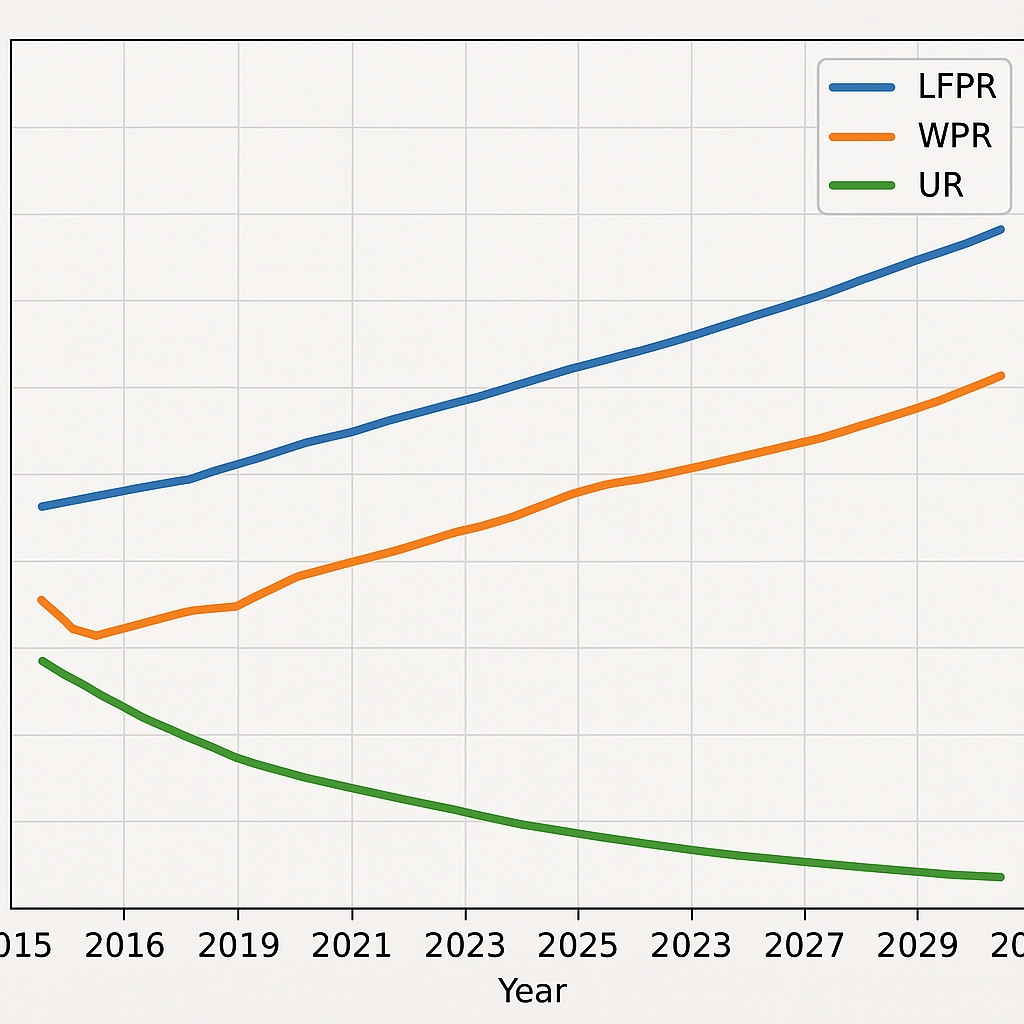
- Labour Force Participation Rate (LFPR) rose from 49.8% (2017–18) to 60.1%
- Worker Population Ratio (WPR) increased from 46.8% to 58.2%
- Unemployment Rate (UR) dropped sharply from 6.0% to 3.2%
- Youth Unemployment decreased from 17.8% to 10.2% — better than the global average of 13.3% (ILO, 2024)
Employment Is Growing, Formal Jobs Are Rising
As per the RBI’s KLEMS database, employment in India grew from 47.5 crore (2017–18) to 64.33 crore (2023–24)—an addition of 16.83 crore jobs.
In FY 2024–25 alone, over 1.29 crore net EPFO subscribers were added, showing a healthy rise in formal employment. Since 2017, a total of 7.73 crore net subscribers have joined.
Wages Are Not Stagnant
Average daily wages for casual workers rose from ₹294 in Q2 2017 to ₹433 in Q2 2024. Similarly, monthly earnings for salaried workers rose from ₹16,538 to ₹21,103. This is clear proof of rising income levels and job quality.
India’s Employment Structure Is Evolving
PLFS also shows a structural shift in employment:
- Self-employment increased from 52.2% to 58.4%
- Casual labour dropped from 24.9% to 19.8%
This reflects a growing trend of entrepreneurship and more stable livelihoods, supported by programs like PMEGP, Skill India, and NEP 2020.
New Sectors and Policy Support Fuel Growth
India’s job ecosystem is diversifying. Emerging sectors like startups, GCCs, digital services, and the gig economy are creating new opportunities.
Government support includes:
- ₹99,446 crore Employment Linked Incentive (ELI) Scheme to generate 3.5 crore jobs
- ₹122.5 crore for agri-startups
- Large-scale capital expenditure and infrastructure-led job creation
- Schemes like MGNREGS, PMMY, DDU-GKY, DAY-NULM
Conclusion: Data Must Trump Perception
The Reuters poll is based on subjective opinions, not data. It lacks transparency, sample size details, and statistical rigor. On the other hand, the PLFS is a scientifically sound, globally benchmarked survey with full disclosure of its methodology.
India’s employment story is not of decline but of progress. The facts speak for themselves—rising participation, falling unemployment, and better wages. Constructive debate on employment metrics is welcome, but it must be backed by evidence, not speculation.