
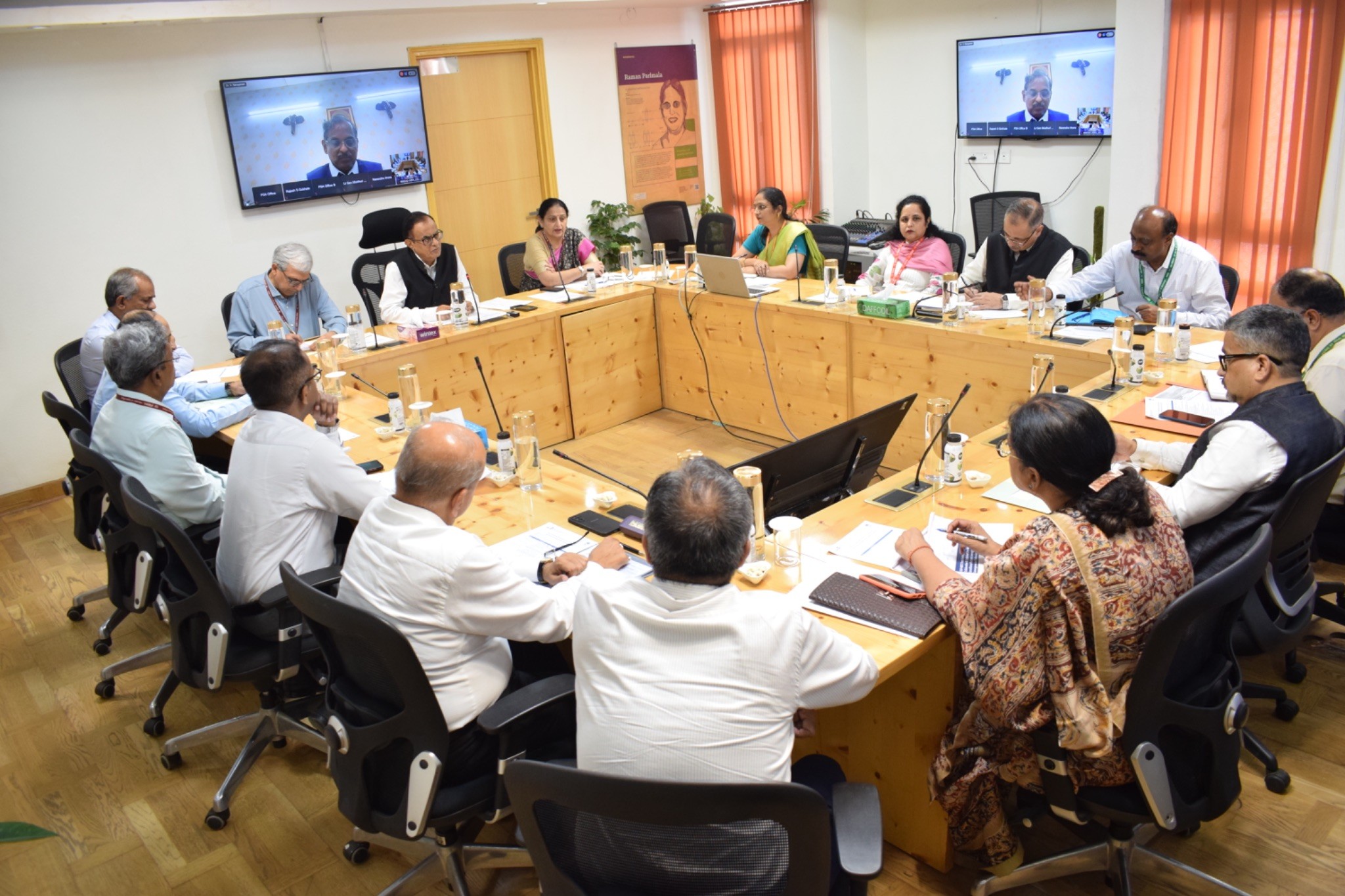
India’s One Health Mission Gains Momentum at 3rd Meet
The third meeting of the Scientific Steering Committee of the National One Health Mission (NOHM) was held on August 26, 2025, in New Delhi under the chairmanship of Prof. Ajay K. Sood, Principal Scientific Adviser to the Government of India. The mission, which integrates public health, animal husbandry, agriculture, and environment, aims to build a comprehensive framework for tackling future health challenges.
Expanding the Mission with New Ministries
This session saw the inclusion of three more institutions — the Ministry of Earth Sciences, the Indian Space Research Organisation (ISRO), and the Department of Fisheries. With this, the mission now brings together 13 ministries and departments, making it one of India’s most cross-sectoral initiatives in public health and governance.
Key Discussions and Progress Updates
The committee reviewed progress since the previous meeting. Updates included state and union territory engagements, cross-linkages between states for knowledge sharing, and community engagement on zoonotic diseases. States such as Assam and Uttar Pradesh, and Goa and Karnataka, were highlighted for their collaborative efforts in sharing best practices.
The report of the first State/UT engagement workshop held in June 2025 was released. It mapped strengths, challenges, and immediate opportunities for One Health adoption at the grassroots level.


A tiered governance model was suggested, spanning state, district, and panchayat levels. The model is expected to streamline implementation and accountability. Additionally, discussions focused on a unified e-learning module for officials, capacity-building programs, and youth participation through hackathons and ideathons.
Advisory Committee Inputs
Four Advisory and Review Committees presented updates:
- BSL 3/4 Laboratory Network: Led by Lt. Gen. (Retd.) Madhuri Kanitkar, this group is working to expand high-level lab capacity across India.
- Integrated Surveillance and Outbreak Investigation: Chaired by Dr. N. K. Arora, the focus is on technology-driven surveillance tools.
- R&D on Medical Countermeasures: Under Dr. Renu Swarup, research on vaccines, diagnostics, and treatments is advancing.
- Data Integration and Sharing: Chaired by Dr. Vijay Chandru, efforts are underway to build a National Outbreak Data Repository.
Chair’s Closing Remarks
Prof. Sood underlined that the strength of the mission lies in the collective expertise of its members. He emphasized the need for scaling up wastewater surveillance, improving outbreak detection systems, strengthening laboratories, and engaging youth through innovation challenges.
He concluded that the mission is not just national in scope but also of global significance, positioning India as a leader in integrated health governance.
Looking Ahead
The National One Health Mission has made strong progress in less than a year of active engagement. By combining expertise from human health, animal health, and environmental science, the mission is building a resilient framework that can prepare India for future pandemics, zoonotic threats, and climate-linked health risks.
Its collaborative approach — involving ministries, scientists, and communities — ensures that solutions will be both science-driven and citizen-oriented.