
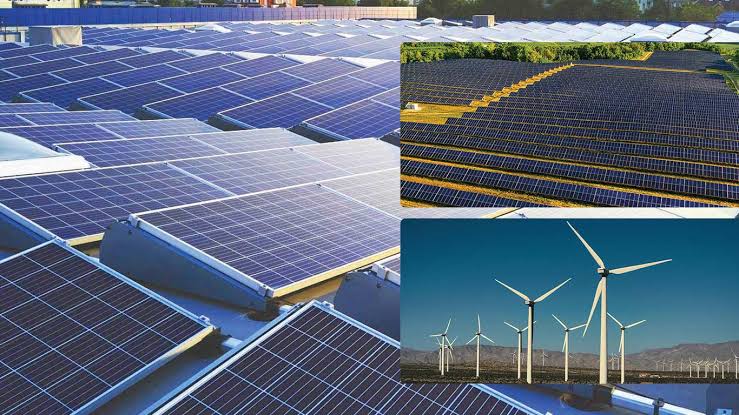
Government Initiatives Accelerating Renewable Energy Growth
To achieve the target of 500 GW non-fossil energy capacity by 2030, the Government of India has introduced multiple measures:
- Waiver of Inter-State Transmission System (ISTS) charges for solar, wind, offshore wind, and green hydrogen projects.
- Standard Bidding Guidelines for tariff-based competitive procurement of renewable energy (RE).
- Renewable energy power procurement targets of 50 GW/year from FY 2023-24 to FY 2027-28 under Renewable Energy Implementing Agencies (REIAs).
- 100% FDI permitted under the automatic route for renewable energy projects.
- Green Energy Corridor Scheme funding for new transmission lines and substations.
- Development of solar parks, ultra-mega solar projects, and rooftop initiatives under PM-KUSUM and PM Surya Ghar schemes.
- Viability Gap Funding (VGF) for offshore wind projects and battery energy storage systems (BESS).
- Green Hydrogen Mission targeting 5 MMT capacity with 125 GW associated renewable energy by 2030.
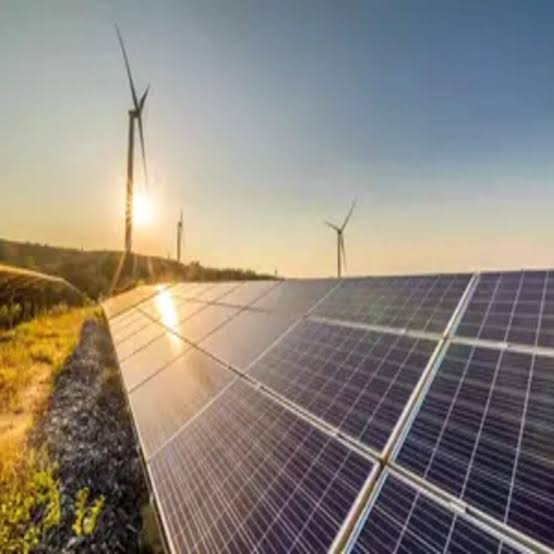

India reached 50% of its installed electricity capacity from non-fossil sources in June 2025, more than five years ahead of its Paris Agreement NDC target. This achievement emphasizes India’s commitment to climate action, energy security, affordability, and accessibility while supporting economic growth and net-zero goals by 2070.
Nuclear Power and Energy Security
Nuclear energy is central to India’s long-term energy strategy. The Government has set a target of 100 GW nuclear capacity by 2047. Steps include:
- Launch of a dedicated Nuclear Energy Mission with ₹20,000 crore for Small Modular Reactors (SMRs).
- Amendments to Atomic Energy Act and Civil Liability for Nuclear Damage Act to attract private investment.
- Upgradation of Bharat Small Reactors (BSRs) and development of SMRs for retiring coal stations and remote areas.
- Enhancement of fuel security through uranium discoveries and fast breeder reactor advancements.
- Joint venture ASHVINI between NPCIL and NTPC for nuclear plant development.
Energy Storage, Pumped Storage, and Offshore Wind
Battery Energy Storage Systems (BESS) and Pumped Storage Projects (PSPs) are being implemented to support RE integration. Currently, 13.22 GWh BESS capacity is underway with 30 GWh more approved. Ten PSPs totaling 11,870 MW are under construction. Offshore wind projects are supported through viability gap funding for initial capacity of 1 GW.
Installed Capacity Breakdown (Oct 2025)
| Source | Installed Capacity (MW) | Share (%) |
|---|---|---|
| Fossil Fuel | 2,45,600 | 48.6 |
| Non-Fossil Fuel | 2,59,423 | 51.37 |
| Total | 5,05,023 | 100 |
Renewable energy dominates the non-fossil segment with 2,50,643 MW, including 129,924 MW solar, 53,600 MW wind, 10,757 MW biomass, and 5,159 MW small hydro.