
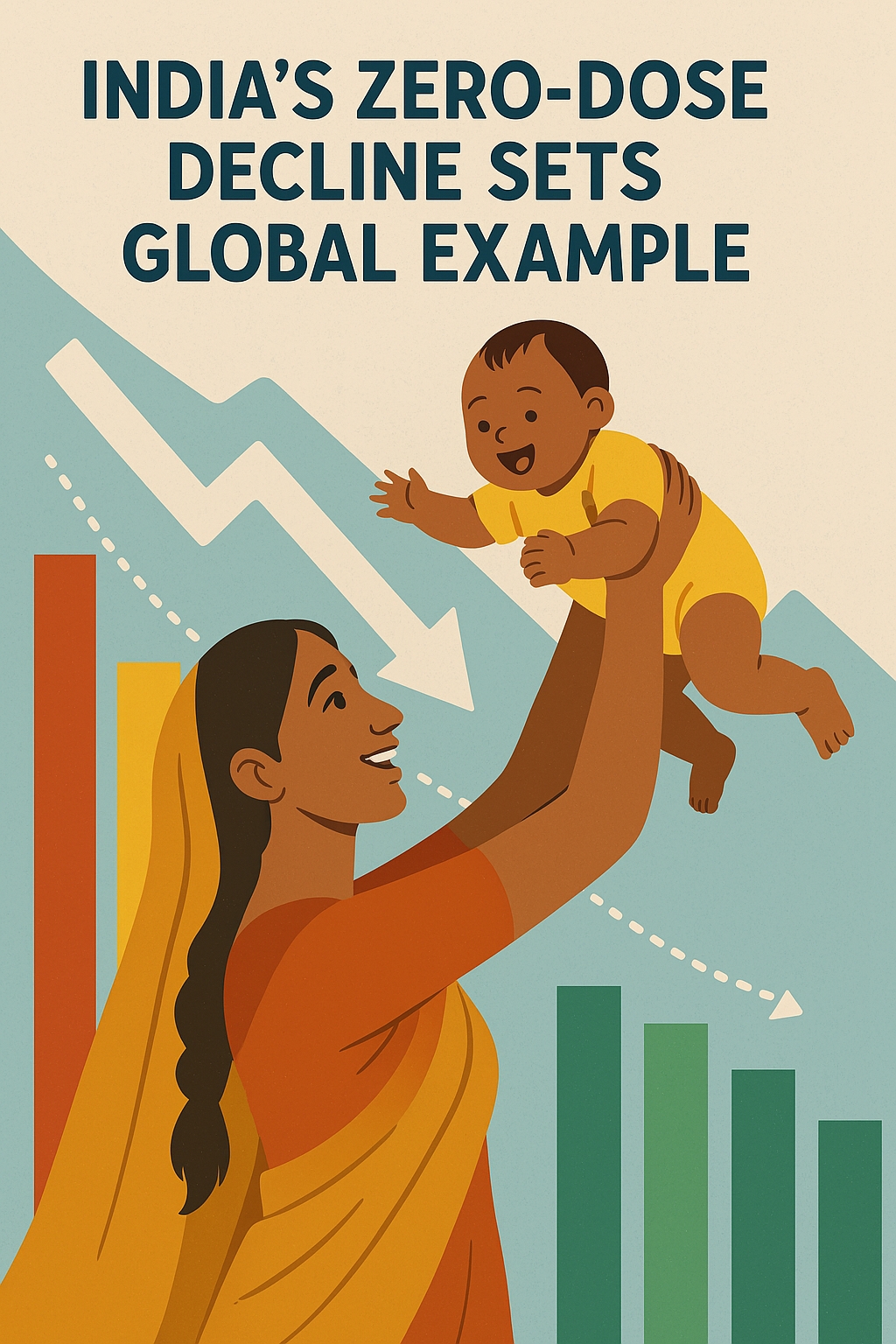
New Delhi, June 29, 2025 — India has achieved a significant public health milestone with a steep decline in the percentage of zero-dose children—from 0.11% in 2023 to just 0.06% in 2024. This accomplishment has earned India global recognition, including praise from the UN Inter-agency Group for Child Mortality Estimation (UN IGME).

India’s Maternal Mortality Ratio (MMR) dropped from 130/lakh live births (2014-16) to 80/lakh in 2023, marking an 86% decline—far surpassing the global average reduction of 48%. Similarly, the country’s Under-Five Mortality Rate (U5MR) declined by 78%, outpacing the global 61% average. Neonatal Mortality also fell by 70% compared to the world’s 54%.
Universal Immunization Programme: Expanding Reach
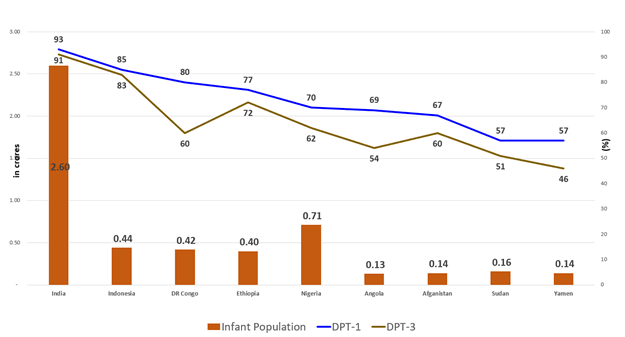
India’s Universal Immunization Programme (UIP) now covers 12 vaccine-preventable diseases. In contrast to just six vaccines before 2014, the UIP added six new vaccines including Rotavirus, PCV, and Measles-Rubella. Every year, the program vaccinates around 2.6 crore infants and 2.9 crore pregnant women through 1.3 crore immunization sessions led by ASHAs and ANMs.
Mission Indradhanush and Zero-Dose Plan
Since 2014, Mission Indradhanush has vaccinated over 5.46 crore children and 1.32 crore pregnant women. The Zero Dose Implementation Plan 2024, launched across 143 districts in 11 states, targets high-burden regions with unvaccinated children. The government is also tackling vaccine hesitancy in urban slums, peri-urban areas, and remote populations.
Global Comparisons and Achievements
According to WUENIC 2023, India’s DTP1 (Penta-1) coverage stands at 93%, significantly higher than Nigeria’s 70%. Dropout rates from DTP1 to DTP3 reduced from 7% in 2013 to 2% in 2023. Measles coverage rose from 83% to 93% during the same period.
In comparison, countries like Yemen (1.68%), Sudan (1.45%), and Nigeria (0.98%) have much higher zero-dose child percentages. India’s data places it on par with developed nations like Germany and New Zealand in terms of vaccine coverage.
Tech Integration and Community Outreach
The U-WIN digital platform is helping track immunization and prevent dropouts. Meanwhile, awareness campaigns via radio, social media, and local engagement (like street plays) are increasing demand. Community healthcare workers continue door-to-door outreach to ensure no child is left behind.
Looking Ahead
With the Measles-Rubella Elimination Campaign 2025 underway and polio-free status maintained since 2014, India’s immunization model is a case study in effective last-mile healthcare delivery. The government remains focused on continuous improvement, inclusivity, and leveraging technology to ensure universal coverage.
India’s success reaffirms that consistent political will, ground-level worker engagement, and community participation can transform child healthcare outcomes globally.