INS Vikrant: India’s Pride in Indigenous Naval Power
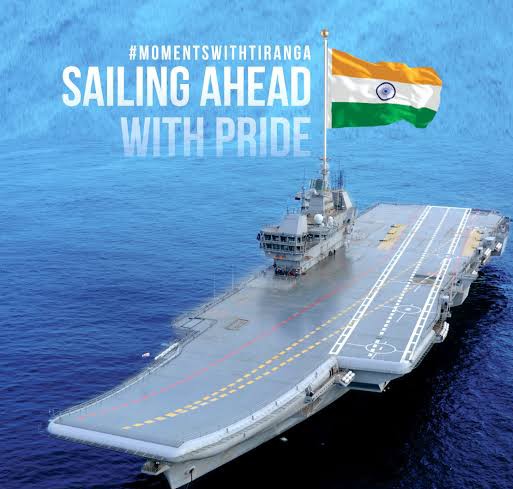
New Delhi: India’s first indigenous aircraft carrier, INS Vikrant, stands as a monumental achievement in naval engineering and national self-reliance. Commissioned on 2 September 2022, the 45,000-tonne warship represents 76% indigenous content and has created thousands of skilled jobs across Indian industries.
 A Symbol of Self-Reliance and Strength
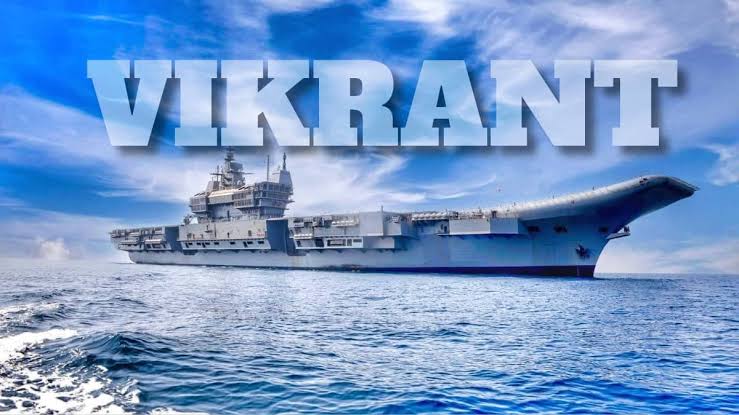
Designed by the Indian Navy’s Warship Design Bureau and built by Cochin Shipyard Limited (CSL), INS Vikrant demonstrates India’s capability to design and construct complex warships. The carrier’s indigenous build involved over 550 OEMs and 100 MSMEs, generating 2,000 direct and 12,500 indirect jobs.
Prime Minister Narendra Modi, who celebrated Diwali 2025 onboard Vikrant, hailed the ship as a symbol of India’s naval pride and “Atmanirbhar Bharat.” His visit included witnessing naval demonstrations, special forces operations, and cultural interactions with the crew.
Design, Development, and Commissioning
The ship’s keel was laid in 2009, launched in 2013, and underwent sea trials in 2021 before commissioning in 2022. With dimensions of 262.5 metres in length and 61.6 metres in width, Vikrant is powered by four gas turbines generating 88 megawatts of power and achieves 28 knots of speed.
INS Vikrant can host 30 aircraft, including MiG-29K fighter jets, MH-60R and Kamov-31 helicopters, ALH, and Chetak. It operates on the Short Take-Off But Arrested Recovery (STOBAR) system and accommodates 1,600 crew members including women officers.
Operational Achievements
Since commissioning, Vikrant has achieved numerous operational milestones, including successful maiden sea trials, night landings, and participation in major naval exercises like MILAN 2024 and Varuna 2025. It also played a key role during Operation Sindoor, strengthening India’s deterrence in the Arabian Sea.
During its deployment in March 2025, Vikrant led a Humanitarian Assistance and Disaster Relief (HADR) mission to rescue crew members of the Panama-flagged vessel MV Heilan Star off the Goa coast, highlighting its dual strength in combat and humanitarian operations.
Humanitarian Leadership and Regional Role
Beyond combat readiness, Vikrant’s robust automation and power generation capacity make it a mobile command centre during disasters. Aligned with India’s ‘SAGAR’ (Security and Growth for All in the Region) vision, it enhances India’s reputation as a first responder in the Indian Ocean Region.
Technological Excellence and Industrial Partnerships
The carrier is a result of collaboration among India’s top defence and industrial entities like BEL, BHEL, Larsen & Toubro, GRSE, and Kirloskar. Warship-grade steel was indigenously developed through a joint effort of the Navy, DRDO, and SAIL, making India self-sufficient in critical defence materials.
Future Readiness and Defence Expansion
The Indian Navy’s procurement of 26 Rafale-Marine jets in April 2025 for ₹63,000 crore will further enhance Vikrant’s air wing capabilities. The carrier will soon be based at Visakhapatnam to strengthen the Eastern Naval Command, contributing to regional security and strategic balance.
India’s Maritime Future
Since 2014, over 40 indigenous warships and submarines have been delivered to the Navy, a testament to India’s growing industrial strength. Vikrant represents not just a warship but a national mission-fueling innovation, employment, and self-reliance across the defence ecosystem.
As India advances its maritime presence in the Indo-Pacific, INS Vikrant remains a powerful symbol of national confidence and technological prowess, marking a new era in India’s journey toward a blue-water navy.