
The recent events in Russia — where an apparent security breach and sabotage reportedly took place — offer not a triumph for Ukraine or the United States, but rather expose a deeper rot within Russia itself. It is not the enemy at the gates, but betrayal from within that seems to be at play. This raises urgent and uncomfortable questions for other nations with similar vulnerabilities — notably, India.
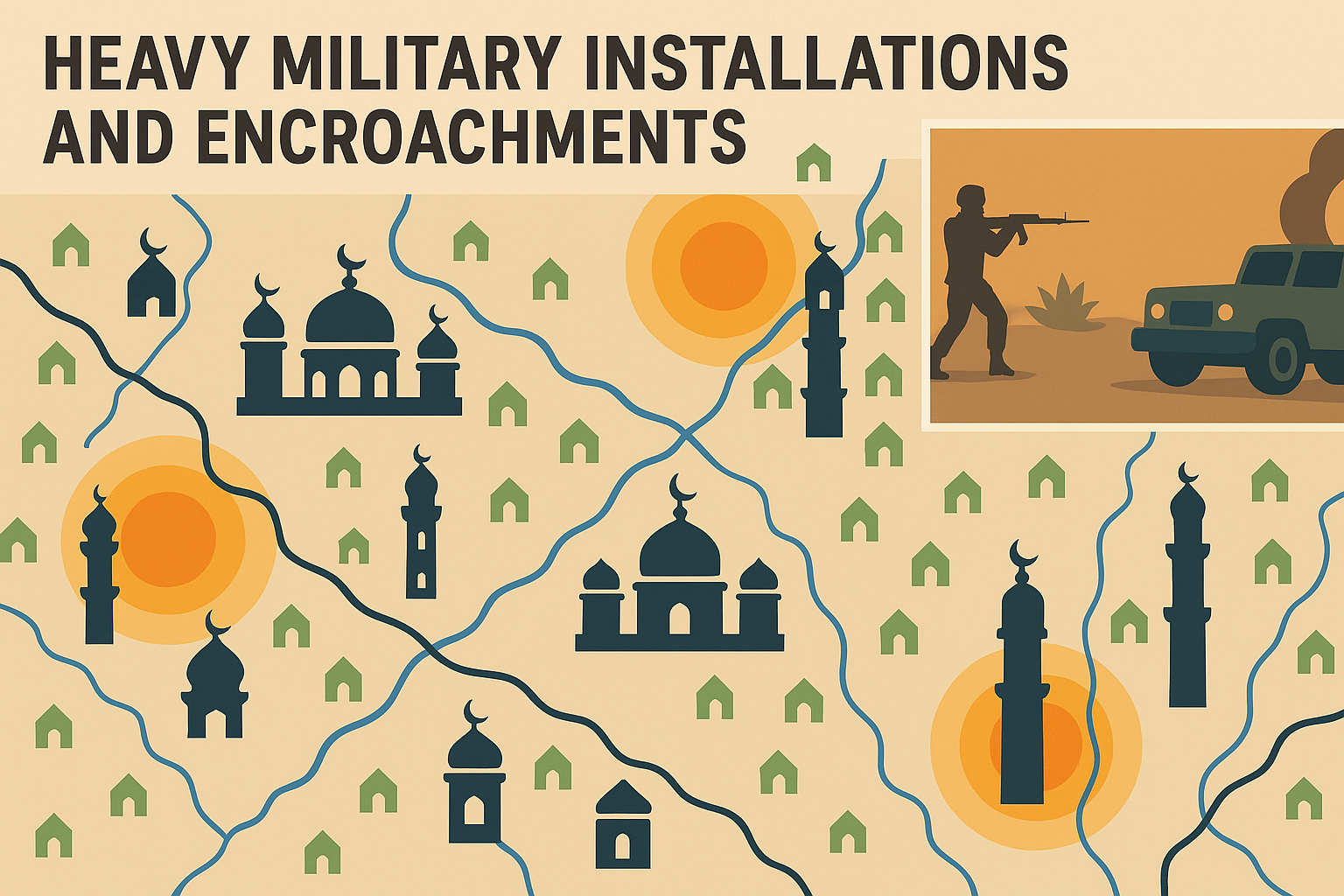
In India’s context, the incident prompts a reassessment of internal security and preparedness. The concern is not hypothetical: across Indian cities, military cantonments, railways, highways, and strategic installations, there is a visible pattern of rapid civilian settlements — particularly Muslim-majority clusters and roadside shrines or dargahs — cropping up in close proximity. While in many cases this may be benign or historically rooted, the scale and pattern of such encroachments in high-sensitivity zones calls for a deeper security audit.
Ironically, in several instances, the Indian Army itself has assumed responsibility for maintaining these shrines located within cantonment areas. This could be seen as secular goodwill — or, in the context of national security, as dangerously naive.
One of the most illustrative examples of internal security compromise is the 2016 Uri attack. Militants launched a deadly raid on the Indian Army brigade headquarters in Jammu and Kashmir, killing 19 soldiers. The scale and precision of the assault — including their ability to breach the perimeter and knowledge of troop movements — suggest insider information or local logistical support. Without help from within, such precision attacks are nearly impossible.
The Security Risk of Civilian Proximity
Military convoys, by their nature, are vulnerable while in motion. If multiple cantonments across India were simultaneously targeted — roads obstructed, bridges compromised, convoys ambushed — and officers’ families held hostage, the Indian Army would be faced with a paralyzing internal crisis even before engaging any external enemy.
This is not speculation — rather, a strategic possibility that must be confronted. The use of stones and mob action, as seen during the Kashmir unrest (especially post-2010 and again in 2016), and during CAA-NRC protests, demonstrates the ability of organized groups to disrupt military or police movements. If such tactics were ever militarized and coordinated during a larger conflict, India could face severe setbacks.
Furthermore, reports and ground-level observations reveal a pattern: mazars and religious encroachments on or near strategic assets like railway bridges, airbases, and highways. While many of these might have cultural significance or legacy status, their unchecked proliferation near sensitive zones is a red flag.
What Needs to Be Done
India’s Home Ministry and Defence Ministry must jointly assess the strategic implications of civilian expansion around sensitive military areas. Some steps that could be considered:
-
Security Mapping and Risk Assessment: Geospatial mapping of religious and civilian structures within a specified radius of cantonments, airbases, nuclear facilities, and key infrastructure.
-
Policy and Regulation: Enforcement of a no-construction zone within a defined perimeter of all strategic installations.
-
Intelligence Reforms: Greater scrutiny of insider threats within the armed forces and support staff.
-
Community Engagement and De-escalation: Any corrective steps must avoid communal polarization. Engagement with local communities, ensuring transparency and legal due process, is key.
-
Learning from Other Nations: Israel, for example, enforces buffer zones and vetting procedures around critical installations. China implements layered security zones near its borders. India must consider similar protocols adapted to its democratic and diverse fabric.
Conclusion
The editorial doesn’t argue for communal profiling — rather, it underlines the need for preparedness and systemic vigilance. In a world where hybrid warfare — a mix of military, cyber, and social manipulation — is the new norm, complacency is not an option. India’s strength lies not only in its military capacity but in recognizing and addressing internal vulnerabilities before they are exploited.
References / Bibliography
-
Uri Attack, 2016 – Ministry of Defence, Government of India
-
Hybrid Warfare & Internal Threats – Carnegie Endowment for International Peace (2020)
-
Pattern of Stone-Pelting in Kashmir – “Kashmir: The Vajpayee Years” by A.S. Dulat, HarperCollins
-
Proliferation of Mazars on Public Land – India Today Investigations, 2018
-
Insider Threats in Global Militaries – RAND Corporation Reports